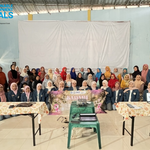
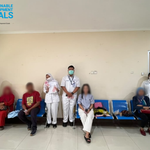
NERS NEWS — Surabaya, February 20, 2026 – Nursing Clinical Practice (PKK) students from the Faculty of Nursing, Universitas Airlangga carried out a health education activity at the home of a foster patient with Tuberculosis (TB) on Friday, February 20, 2026. This activity was conducted as a promotive and preventive intervention within family nursing care, with the theme “Clean Living Behavior, Cough Etiquette, and Balanced Nutrition for Families with TB.”
Tuberculosis (TB) is an infectious disease caused by the bacterium Mycobacterium tuberculosis, transmitted through droplets when an infected person coughs, sneezes, or speaks. Therefore, education on clean living behavior and proper cough etiquette is essential to prevent transmission to other family members.
The activity began with a brief assessment of the home environment, ventilation, the patient’s coughing habits, and the family’s dietary patterns. The students then provided direct education to the patient and family members regarding the importance of maintaining household cleanliness, opening windows every morning to ensure good air circulation, regularly cleaning floors and furniture, and avoiding spitting carelessly. In the cough etiquette session, the patient was taught to cover the mouth and nose with a tissue or the inner elbow when coughing or sneezing, dispose of used tissues in a closed trash bin, and wash hands afterward.
In addition, the students delivered education on balanced nutrition for TB patients. They explained that consuming nutritious foods high in protein such as eggs, fish, tempeh, and tofu, as well as vegetables and fruits, is crucial for boosting immunity and accelerating recovery. The family was also encouraged to ensure the patient takes anti-tuberculosis drugs (OAT) regularly as prescribed by health workers to optimize treatment and prevent drug resistance.
Throughout the activity, the patient and family were cooperative and actively asked questions. The family expressed happiness during each visit, especially when receiving education on preventing transmission and recommended foods. Based on the evaluation, the family was able to correctly repeat proper cough etiquette and mention examples of balanced nutritious foods for TB patients. They also expressed their commitment to improving home ventilation and supporting the patient’s medication adherence.
The patient’s mother shared, “I’m happy, dear, when you educate us like this. I didn’t know before, but now I understand.” This statement reflects that our non-pharmacological intervention through education on Clean Living Behavior, Cough Etiquette, and Balanced Nutrition can serve as an effective effort to improve quality of life and support the patient’s recovery.
This activity also received appreciation from Nurse Waji, a healthcare provider at Kalijudan Public Health Center. He stated that the students’ efforts would positively impact the quality of life of the patient and family, helping accelerate recovery through the implementation of healthy living practices, proper cough etiquette, and balanced nutrition.
This initiative is part of the effort to Support Sustainable Development Goal (SDG) 3: Good Health and Well-being, particularly in controlling infectious diseases such as TB. Through education and family empowerment, the risk of transmission can be reduced, and the patient’s quality of life can be improved.
Writer: Firiyal Mitsalina
Editor: Eva Khoirunnisa Adinta (Airlangga Nursing Journalist)