
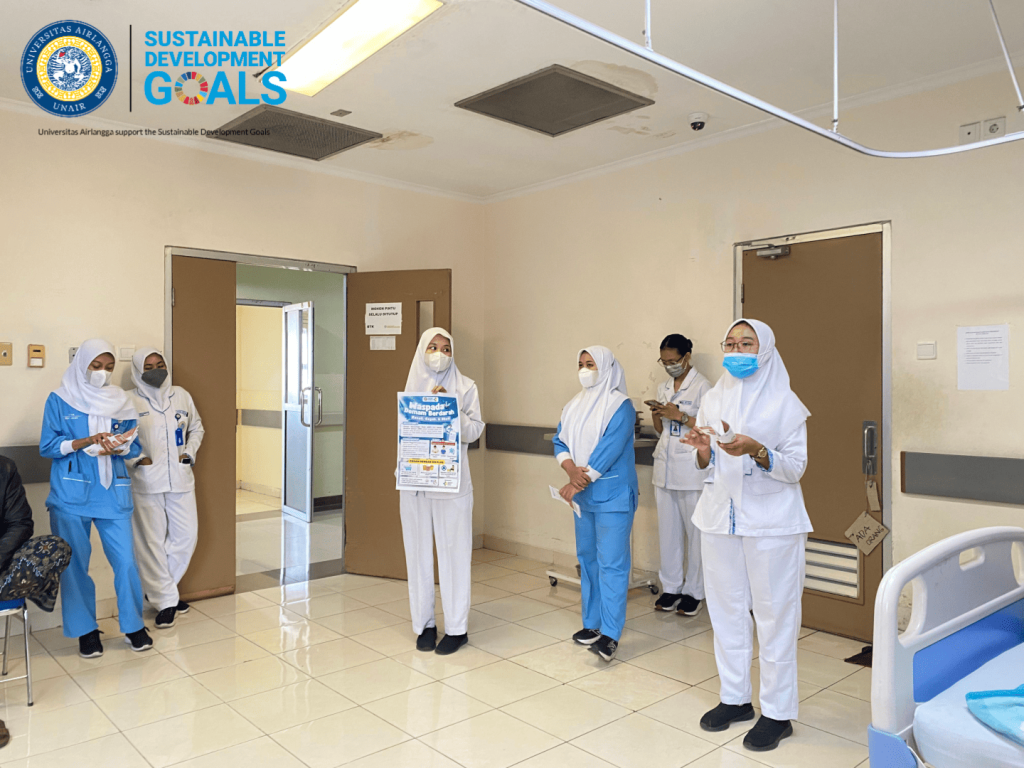
NERS NEWS – Professional Nursing students from the Faculty of Nursing, Universitas Airlangga (Unair), conducted a health education session at the IRNA 5A ward of Graha Trimed on Saturday, April 11, 2026. The activity was aimed at patients and their families as an effort to increase knowledge regarding the prevention, early detection, and initial management of Dengue Hemorrhagic Fever (DHF) through interactive educational methods.
The session utilized lectures, discussions, and Q&A formats supported by leaflets and posters as educational media. The material presented covered the definition of Dengue Hemorrhagic Fever (DHF), its causes, and the transmission process through the bite of the Aedes aegypti mosquito. Additionally, participants were taught to identify signs and symptoms, danger signs, and preventive measures using the “3M Plus” method. Participants also gained an understanding of environmental control and initial steps to take if DHF symptoms appear.
This initiative involved Professional Nursing students from Group 15, Cohort B27, with Warda Diah Safirah and Sheirly Eferda Meita Aulia as the primary speakers, accompanied by academic and clinical supervisors. The session targeted patients and their families currently receiving care at IRNA 5A Graha Trimed.
The primary objective of this activity was to enhance the knowledge and awareness of patients and families in recognizing, preventing, and controlling DHF independently. This initiative was driven by the persistently high incidence of DHF in tropical regions and the lack of public awareness regarding environmental cleanliness.
Furthermore, this program supports the achievement of the Sustainable Development Goals (SDGs), specifically Goal 3: Good Health and Well-being, Goal 4: Quality Education, and Goal 17: Partnerships for the Goals. One of the representatives from the education team stated that this activity is expected to increase the community’s active role in preventing infectious diseases as a promotive and preventive step to reduce complications caused by DHF.
Overall, this health education session had a positive impact on increasing the awareness of patients and their families. It is hoped that similar activities will continue to be implemented sustainably as a contribution from educational institutions toward improving public health status.
Author: Vera Niken Wulandari
Editor: Farah Dina Azizatul Aulia (Airlangga Nursing Journalist)





