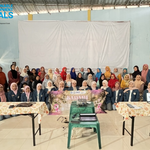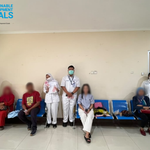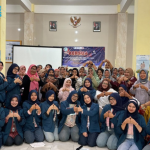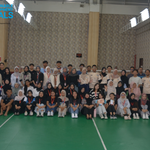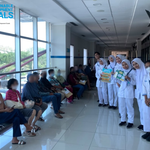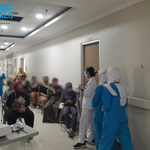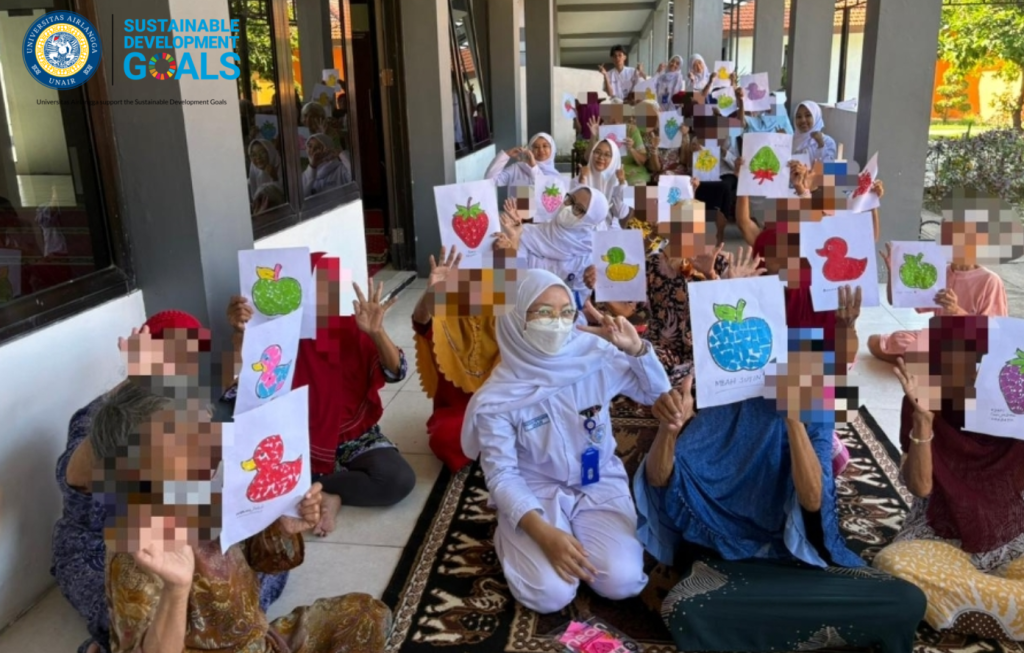
NERS NEWS – Students of the Faculty of Nursing, Universitas Airlangga, who are currently undertaking clinical nursing practice, organized a Group Activity Therapy (TAK) session on creating origami paper collages for elderly residents at UPTD Griya Werdha on Thursday, May 7, 2026. This activity was conducted to help train the cognitive function and fine motor skills of the elderly participants.
This group activity therapy invited elderly participants to tear and paste colorful origami paper pieces into patterned images. Through direct assistance, the creative process was carried out interactively, providing a comfortable space for the elderly to socialize and freely express their creativity.
The program involved elderly residents as participants and was initiated by clinical practice students from the Faculty of Nursing, Universitas Airlangga, Groups B3 and B4. The activity took place at UPTD Griya Werdha, Surabaya, on Thursday, May 7, 2026.
This activity was motivated by the importance of maintaining brain and physical function in old age as a form of support for achieving the Sustainable Development Goals (SDGs), particularly SDG 3: Good Health and Well-Being. The relationship between this therapy and SDG 3 is highly comprehensive because it targets not only physical health but also the mental well-being of elderly individuals. Physically, the activities of tearing and pasting paper help train neuromuscular coordination and maintain finger joint flexibility. Mentally, the process of arranging color patterns stimulates brain activity and memory function, which may help slow the progression of dementia. In addition, the warm social interaction throughout the activity effectively helps reduce stress, depression, and feelings of loneliness, ensuring optimal psychological well-being for the elderly participants.
This collage-making therapy provided positive impacts by combining both physical and emotional care simultaneously. It is hoped that through routine activities like this, elderly residents at UPTD Griya Werdha will be able to enjoy their later years feeling happier, remaining active and independent according to their abilities, and feeling that their presence continues to be meaningful.
Writer: Ayesha Danish Haq