
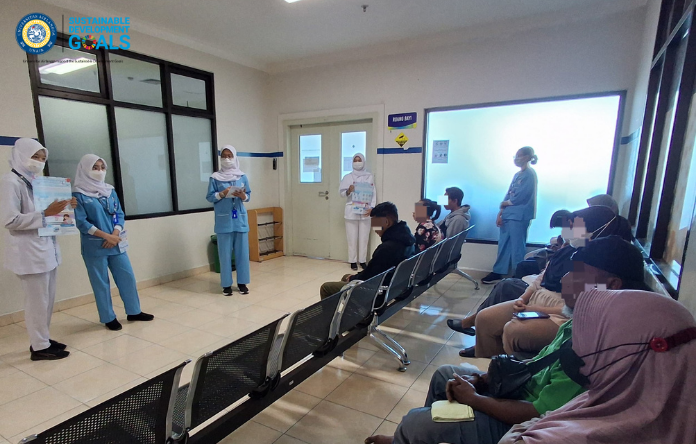
NERS NEWS — Professional Nursing students from the Faculty of Nursing, Universitas Airlangga (Unair), conducted a Hospital Health Promotion (PKRS) program titled “Family Education: Protecting Infants from Infection through Hygiene, Interaction Management, and Cigarette Smoke Control” on Thursday, May 7, 2026. Held in the family waiting room of the Perina Ward (Perinatology) at Universitas Airlangga Hospital (RSUA), the session utilized lectures, demonstrations, and interactive discussions supported by leaflets and posters to enhance the families’ knowledge regarding infection prevention in newborns.
The health education session provided vital information on the definition of neonatal infections, risk factors, and modes of transmission. Key topics included the importance of hand hygiene before touching an infant, managing safe interactions, and the severe dangers of secondhand smoke exposure to an infant’s health. The students explained that newborns have immature immune systems, making them highly vulnerable to infections—particularly those spread through unwashed hands, droplets, unhygienic environments, or cigarette smoke.
In addition to the presentation, the speakers demonstrated the correct steps for handwashing and provided guidance on safe infant interaction. This included limiting unnecessary physical contact, avoiding kissing the baby, and ensuring that anyone intending to touch the infant washes their hands first. The education also emphasized the necessity of creating a clean, smoke-free home environment as a critical protective measure for the infant’s health.
The program was carried out by Professional Nursing students from Group D1-4 between 09:00 AM and 09:50 AM WIB. Throughout the session, the participants showed high enthusiasm, paying close attention to the material and actively participating in the Q&A session. Several participants asked questions regarding how to maintain infant hygiene at home and the appropriate steps to reduce the risk of infection from the surrounding environment.
The activity was conducted under the supervision of academic advisor Prof. Dr. Yuni Sufyanti Arief, S.Kp., M.Kes. and clinical instructor Diah Sukmawati P., S.Kep., Ns. The primary goal of this PKRS initiative was to improve the families’ understanding of infection prevention through good hygiene practices, safe interactions, and controlling exposure to cigarette smoke.
This health education initiative also serves as a contribution to the Sustainable Development Goals (SDGs), specifically SDG 3: Good Health and Well-Being, by improving the health quality of infants and families, and SDG 4: Quality Education, by providing science-based nursing health education.
Through this PKRS activity, it is hoped that families can independently implement infection prevention behaviors in their daily lives, thereby creating a safe and healthy environment that supports optimal infant growth and development.
Author: Dhea Triananda
Editor: Farah Dina Azizatul Aulia (Airlangga Nursing Journalist)





