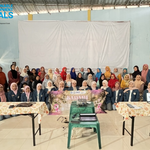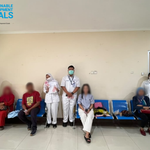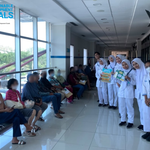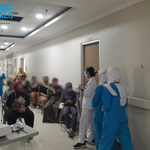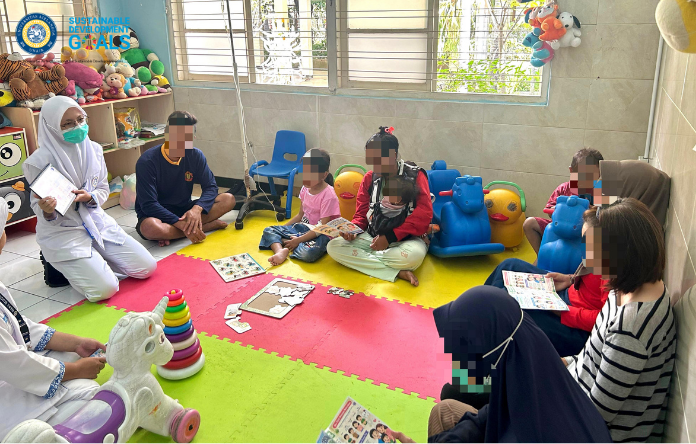
NERS NEWS – Nursing Professional (Ners) students from the Faculty of Nursing, Universitas Airlangga, conducted a Hospital Health Promotion Program (PKRS) activity on Thursday, May 21, 2026, in the Nakula Sadewa Ward at RSUD Dr. Soetomo Surabaya. This activity was intended for parents and families of pediatric patients as an effort to increase knowledge and awareness regarding the importance of personal hygiene for children during hospitalization. The educational session was carried out as a promotive and preventive effort to reduce the risk of infectious diseases caused by inadequate personal hygiene.
The health education activity was conducted using interactive lectures, discussions, and question-and-answer sessions supported by leaflets and flipcharts. The material presented included the definition of personal hygiene in children, the importance of maintaining cleanliness, types of personal hygiene, methods of maintaining children’s body hygiene, the impacts of poor personal hygiene, and the role of parents in guiding children to maintain personal cleanliness. In addition, participants were educated on proper handwashing techniques, oral and dental hygiene, nail and hair cleanliness, the use of clean clothing, and maintaining the cleanliness of the patient’s environment during hospitalization.
During the activity, participants appeared enthusiastic and actively engaged in the discussion and question-and-answer sessions. This was evident from their participation in answering questions related to proper handwashing steps, the importance of changing clothes regularly, and appropriate times for handwashing. Participants were also able to re-explain the meaning of personal hygiene and the benefits of maintaining cleanliness in children after the session.
This activity involved Nursing Professional students from Group 3 A2 of the Maternity Nursing Clinical Practice rotation with structured task assignments: Rokhma Mista Febrianah as moderator, Vera Niken Wulandari as presenter, Intan Taniya as facilitator and observer, and Rendra Wahyu Ismawan as time keeper and documentation coordinator. The activity was conducted from 10:00 to 10:30 AM WIB and targeted parents and families of pediatric patients in the Nakula Sadewa Ward at RSUD Dr. Soetomo Surabaya under the supervision of a clinical instructor.
This educational activity aimed to improve families’ understanding of the importance of maintaining children’s personal hygiene as a preventive measure against infectious diseases. The background of the activity was based on the still-low implementation of proper personal hygiene practices among children, which may increase the risk of diarrhea, acute respiratory infections (ARI), intestinal worm infections, skin diseases, and other health problems. Hospitalized children are also at higher risk of infection due to the hospital environment and their health conditions, making parental assistance in maintaining optimal hygiene especially important.
Through this activity, it is hoped that parents and families will be able to independently implement clean and healthy living habits for children both during hospitalization and after returning home. Education regarding personal hygiene is also expected to help improve children’s health quality and establish healthy hygiene habits from an early age.
This activity also supports the achievement of the Sustainable Development Goals (SDGs), particularly Goal 3: Good Health and Well-being through improved health education and prevention of infectious diseases in children. In addition, the activity supports SDG 4 (Quality Education) and SDG 17 (Partnerships for the Goals) through collaboration between educational institutions and hospitals in implementing health promotion programs.
One representative of the educational team stated that health education regarding personal hygiene is very important in establishing clean and healthy living habits in children from an early age. With active parental involvement, children are expected to become more disciplined in maintaining personal hygiene, thereby minimizing the risk of infectious diseases.
Overall, this PKRS activity was successfully conducted and had a positive impact on increasing the knowledge of patients’ families regarding personal hygiene care for children. It is hoped that similar educational activities can continue to be carried out sustainably as part of the implementation of healthcare workers’ promotive and preventive roles within healthcare services.
Author: Vera Niken Wulandari
Editor: Raffa Nadiya Primatiana (Airlangga Nursing Journalist)