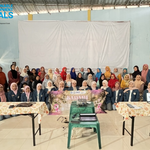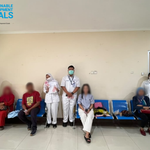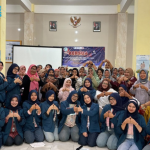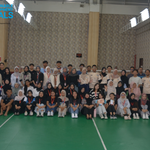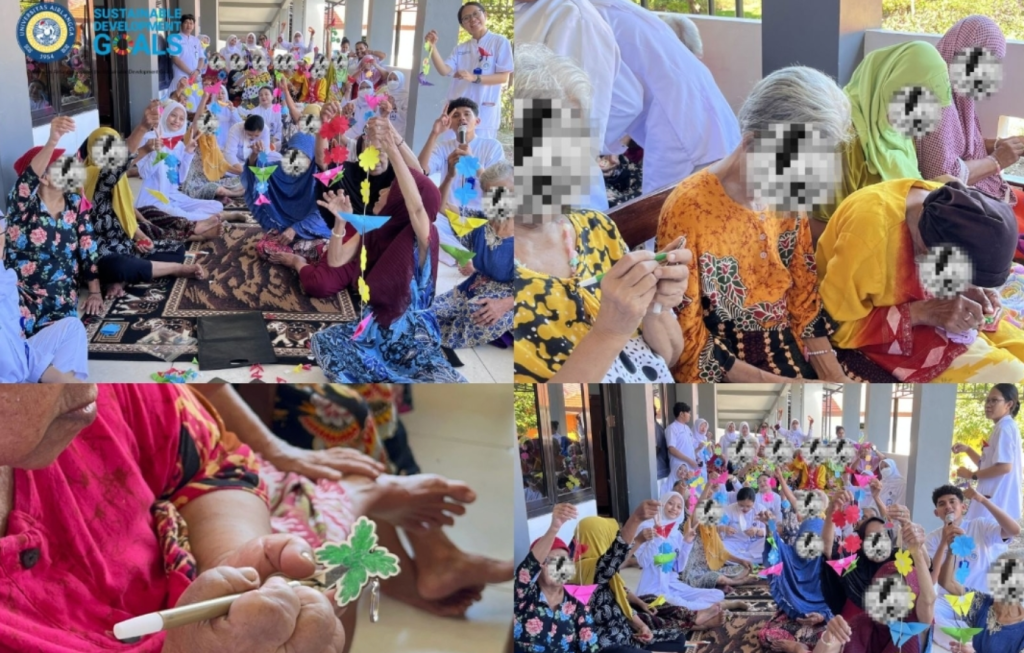
NERS NEWS — Nursing Undergraduate Program students of the Faculty of Nursing, Universitas Airlangga conducted Group Activity Therapy (GAT) for elderly residents at UPTD Griya Werdha Kalijudan, Surabaya, on Wednesday (13/5/2026). This activity featured creative interventions in the form of wall decorations made from origami and “Painting Hope,” aimed at improving cognitive function, motor skills, and social interaction among the elderly.
The GAT activity took place in the mosque of UPTD Griya Werdha Kalijudan for 60 minutes and involved gerontic nursing students from Groups A5, A6, A7, and A8 of the Faculty of Nursing, Universitas Airlangga. During the activity, the elderly participants were invited to engage in various creative tasks such as folding origami, decorating and coloring keychains, writing down their hopes, and arranging their works into wall decorations.
Throughout the implementation, students directly assisted the elderly through a small-group mentoring system to ensure optimal guidance. The elderly were given the freedom to choose colors, origami shapes, and design elements according to their creativity. This activity helped train fine motor skills, concentration, hand-eye coordination, and the ability to follow simple instructions. In addition, the participants’ ability to understand and follow instructions was also enhanced through each step of the origami folding process they completed.
This Group Activity Therapy supports the achievement of the Sustainable Development Goals (SDGs), particularly SDG 3: Good Health and Well-Being, through efforts to improve the physical, cognitive, and psychosocial health of the elderly. The collaboration between the Faculty of Nursing, Universitas Airlangga and UPTD Griya Werdha Kalijudan also reflects the implementation of SDG 17: Partnerships for the Goals through joint efforts to support elderly welfare.
Through this Group Activity Therapy, students of the Faculty of Nursing, Universitas Airlangga strive to provide meaningful and enjoyable activities for the elderly. It is hoped that similar programs can continue to be implemented as a form of support for improving the quality of life of the elderly while strengthening the contribution of educational institutions in community health services.
Writer: Citra Umma Choiroh