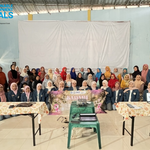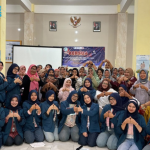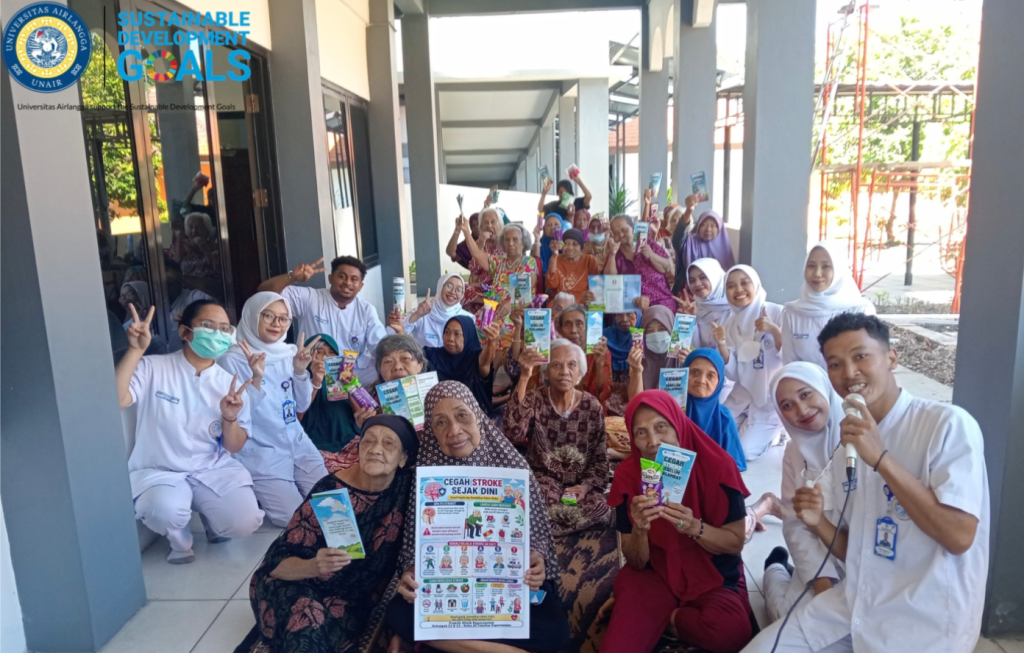
NERS NEWS — Surabaya, June 4, 2026 – Undergraduate Nursing students from the Faculty of Nursing, Universitas Airlangga, who were undertaking their gerontic nursing clinical practice at UPTD Griya Wreda, conducted a health education session on early stroke prevention on Thursday afternoon at 12:00 PM. The activity was held beside the mosque at UPTD Griya Wreda and was attended by 26 older adults.
Before the activity began, the student team prepared the venue and distributed leaflets to participants as educational materials. The event started with an opening session by the moderator, an introduction of the education team, an explanation of the activity’s objectives, and a brief overview of the importance of early stroke prevention among older adults.
The educational material covered the definition of stroke, types of stroke, modifiable and non-modifiable risk factors, stroke warning signs and symptoms using the BE FAST method, and preventive measures through the adoption of a healthy lifestyle. Participants were also educated on the importance of regularly monitoring blood pressure, blood sugar levels, and cholesterol levels as part of efforts to reduce the risk of stroke.
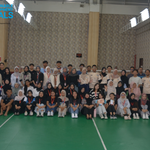
During the activity, the students also introduced and demonstrated anti-stroke exercises aimed at improving blood circulation, maintaining body balance, and supporting the physical fitness of older adults. Participants enthusiastically followed the exercise movements according to their individual abilities under the guidance of the student educators.
Throughout the session, participants actively engaged in discussions and the question-and-answer segment. Several older adults asked questions regarding stroke symptoms, blood pressure management, and safe physical activities that could help prevent stroke. The presenters responded interactively and provided clear explanations, ensuring that the material was well understood by the participants.
The educational session proceeded smoothly and concluded successfully. Documentation was carried out throughout the presentation, discussion sessions, and anti-stroke exercise activities as evidence of the program’s implementation.
Through this activity, it is hoped that older adults will gain a better understanding of the early signs of stroke, recognize their personal risk factors, and adopt healthier lifestyles in their daily lives. By increasing awareness and knowledge about stroke prevention, the risk of both first-time and recurrent strokes among older adults is expected to decrease, helping them maintain a better quality of life.
Writer: Diva Veronika Oknanori