
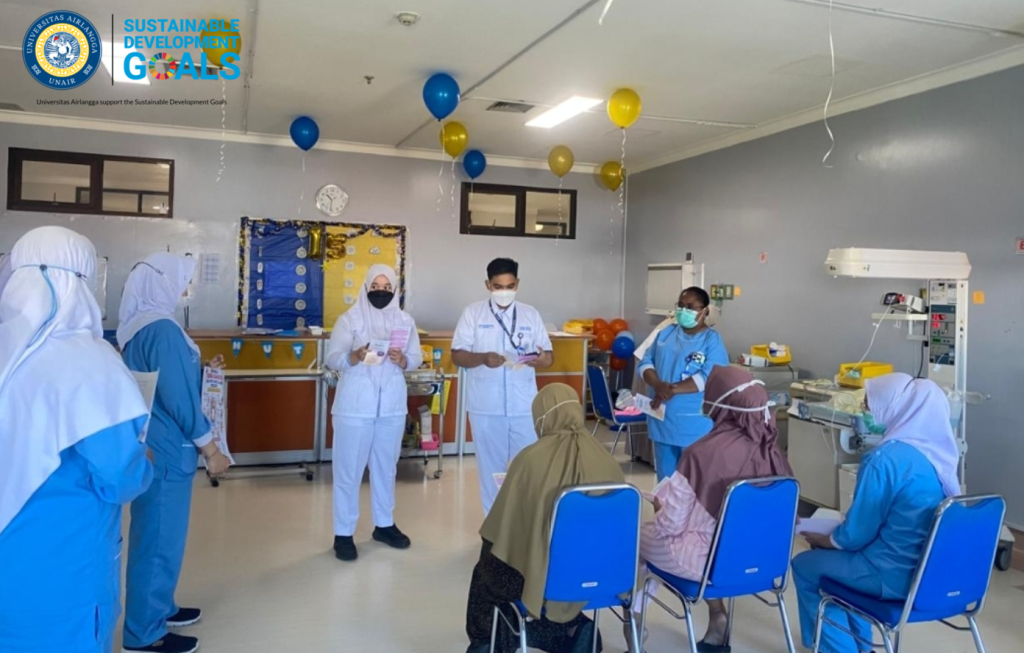
NERS NEWS — Nursing Profession students of Group B27 conducted a Hospital Health Promotion Program (PKRS) on “Recognizing Danger Signs in Newborns” at the Perina Ward of Universitas Airlangga Hospital on Friday, June 19, 2026, at 10:00 AM. This activity was attended by patients’ family members or caregivers of newborns receiving treatment in the Perina Ward. Through this activity, the students provided education on the importance of monitoring the condition of newborns aged 0–28 days as an effort for early detection of health problems that may threaten the baby’s safety.
The activity was carried out interactively through material presentations, discussions, and question-and-answer sessions. The materials covered signs of a healthy baby, sleeping patterns and growth of newborns, normal bowel and urinary patterns, the importance of exclusive breastfeeding, ways to keep babies warm, and proper umbilical cord care. In addition, participants also received information about various danger signs in newborns that require immediate medical attention, such as shortness of breath, seizures, diarrhea, fever, vomiting, bluish skin discoloration (cyanosis), nosebleeds, swelling accompanied by pain behind the ear, and babies who refuse to breastfeed.
This educational activity was conducted by Nursing Profession students of Group B27 with guidance from healthcare professionals in the Perina Ward of Universitas Airlangga Hospital. Throughout the activity, participants showed enthusiasm in following the educational session. Several parents asked questions about how to recognize normal newborn conditions, umbilical cord care at home, ideal breastfeeding frequency, and actions to take if a baby shows danger signs. The discussion provided participants with the opportunity to gain accurate information regarding newborn care and health monitoring.
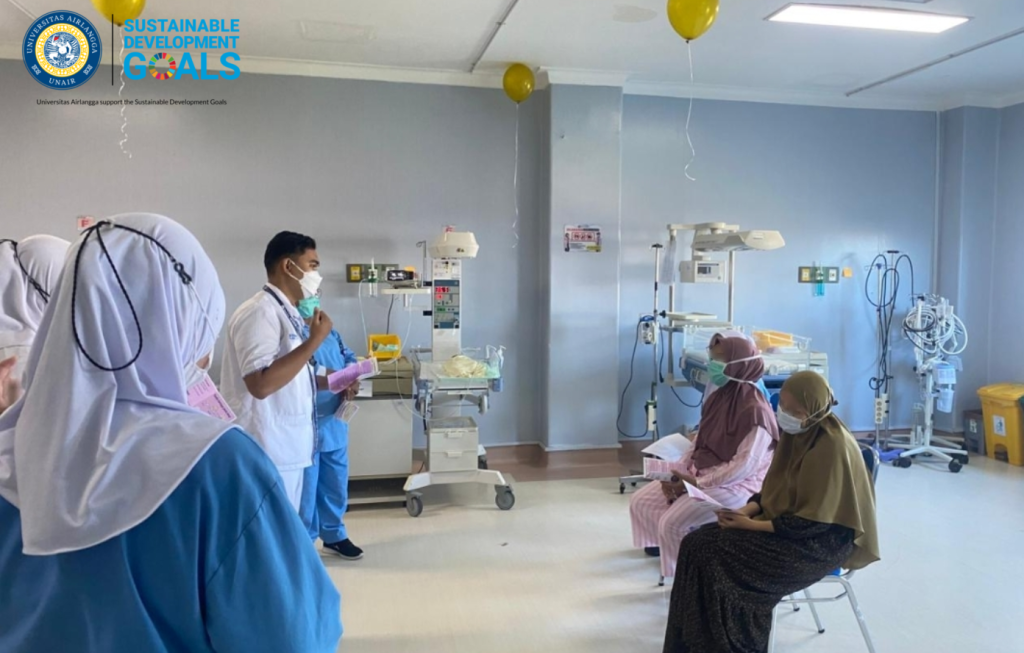
This activity aimed to improve the knowledge and awareness of parents and families in recognizing danger signs in newborns from an early stage. The neonatal period is a highly vulnerable phase because babies are still adapting to the environment outside the womb. Delays in recognizing danger signs can increase the risk of complications and neonatal mortality. Therefore, understanding normal newborn conditions, exclusive breastfeeding, proper care, and early detection of concerning symptoms are essential steps in maintaining infant health.
This activity also supports the achievement of the Sustainable Development Goals (SDGs), particularly Goal 3: Good Health and Well-Being, which focuses on improving public health and well-being, including reducing morbidity and mortality rates among newborns. Through the health education provided, families are expected to take an active role in maintaining infant health and seek medical assistance immediately if danger signs are observed during the neonatal period.
Through this PKRS activity, it is hoped that parents and families will better understand the importance of monitoring newborn health during the first 28 days of life. With increased public knowledge about danger signs in newborns, early detection and prompt treatment are expected to be carried out so that the health and safety of newborns can be optimally maintained. This activity also reflects the contribution of nursing profession students in supporting healthcare services that focus not only on curative aspects but also on promotive and preventive efforts to improve public health quality.
Writer: Almira Florint Salsabila





