
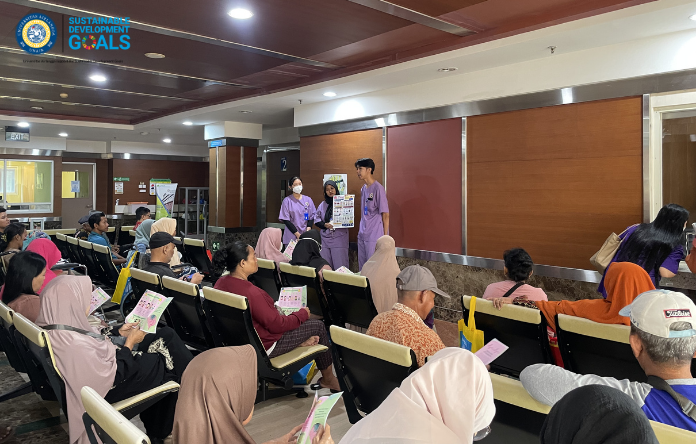
NERS NEWS — Undergraduate nursing students from the Faculty of Nursing, Universitas Airlangga, successfully conducted a Hospital Health Promotion (PKRS) session focusing on stroke management for patients’ families. The educational campaign was held in the waiting area of the Intensive Care Unit (ICU), Grha Trimed, Universitas Airlangga Hospital (RSUA). This initiative aimed to enhance participants’ knowledge regarding the definition, classifications, signs and symptoms, medical management, diagnostic examinations, and prevention of stroke, alongside introducing anti-stroke exercises to increase public awareness of early detection and risk reduction.
The PKRS activity was executed through lectures, interactive discussions, and Q&A sessions, supported by digital presentations and educational leaflets. The material covered comprehensive topics, including the clinical definitions and classifications of stroke—specifically ischemic stroke, hemorrhagic stroke, and Transient Ischemic Attack (TIA)—clinical manifestations, medical interventions, diagnostic tests, and proactive prevention measures. Furthermore, the speakers emphasized the vital importance of recognizing early stroke symptoms and immediately seeking medical assistance. This ensures that patients receive care within the critical golden period, thereby minimizing the risks of long-term disability and mortality.
The program was carried out by undergraduate nursing students currently completing their Nursing Clinical Practice (PKK) rotation at RSUA, targeting families accompanying their relatives in the Grha Trimed ICU. Throughout the event, the participants demonstrated high enthusiasm, actively asking questions regarding stroke risk factors, blood pressure regulation, balanced nutrition, and physical activities suitable for stroke prevention.
This public outreach sought to elevate health literacy surrounding stroke, a major non-communicable disease (NCD) that remains a leading cause of long-term disability and mortality both in Indonesia and globally. Through this education, families are expected to identify stroke warning signs early, understand the critical value of managing modifiable risk factors—such as hypertension, diabetes mellitus, dyslipidemia, smoking, and physical inactivity—and adopt healthy lifestyle choices in their daily routines. Additionally, the audience was introduced to anti-stroke exercises, a structured physical activity designed to improve blood circulation, maintain cardiovascular fitness, and support vascular health.
This PKRS framework also directly supports the realization of the Sustainable Development Goals (SDGs), particularly:
- SDG 3: Good Health and Well-Being: Improving community health outcomes and reducing the global burden of non-communicable neurological diseases.
- SDG 4: Quality Education: Providing high-quality, accessible public health literacy through interactive community-based learning.
- SDG 17: Partnerships for the Goals: Strengthening the strategic clinical collaboration between educational institutions and university hospitals to maximize community healthcare standards.
According to a representative from the student group, stroke education is vital for patients’ families, as they play a central role in recognizing early symptoms, supporting the clinical treatment process, and helping patients maintain healthy lifestyle modifications post-discharge. “We hope that through this campaign, the community will become more vigilant regarding early stroke detection and capable of implementing preventive steps to lower future stroke risks,” they stated.
The stroke PKRS campaign at the RSUA Grha Trimed ICU is envisioned to deliver sustainable benefits to the participants and the wider public. By accelerating public knowledge and awareness, it is highly anticipated that the incidence, disability rates, and mortality stemming from stroke can be lowered, ultimately fostering a better quality of life for the community.
Author: Group C7 Nursing Clinical Practice, Faculty of Nursing, Universitas Airlangga
Editor: Farah Dina Azizatul Aulia (Airlangga Nursing Journalist)





