
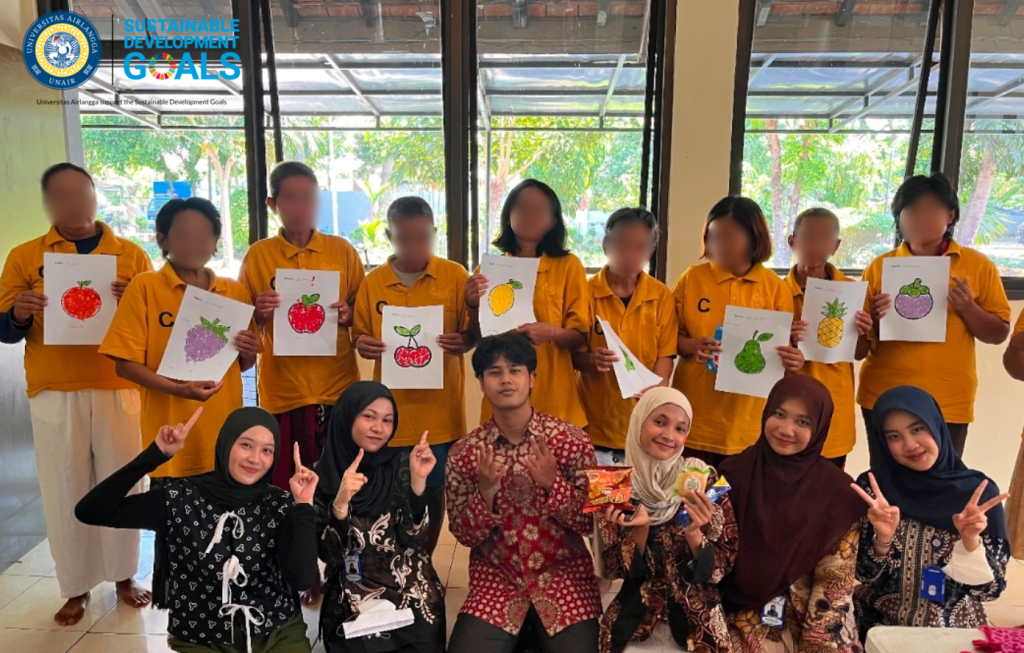
NERS NEWS — Surabaya, June 4, 2026 — Students of the Psychiatric Nursing Clinical Practice Program from the Faculty of Nursing, Universitas Airlangga, Group A3, conducted a Sensory Stimulation Group Activity Therapy (GAT) session at Barrack C, UPTD Liponsos Keputih, Surabaya. The activity aimed to improve residents’ concentration, fine motor skills, and social interaction through a creative fruit mosaic activity using small pieces of colored origami paper.
Before the GAT session began, the students provided health education on the importance of performing the six-step handwashing technique before meals. The education was delivered interactively by demonstrating each step of proper handwashing and inviting the residents to practice it directly. The participants showed great enthusiasm throughout the session. They were able to follow each movement correctly and demonstrated an understanding of the importance of hand hygiene as an essential measure for maintaining good health.
Following the educational session, the activity continued with Sensory Stimulation Group Activity Therapy through a fruit mosaic exercise. Each participant received a printed fruit illustration and was asked to complete the picture by attaching small pieces of colored origami paper according to their own creativity. During the activity, the students also encouraged the residents to recognize and identify colors in both Indonesian and English. Most participants were able to answer the questions correctly, demonstrating well-preserved cognitive abilities, memory, and color recognition skills.
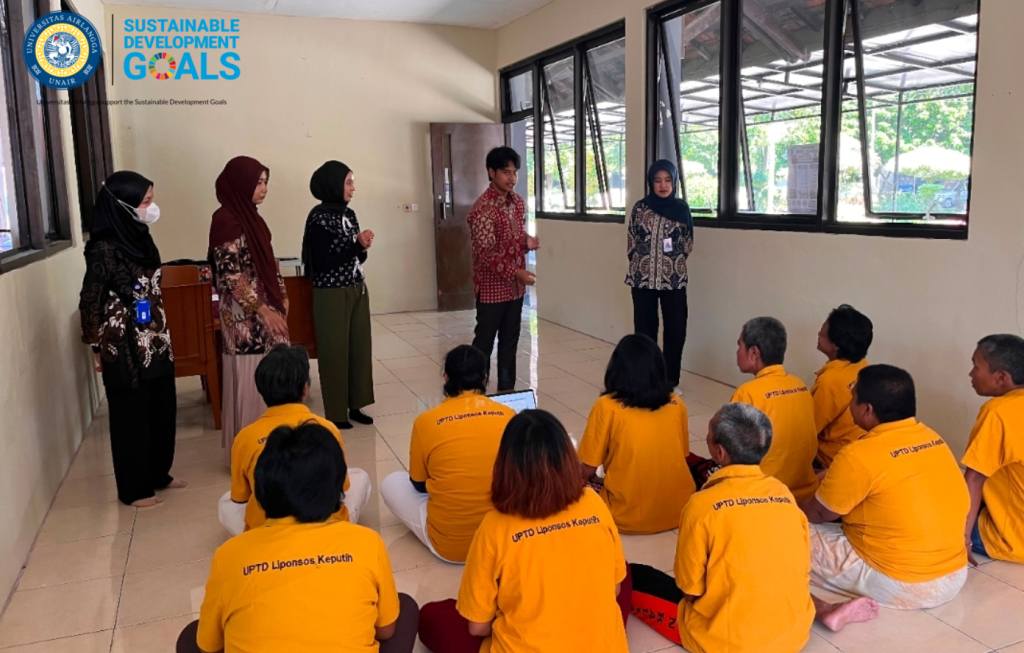
The activity was carried out in a warm and enjoyable atmosphere. The residents enthusiastically participated in every stage, actively interacted with the facilitators, and worked diligently to complete their mosaic artwork. Beyond providing sensory stimulation, the activity also helped improve attention, the ability to follow instructions, fine motor coordination, self-confidence, and social interaction between the residents and the students. The event concluded with the presentation of rewards to the best participants as a form of appreciation for their active participation.
Through this activity, Group A3 students hope that Group Activity Therapy (GAT) can serve as one of the psychiatric nursing interventions that supports the psychosocial rehabilitation process of the residents. In addition to providing valuable learning experiences for the students, the activity is expected to create a supportive and enjoyable environment that encourages residents to further develop their adaptive and social skills.
This activity also supports the achievement of the Sustainable Development Goals (SDGs), particularly SDG 3 (Good Health and Well-Being) by promoting hand hygiene practices and supporting mental health, SDG 4 (Quality Education) through health education and cognitive stimulation, and SDG 10 (Reduced Inequalities) by providing access to rehabilitative and educational activities for vulnerable populations, thereby improving their quality of life and well-being.
Writer: Fania Layla Sabrina (Group A3, Clinical Nursing Practice A23, Faculty of Nursing, Universitas Airlangga)





