
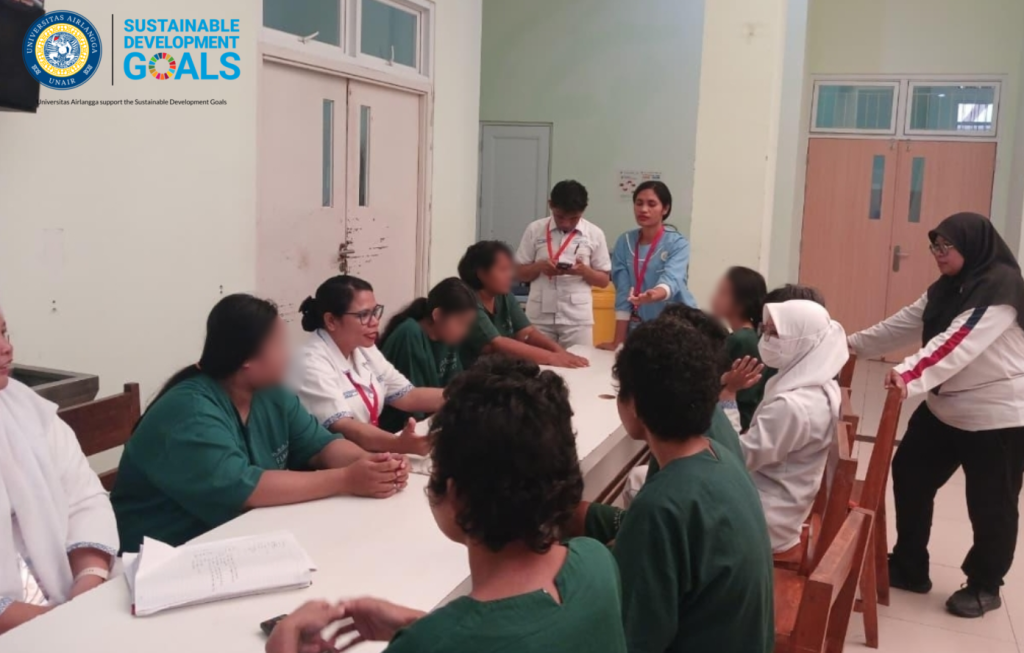
NERS NEWS — Nursing Profession students undertaking their Mental Health Nursing clinical rotation conducted a Group Activity Therapy (GAT) session on the General Perception of Hallucinations for patients in Flamboyan Ward at Menur Mental Hospital, Surabaya, on Friday, July 10, 2026. The activity was conducted as a follow-up to the Hospital Health Promotion (PKRS) program on hallucinations and aimed to improve patients’ ability to recognize and manage the hallucinations they experience.
The therapy session involved 10 patients with nursing diagnoses related to hallucinations. The activity was led by Yahya as the group leader, with Apriyanti Rambu Ngana serving as co-leader. The facilitation team consisted of Atika Septarini, Paula Juana, Ratna, and Viktoria, under the supervision of Clinical Instructor Mardliyah Hayati, S.Kep., Ns.
Before the session began, the group leader explained the objectives, rules, and procedures of the therapy to all participants. The GAT session was carried out through a simple game involving a spoon holding a marble while music was played. When the music stopped, the participant holding the spoon was asked to introduce themselves and describe the type of hallucination they experienced, the content of the hallucination, when it usually occurred, and the strategies they commonly used to manage or dismiss the hallucination.
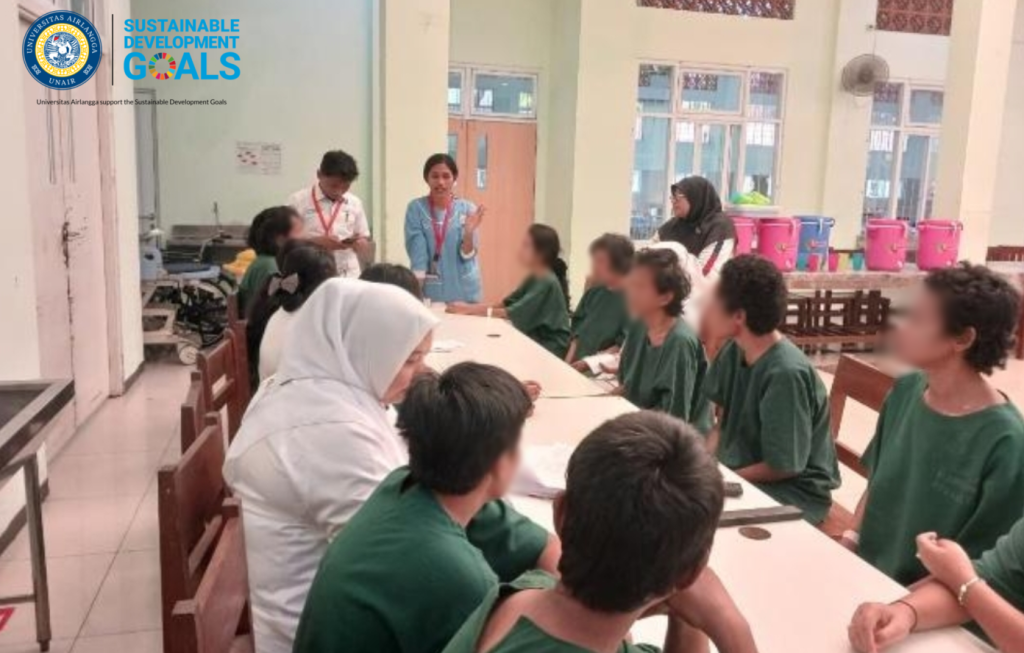
The session lasted approximately 30 minutes in an interactive and supportive atmosphere. All participants demonstrated high enthusiasm throughout the activity. Each participant was able to share their experiences with hallucinations, including auditory, visual, tactile, and olfactory hallucinations. Several participants even reported experiencing more than one type of hallucination. Through this experience-sharing session, participants had the opportunity to learn from one another about effective strategies for managing hallucinations as part of their recovery process.
The primary objective of the Group Activity Therapy was to help patients recognize the type and content of their hallucinations, understand when they typically occur, and strengthen their ability to apply hallucination management techniques, particularly the “rebuking” (self-command) technique. The activity was expected to enhance patients’ ability to manage hallucination symptoms independently during their treatment.
The implementation of this Group Activity Therapy (GAT) aligns with the Sustainable Development Goals (SDGs), particularly SDG 3: Good Health and Well-Being. Specifically, it supports Target 3.4, which focuses on promoting mental health and well-being through promotive, preventive, and rehabilitative interventions. Through this structured group therapy, patients are expected to develop greater awareness of their condition and strengthen their ability to manage hallucinations as part of their mental health recovery.
Writer: Apriyanti Rambu Ngana





