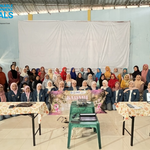
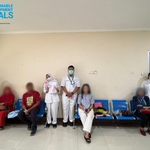
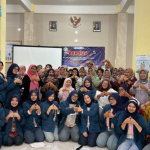
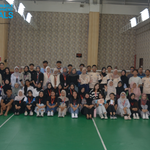
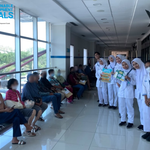
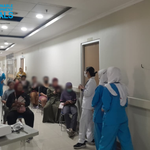
NERS NEWS – Surabaya, July 9, 2026 – Professional Nursing Practice Students of Group 2, Faculty of Nursing, Universitas Airlangga, once again carried out Group Activity Therapy (TAK) on Thursday (7/9) in the Garuda Ward of RSD Prof. Dr. Moeljono, Surabaya. This activity was a continuation of the previous therapy session, focusing on Implementation Strategy (SP) 2: training patients to reject/dismiss hallucinations. After learning to recognize hallucinations in the previous session, patients in this session were trained to practice the technique of rejecting hallucinations as a way to control symptoms when hallucinations occur.
The therapy session was designed as a role play so patients could learn through direct practice. The session began with each patient drawing lots to determine their turn order. Next, patients were asked to draw a scenario card prepared by the students. The cards contained various hallucination situations, including auditory, visual, olfactory, and tactile hallucinations. Based on the scenario they received, each patient came forward in front of the group to demonstrate how to reject a hallucination using a firm statement, such as “Go away! You are not real, I don’t want to listen to or follow you.” After the role play, students gave feedback and reinforcement on the correct rejection technique so patients would feel more confident applying it when hallucinations occur.
The TAK activity was attended by 10 patients who showed active participation and enthusiasm throughout the session. Although some patients initially seemed hesitant to perform, they gained courage after watching their peers take part in the role play. The atmosphere of the therapy was warm and supportive, with students and fellow participants offering appreciation each time a patient successfully practiced the rejection technique well. This activity aimed to improve patients’ ability to control hallucinations through the application of SP 2, equipping them with skills to respond to hallucinations adaptively and reduce the influence of hallucinations on daily activities. In addition, this activity represents an implementation of psychiatric nursing care focused on strengthening patients’ ability to manage symptoms independently, while supporting the achievement of the Sustainable Development Goals (SDGs), particularly SDG 3 (Good Health and Well-being), SDG 4 (Quality Education), and SDG 17 (Partnerships for the Goals).
Through this activity, Professional Nursing students from the Faculty of Nursing, Universitas Airlangga, hope patients will become increasingly confident in applying the rejection technique when hallucinations occur, so they can reduce the impact of hallucinations on their daily lives. For the students, this therapy was a valuable experience in creatively and therapeutically implementing psychiatric nursing interventions through an active, participatory learning method. Going forward, it is hoped that patients can apply the skills they have learned as a foundation for their recovery process and to strengthen their independence in managing hallucination symptoms.
Author: Carissa Lintang Ivana