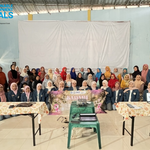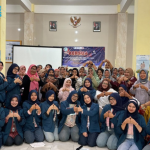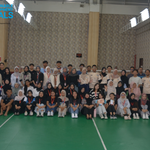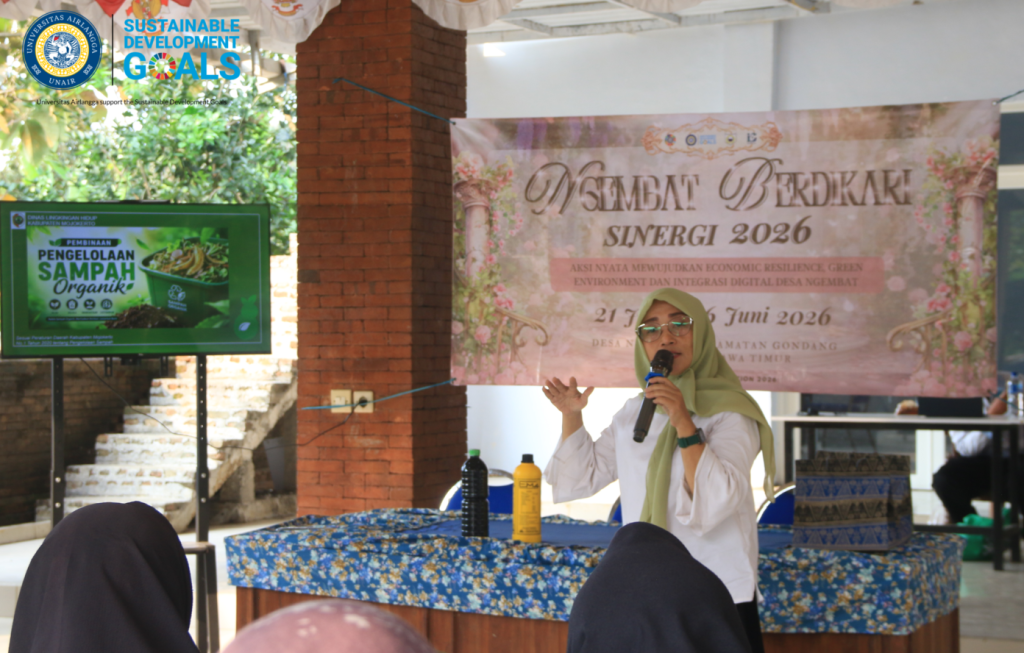
NERS NEWS — Mojokerto — The Faculty of Nursing, Universitas Airlangga organized a series of community service activities through the “Ngembat Ekologis” program, consisting of education on domestic waste management, waste sorting training, and hands-on practice in making organic compost on Wednesday, June 24, 2026. The environmental program, conducted in collaboration with local village officials, targeted 20 environmental and integrated health post cadres. The activity was carried out interactively as a concrete step toward building community independence while reducing the volume of organic waste accumulation in residential areas.
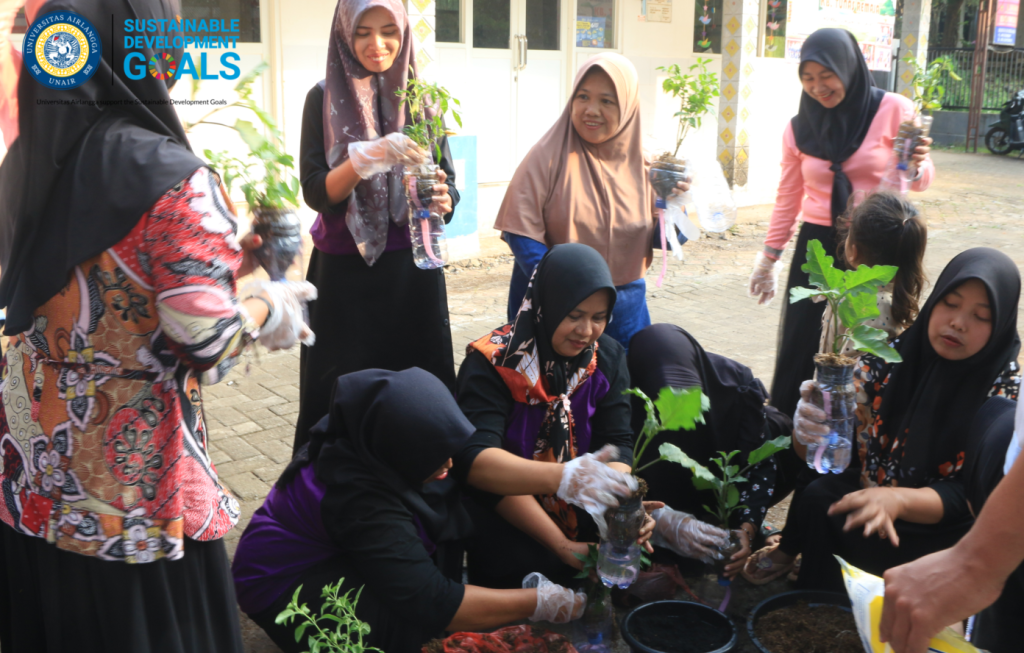
The series of activities began with a presentation on the importance of separating organic and inorganic waste starting at the household level, followed by education on an environmentally friendly decomposition formula. After receiving the materials, the 20 cadres were directed to the practical demonstration area to independently make compost. The training included techniques for mixing kitchen waste and dry leaves, regulating the moisture level of the composting medium, and applying biological activator liquid (EM4) using the Takakura basket method and a simple composter to monitor the decomposition process without producing unpleasant odors.
The parties involved in the success of this program included lecturers and students from the Faculty of Nursing, Universitas Airlangga, village environmental cadres, and the facilitator team, who served as the main instructors, speakers, and providers of supporting materials. The activity was held on Wednesday, June 24, 2026, at Ngembat Village Hall, coordinating the attendance of 20 core cadres to ensure that the entire training process and distribution of composting kits proceeded in an orderly manner.
The “Ngembat Ekologis” program aimed to improve community ecological literacy and strengthen the role of environmental cadres in independent waste management, as a form of support for achieving the Sustainable Development Goals (SDGs), particularly Goal 12 on Responsible Consumption and Production. This initiative was motivated by the increasing accumulation of domestic waste in the community due to the limited utilization of household waste. Therefore, the activity was expected to encourage community independence in transforming waste into highly useful products for fertilizing local vegetation.
“The synergy between educational institutions and village-level cadres is very important in bringing environmental conservation-based education closer to the community. We greatly appreciate the enthusiasm of the 20 cadres who attended to learn independent composting techniques today,” said Zahra Nadia, President of the Student Executive Board of the Faculty of Nursing, Universitas Airlangga.
The background of this program was based on the increasing accumulation of domestic waste in the community due to the limited utilization of household waste, as well as the importance of strengthening ecological literacy and the role of environmental cadres at the village level. The integration of waste management education and composting practices represented a concrete form of community service commitment to supporting the achievement of Sustainable Development Goals (SDGs) Goal 12, Responsible Consumption and Production, and Goal 3, Good Health and Well-Being, by promoting domestic waste reduction and creating clean residential sanitation. The “Ngembat Ekologis” program focused on independent community waste management through organic waste sorting training and the application of the Takakura basket method to independently process kitchen waste into compost. Through this program, the volume of accumulated waste in residential areas could be reduced and transformed into highly useful products, while also supporting SDG 15, Life on Land, through efforts to return natural nutrients to the soil. Thus, the program not only improved the cleanliness of the village environment but also supported the preservation of terrestrial ecosystems as a whole.
Through the implementation of the integrated “Ngembat Ekologis” program, the Faculty of Nursing, Universitas Airlangga together with the people of Ngembat Village reaffirmed their ongoing commitment to community-based waste management. Going forward, this activity is expected to foster collective awareness among residents of the importance of protecting the environment through the establishment of a small-scale circular economy, thereby making a meaningful contribution to reducing waste volumes in support of achieving national SDG targets.
Writer: Abhriel Madu Kanahayama