
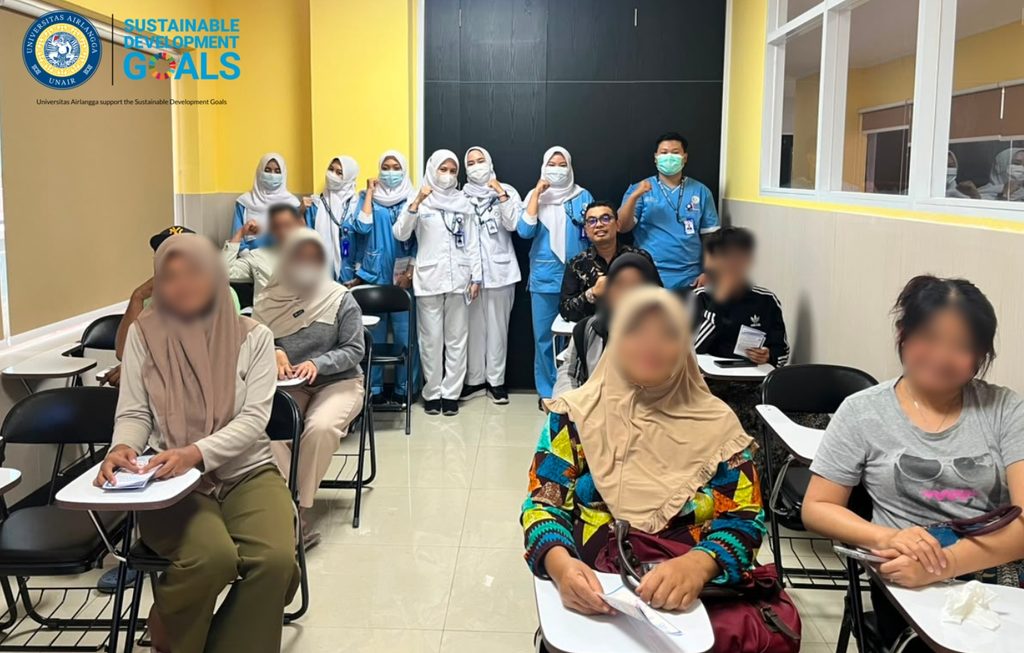
NERS NEWS — Students of the Nursing Profession Education Program, Group 3 Cohort 49, Faculty of Nursing, Universitas Airlangga, carried out a Hospital Health Education (PKRS) activity as part of the Basic Nursing Practice rotation on Thursday, August 20, 2026. The activity, which started at 10:00 a.m. Western Indonesian Time (WIB), carried the theme “Recognizing Pneumonia and Effective Coughing”, targeting patients’ families at IRNA 5A Graha Trimed, Universitas Airlangga Hospital. The activity was conducted by students of the Nursing Profession Education Program, Faculty of Nursing, Universitas Airlangga.
The selection of the topic of pneumonia and effective coughing was based on the importance of increasing patients’ and families’ understanding of pneumonia and how to help clear secretions or phlegm through proper coughing techniques. Pneumonia is an acute infection of the lower respiratory tract that affects lung tissue, particularly the alveoli, and can be caused by various types of microorganisms. Symptoms that may occur include coughing, fever, shortness of breath, and the production of secretions or phlegm.
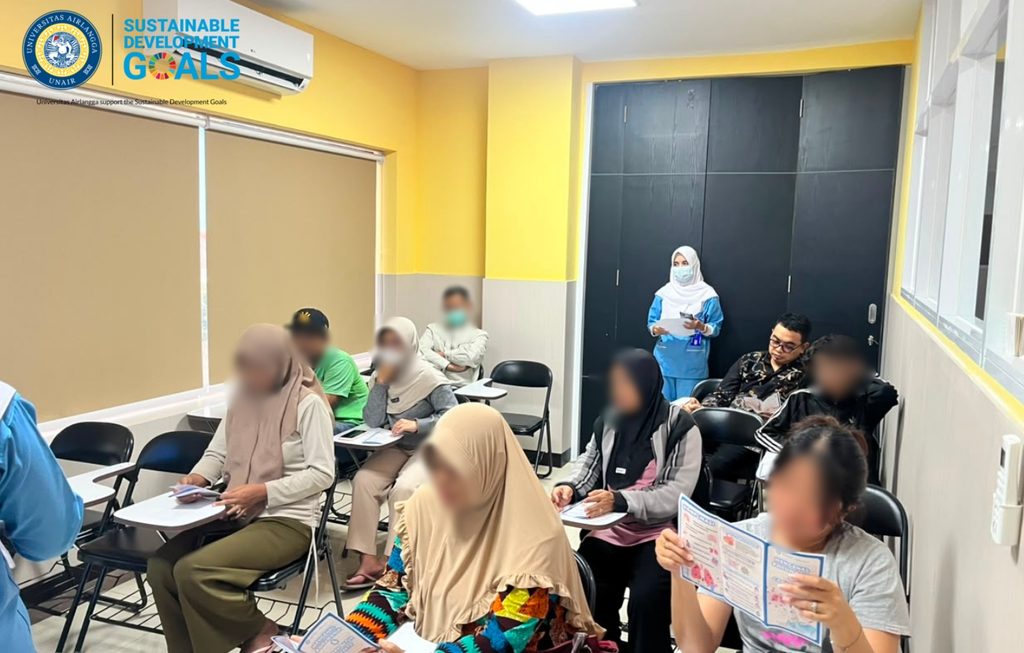
Before the activity, students prepared educational materials, coordinated with supervisors and the ward staff, and prepared educational media in the form of PowerPoint and leaflets. Based on the SAP, the methods used in the activity included lectures, discussions, and the use of visual media in the form of PowerPoint and leaflets.
The activity began with an opening, greetings, introductions, a time agreement, an explanation of the objectives of the education session, and an assessment of participants’ initial understanding of pneumonia and effective coughing. The presenter then delivered material on the definition of pneumonia, causes and risk factors of acute respiratory infections (ARI), effective coughing, proper and correct effective coughing techniques, and coughing etiquette. During the education session, participants were given an understanding of the signs and symptoms of pneumonia, including coughing with or without phlegm, shortness of breath, a feeling of heaviness in the chest, chest pain especially when breathing, as well as several signs on physical examination such as tachypnea, tachycardia, and abnormal breath sounds. In addition, participants were introduced to several causes of pneumonia, such as viruses and bacteria.
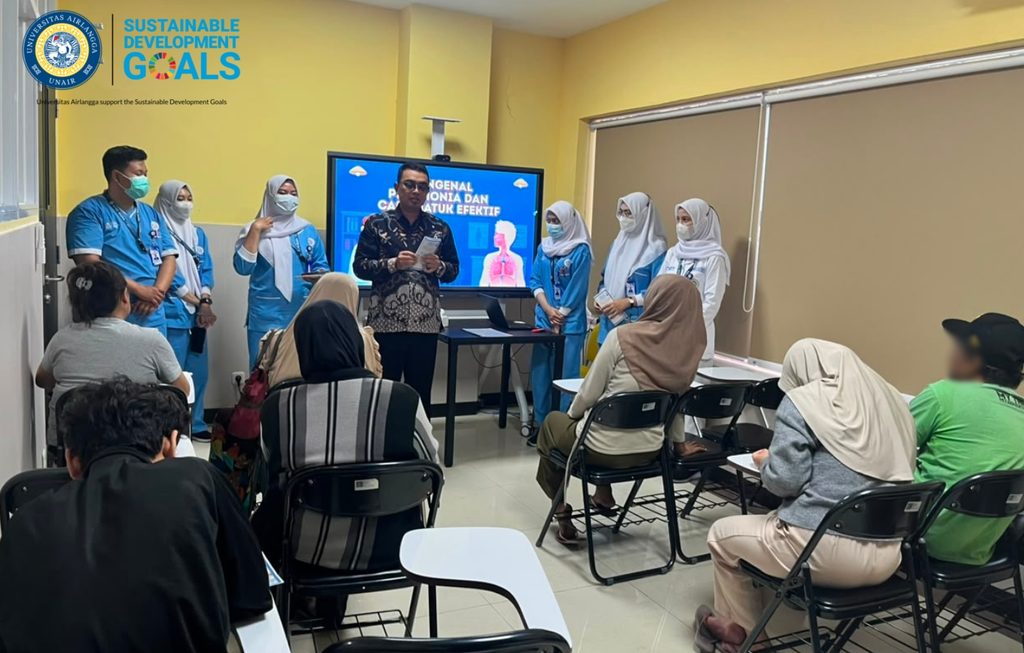
The material was then continued with education on effective coughing. Effective coughing is a coughing technique performed correctly to help remove secretions or phlegm from the respiratory tract as effectively as possible while using energy more efficiently. Participants were explained the purposes of effective coughing, namely helping to expel phlegm, reducing shortness of breath, conserving energy, and training the respiratory muscles.
Participants were also given an explanation of the steps for performing effective coughing, starting with drinking warm water, positioning themselves in a sitting position with the body slightly leaning forward, taking a deep breath through the nose and exhaling through the mouth, holding the breath for 1–2 seconds during the final inhalation, then coughing strongly and expelling the phlegm with a “huff” sound. The exercise can be repeated as needed, but coughing for too long should be avoided because it can cause fatigue and hypoxia. In addition to effective coughing techniques, participants were given education on coughing etiquette as one of the efforts to prevent the spread of disease through droplets when coughing or sneezing. Participants were instructed to cover their nose and mouth using a tissue, handkerchief, or the inner arm when coughing or sneezing, immediately dispose of used tissues, wash their hands, and wear a mask.
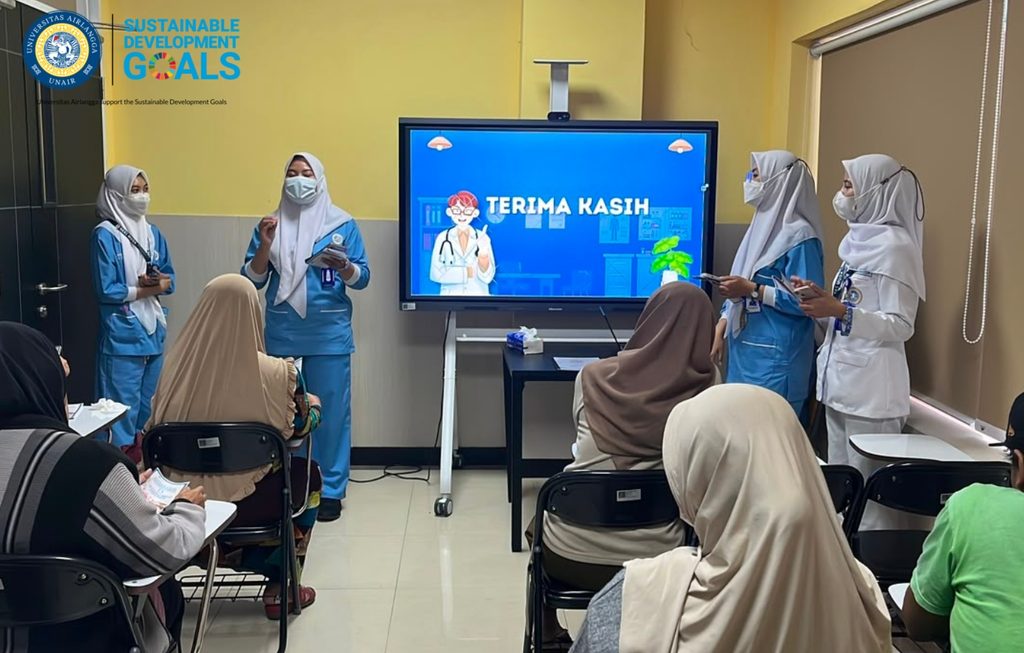
After the presentation of the material, the activity continued with a discussion and question-and-answer session. Participants were given the opportunity to ask questions, provide feedback, and clarify information that they did not yet understand. The activity was also accompanied by an evaluation of participants’ understanding of the material that had been presented. The success of the activity was assessed based on participants’ ability to answer the questions provided and their willingness to practice the effective coughing technique correctly.
Through this PKRS activity, the students hope that participants can improve their knowledge about pneumonia, recognize its signs and symptoms, and understand the importance of performing effective coughing and applying proper coughing etiquette. This knowledge is expected to be applied in daily life so that patients and families can help maintain airway clearance, reduce the risk of infection transmission, and support the patient’s care and recovery process.
Writer: Aura Nirmala Sari





