
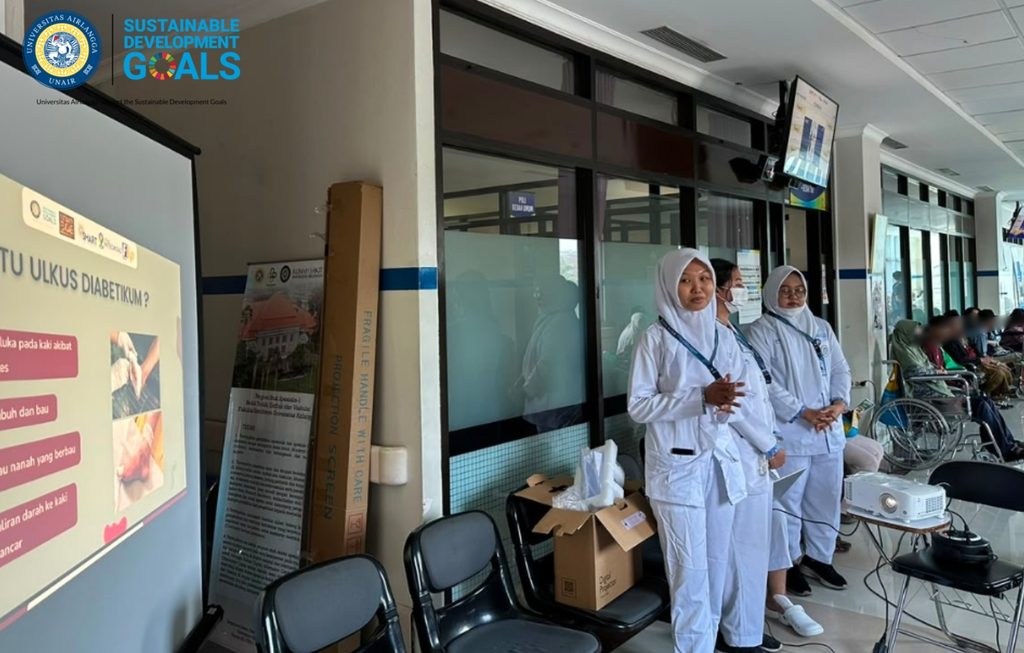
NERS NEWS — Surabaya, August 21, 2026 — Group 11 of the Basic Nursing Profession (PKD) Rotation, Nursing Profession students of the Faculty of Nursing, Universitas Airlangga, conducted a health education activity on foot ulcers for patients and their families at Surgical Polyclinic A, Universitas Airlangga Hospital, on Friday (August 21, 2026). The activity, which was attended by seventeen participants, was conducted as an effort to increase patients’ and families’ understanding of the importance of preventing diabetic ulcers and performing diabetic foot care.
The health education activity was conducted at the waiting area of Surgical Polyclinic A and was guided by Savira Ratnadewati Nirwasita as the Master of Ceremony (MC). The material entitled “Prevent Diabetic Ulcers Early” was delivered by Rizcha Rachmawati and Ema Hesti Fatma. The activity used an educational method so that participants could obtain information about the definition, risk factors, care, and prevention of diabetic ulcers.
During the health education, it was explained that a diabetic ulcer is one of the complications of diabetes, characterized by a condition in which the foot develops a wound accompanied by the discharge of foul-smelling pus. The main cause of diabetic ulcers is poor blood circulation, which prevents blood from flowing properly to the feet. Risk factors for diabetic ulcers include poor blood sugar control, calluses on the feet, foot protrusions or bunions, visual impairment, and smoking.

In addition to explaining the definition and risk factors of diabetic ulcers, the presenters also explained how to perform diabetic foot care, including cleaning the feet with water and soap every day and using moisturizer on the feet, except between the toes. Trim toenails straight across, following the normal shape of the toes. Wear properly sized and comfortable footwear with sufficient space for the toes, and check shoes before wearing them. Immediately treat wounds if there is a small wound by covering it with a clean cloth or gauze. Immediately see a doctor if there are signs of inflammation or if there is a wound.
The prevention method using “KAKI” consists of K: control blood sugar, A: arrange a regular examination schedule, K: wear appropriate footwear, and I: remember to clean the feet regularly. The material was delivered using an easy-to-understand approach so that patients and their families could gain an understanding of diabetic ulcer prevention.
This educational activity was a form of contribution by Nursing Profession students of the Faculty of Nursing, Universitas Airlangga, to improving the health literacy of patients’ families. Providing education on diabetic ulcer prevention also supported the Sustainable Development Goals (SDGs), particularly SDG 3: Good Health and Well-Being, through promotive and educational efforts to support patients’ health and well-being. In addition, this activity was also in line with SDG 4: Quality Education through the provision of health education to families so that they could have better knowledge in supporting patient care.
Through this activity, the students hoped that education on diabetic ulcer prevention and diabetic foot care would benefit patients and their families in understanding the importance of maintaining foot health, recognizing signs of wounds early, and performing proper foot care. This activity also served as a form of the role of nursing students in providing health education to the community while supporting the achievement of sustainable development goals in the fields of health and education.
Writer: Cici Yulia





