
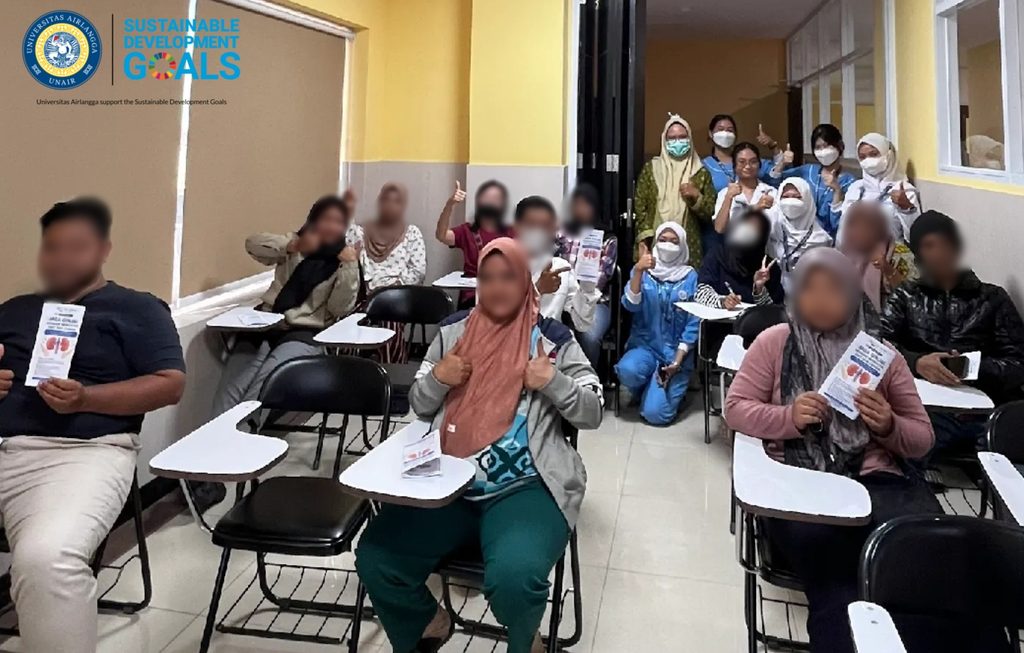
NERS NEWS — Surabaya, August 27, 2026 – Hospital Health Promotion (PKRS) is one of the activities conducted by Nursing Profession students of the Faculty of Nursing, Universitas Airlangga, to fulfill nursing competencies through providing health education to patients and families. On this occasion, Group 10 of the Medical-Surgical Nursing Rotation conducted a PKRS activity with the theme “CKD, Diet and Fluid Management for Patients with Chronic Kidney Disease (CKD),” which was aimed at patients’ families in IRNA 5A Graha Trimed, Universitas Airlangga. The activity was carried out on Thursday, August 27, 2026, starting at 10:00 a.m. Western Indonesia Time (WIB) until completion, with a duration of approximately one hour. The activity was accompanied by Hidayat Arifin, S.Kep., Ns., M.Kep., PhD. as the academic supervisor and Nina Yaroh U., S.Kep., Ns. as the clinical supervisor.
This activity aimed to increase patients’ families’ knowledge about Chronic Kidney Disease (CKD), particularly regarding the importance of diet and fluid management as part of patient care. The education was expected to help families understand the steps that can be taken to support the fulfillment of patients’ needs according to their condition and healthcare workers’ recommendations. The materials presented included the definition, causes, signs and symptoms, and complications of chronic kidney disease. Participants were also given education about diet management for patients with CKD, including the importance of selecting appropriate foods and limiting the intake of certain nutrients based on the patient’s condition. In addition to diet management, the materials also discussed fluid management in patients with CKD. Participants were given an understanding of the importance of controlling the amount of fluid intake, so that families can help patients maintain fluid balance in the body.
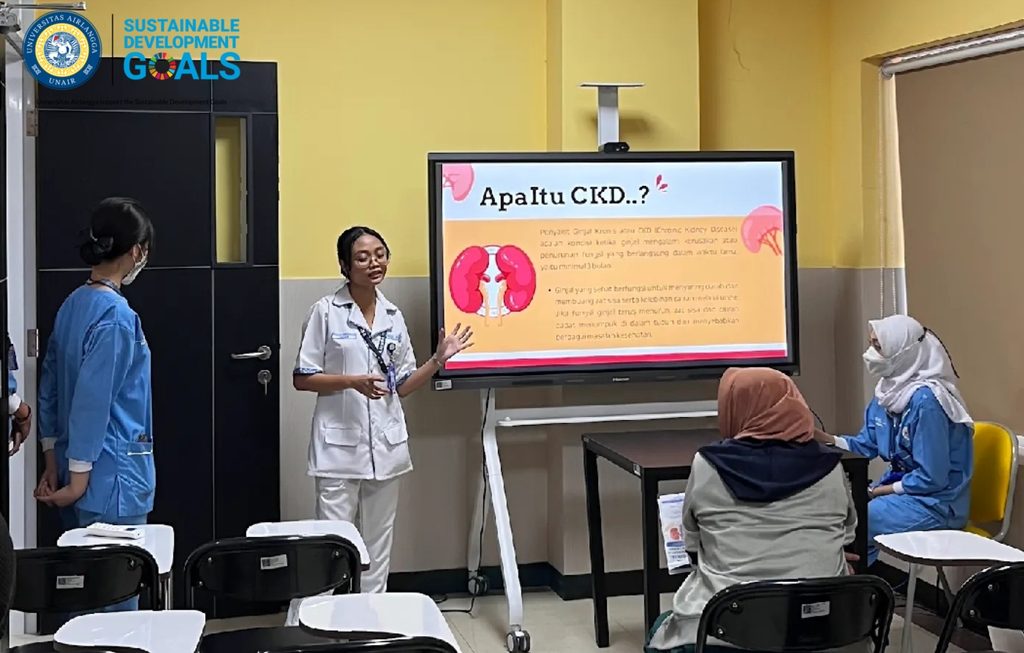
The materials were delivered using PowerPoint (PPT) and leaflets. The use of these media helped present the information systematically while also providing educational materials that families could read again after the activity. The activity was then continued with a discussion and question-and-answer session. Participants were given the opportunity to ask questions about the materials that had been presented, particularly regarding diet and fluid management in daily life. The discussion session was interactive and became an important part of ensuring that the information provided could be understood by the participants.
The PKRS activity proceeded smoothly and orderly. Through this education, patients’ families are expected to have a better understanding of chronic kidney disease and be able to support the implementation of diet and fluid management according to the patient’s condition and healthcare workers’ recommendations. Health education such as this is expected to become one of the efforts to increase family involvement during the patient care process.
Writer: Group 10 of the Medical-Surgical Nursing Rotation





