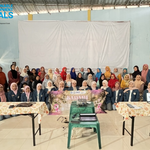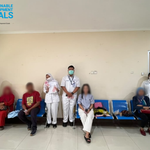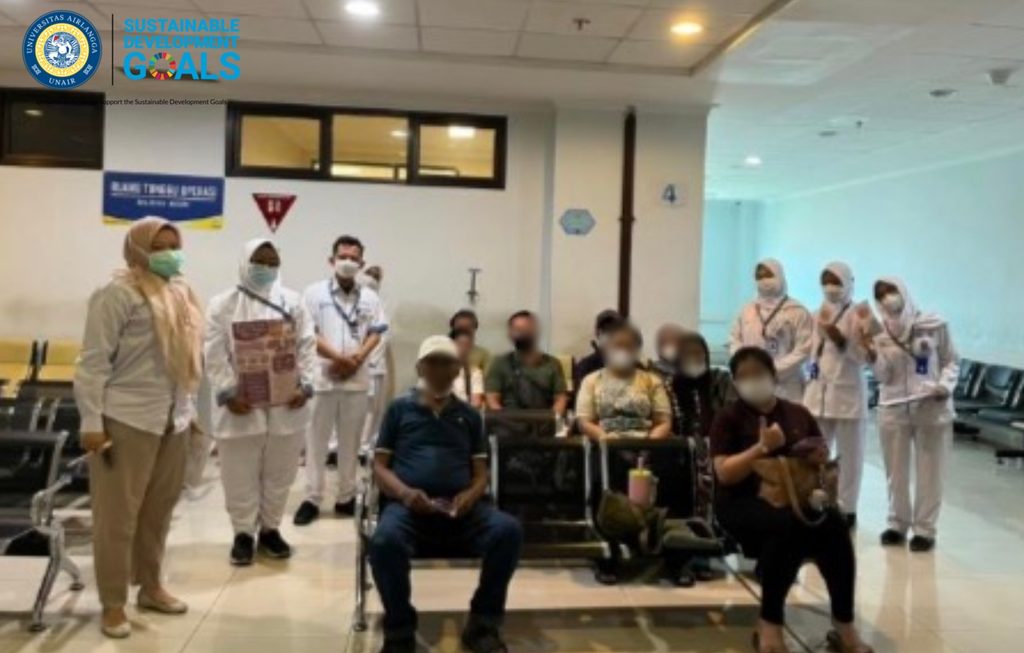
NERS NEWS — Nursing Profession students of the Nursing Profession Education Program, Faculty of Nursing, Universitas Airlangga, conducted health education on “Postoperative Wound Care” for families accompanying patients in the OK Waiting Room of Universitas Airlangga Hospital on Friday, September 4, 2026. This activity aimed to increase families’ understanding of proper wound care and infection prevention after patients underwent surgery.
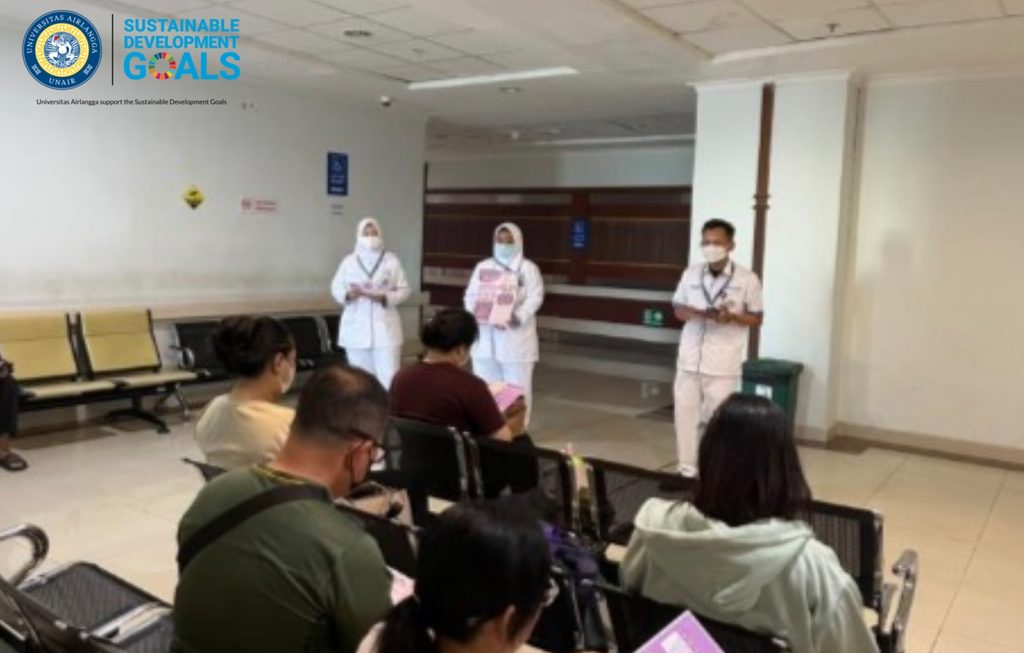
The health education activity began with an opening, introductions, an explanation of the activity objectives, and a time contract. The material presented included the definition and purpose of postoperative wound care, types and the wound healing process, clean and sterile wound care techniques, signs of infection, and wound care that can be performed at home. In addition, participants were educated on the importance of maintaining wound cleanliness, meeting nutritional needs, especially protein and vitamins, meeting adequate fluid needs, and managing activities and rest during the recovery period. The material was delivered through a lecture method, followed by a question-and-answer session and discussion.
The activity was conducted on Friday, September 4, 2026, at the OK Waiting Room of Universitas Airlangga Hospital. The health education was provided by Nursing Profession students of the Nursing Profession Education Program, Faculty of Nursing, Universitas Airlangga, and was intended for families accompanying patients. Participants followed the activity in an orderly manner and showed active participation through the question-and-answer and discussion sessions regarding postoperative wound care.
This health education aimed to increase families’ knowledge and skills in assisting with patient care after surgery, particularly in maintaining wound cleanliness, recognizing signs of infection, and supporting the healing process through adequate nutrition, fluid intake, activity, and rest. This activity is expected to increase family involvement in patient care and help prevent postoperative complications. The implementation of the activity is also in line with Sustainable Development Goal (SDG) 3, Good Health and Well-Being, through promotive and preventive efforts to improve health literacy and the quality of patient care.
“Postoperative wound care is not only the responsibility of healthcare professionals while patients are in the hospital. Families have an important role in continuing care at home, particularly in maintaining wound cleanliness and recognizing signs of infection. With good knowledge, families are expected to help patients undergo the recovery process more optimally,” said one of the Nursing Profession students involved in the health education activity.
The Postoperative Wound Care health education activity was a form of contribution to supporting SDG 3: Good Health and Well-Being. Health education for families is one of the promotive and preventive measures to improve the community’s ability to maintain health, prevent infection, and support patients’ recovery after undergoing surgery.
The health education activity proceeded smoothly, orderly, and interactively. Participants showed enthusiasm during the delivery of the material and actively participated in the question-and-answer session. The activity concluded with an evaluation of understanding, a summary, and closing. Through this activity, families are expected to properly apply their knowledge of postoperative wound care so that they can support the patient’s healing process and help prevent infection.
Writer: Muhammad Rizqi Hidayat