
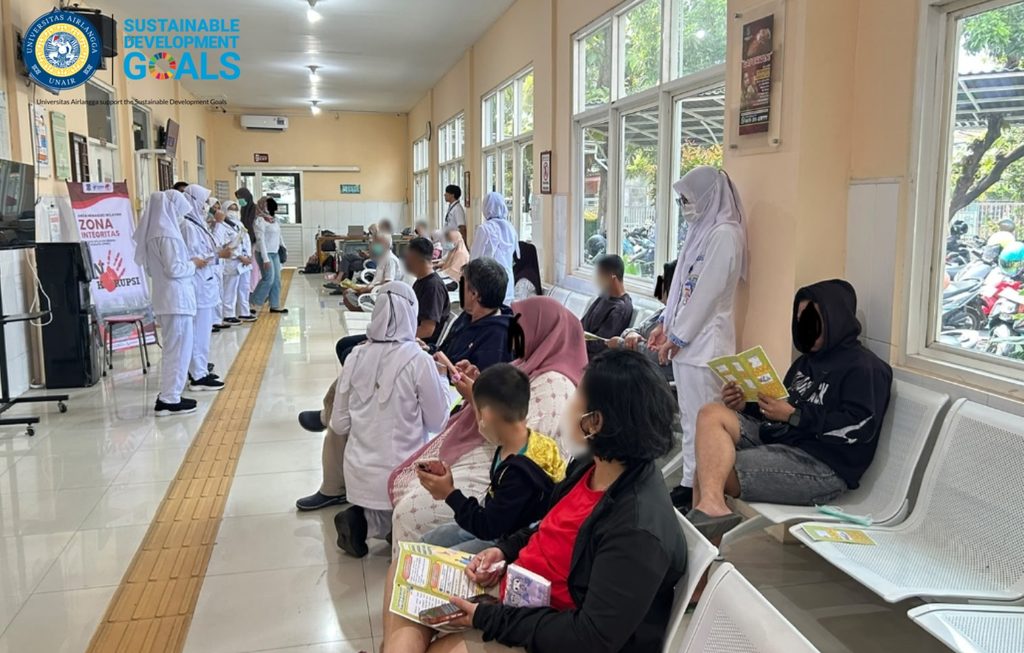
NERS NEWS — Surabaya – Nursing Profession Education students of Group 3, Second Wave, Community Nursing Rotation, successfully conducted a health promotion activity. The activity took place at Kalijudan Community Health Center, Surabaya. The theme was “SENADI (Diabetes Foot Exercises to Prevent Neuropathy)” as a concrete effort to prevent complications of nerve and blood vessel damage caused by high glucose levels.
The activity began with an opening by MC Fianita Fitri Sa’idah, who guided the event and conducted an interaction session with the audience. The core material was delivered by Aulia Fachrun Nisa’ and Dita Rusiana, focusing on the prevention of neuropathy complications. The material presented included:
- Definition of Diabetes Mellitus: A disease that occurs due to disorders of the pancreas, which is unable to produce insulin according to the body’s needs or the inability to break down insulin.
- Early Symptoms of Nerve Damage: Signs that need to be watched for include a burning sensation, tingling, a pins-and-needles sensation, and numbness in the feet, muscle weakness that can lead to difficulty walking, as well as poor balance and a tendency to fall.
- Purpose of Diabetes Foot Exercises: Education on the benefits of exercises to help improve blood circulation in the feet, prevent foot deformities, reduce pain, reduce nerve damage, and control blood sugar.
- Practical Steps for Diabetes Foot Exercises: Physical exercises beginning from a seated position, movements involving lifting and rotating the heels and toes, writing numbers in the air with the feet, and exercises involving tearing and shaping a ball from a sheet of newspaper using both feet.
This education was conducted using an informational leaflet to help participants understand the diabetes foot exercise procedures visually and practice them directly.
This activity was a concrete contribution to supporting the achievement of the Sustainable Development Goals (SDGs), particularly SDG 3 (Good Health and Well-Being) through the early prevention of diabetes complications.
Throughout the activity, the atmosphere was highly interactive and conducive. Participants appeared enthusiastic, especially during the simulation session of the foot exercise steps using newspaper as a medium. All members of Group 3 carried out their duties well, allowing the event to proceed in an orderly manner.
Through this health education activity, patients and families are expected to have the independence and awareness to routinely perform diabetes foot exercises at home, so that blood circulation in the feet remains smooth and the risk of diabetic neuropathy can be optimally reduced.
Writer: Aulia Fachrun Nisa





