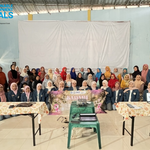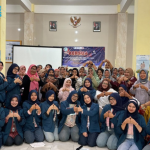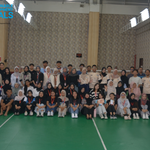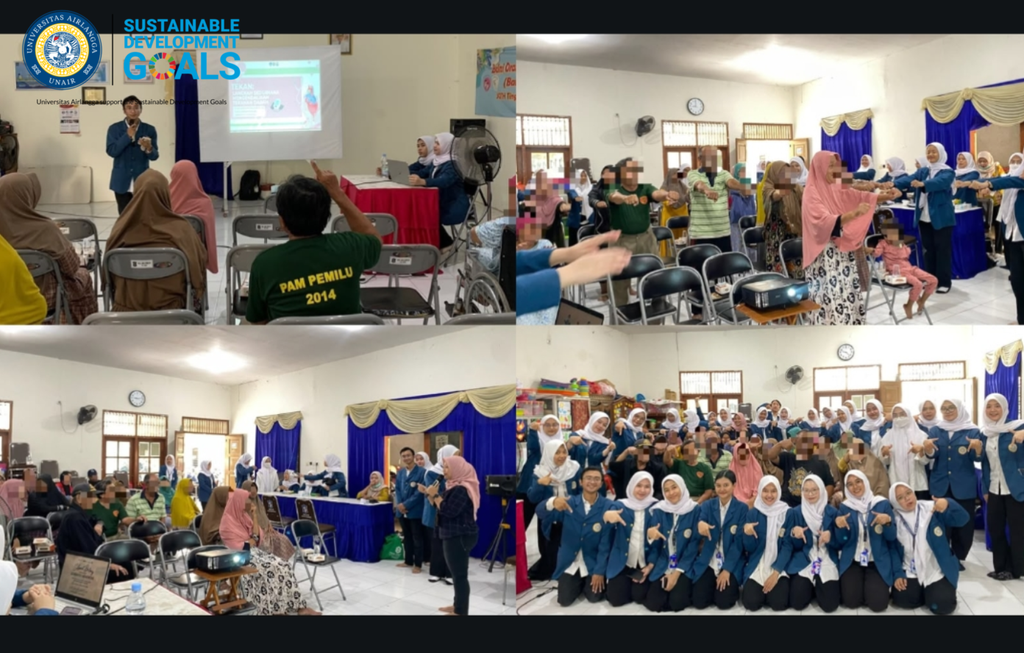
NERS NEWS — Efforts to improve the health of older adults are an important step in preventing and controlling non-communicable diseases that often occur with increasing age. One of the health problems that requires attention among older adults is hypertension. As a form of health education and promotion in the community, students of the Nursing Profession Education Practice, Faculty of Nursing, Universitas Airlangga, Groups 1, 2, and 3 of the Community and Family Nursing Rotation at Kalijudan Community Health Center, conducted a health education activity entitled “TEKAN: Simple Steps to Control Blood Pressure through Health Education and Hypertension Exercises.” The activity was held on Thursday, September 10, 2026, at the RW 07 Community Hall, Dukuh Sutorejo Urban Village, Mulyorejo District, Surabaya City, targeting older adults from RT 01–04, RW 07, Dukuh Sutorejo Urban Village.
This activity was conducted under the supervision of Clinical Supervisor Waji, S.Kep., Ns., as well as Academic Supervisors Dr. Makhfudli, S.Kep., Ns., M.Ked.Trop., Prof. Ferry Efendi, S.Kep., Ns., M.Sc., PhD., and Dr. Eka Misbahatul Mar’ah Has, S.Kep., Ns., M.Kep. The health education aimed to increase older adults’ knowledge and awareness regarding hypertension, including its definition, risk factors, signs and symptoms, complications, as well as prevention and control efforts. In addition to the health education, participants were also invited to perform hypertension exercises with light movements adapted to the abilities of older adults as a form of physical activity to help maintain fitness and support blood pressure control. The materials and activities were designed by considering the physical condition and abilities of older adults.
One of the health messages delivered to the older adults was the application of the “TEKAN” principle in hypertension control. T stands for Tekanan darah dipantau rutin (regular blood pressure monitoring), E stands for Encerkan asupan garam (reduce salt intake), K stands for Kendalikan berat badan dan aktivitas (control body weight and physical activity), A stands for Atur obat dan pola makan (manage medication and diet), and N stands for Nikmati hidup tanpa rokok dan kelola stres (enjoy life without smoking and manage stress). This principle serves as a simple reminder for older adults to implement healthy behaviors in their daily lives. Participants were also provided with education about various factors that can increase the risk of hypertension, such as age, family history, excessive salt consumption, an unhealthy diet, lack of physical activity, overweight or obesity, smoking habits, alcohol consumption, and stress. Older adults were also provided with an understanding that hypertension often does not cause specific symptoms, so regular blood pressure checks remain important to determine blood pressure conditions.
The series of activities continued with hypertension exercise practice consisting of warm-up, core movements, and cool-down. The movements were performed at light to moderate intensity without forcing participants beyond their abilities. The activity was expected to help improve fitness, maintain the ability to perform daily activities, and serve as part of non-pharmacological efforts to control hypertension. Hypertension exercises can also be performed in groups or independently according to the condition and abilities of older adults.
Through the “TEKAN: Health Education and Hypertension Exercises” activity, older adults are expected to increasingly understand the importance of maintaining blood pressure through a healthy diet, limiting salt consumption, engaging in regular physical activity, adhering to treatment, not smoking, and managing stress. This activity is also expected to encourage older adults to become more active in maintaining their health and preventing hypertension complications, so that their quality of life and independence can be maintained.
Writer: Adim Hidayat and Syah Reza Alfiana Nuro Aini