
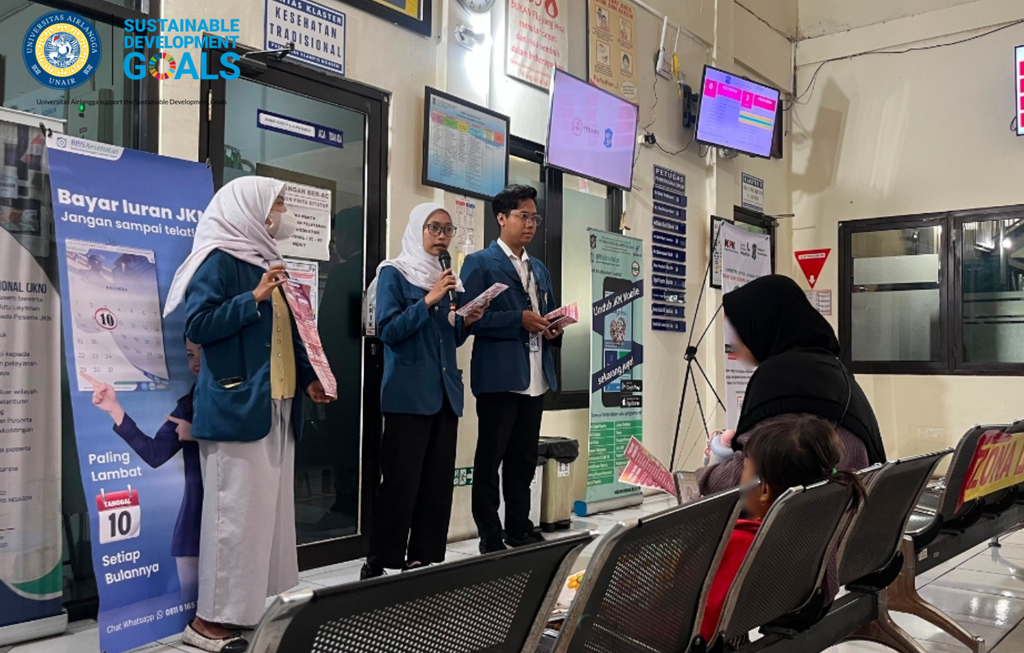
NERS NEWS — In an effort to increase public knowledge regarding the prevention of infectious diseases, Nursing Profession Education Program students of the Faculty of Nursing, Universitas Airlangga, conducted a health education activity entitled “Tuberculosis Prevention and Effective Cough Etiquette” on Thursday, September 16, 2026, at 7:45 a.m. WIB in the Waiting Room of Klampis Ngasem Community Health Center. The activity was attended by patients and patients’ families who were waiting for healthcare services at the community health center. This health education aimed to increase public understanding of tuberculosis (TB), its modes of transmission, risk factors, signs and symptoms, prevention efforts, the proper implementation of cough etiquette, as well as the important role of families in supporting the treatment process of TB patients.
The activity began with an opening by the students, followed by introductions, an explanation of the objectives of the activity, and an assessment of participants’ initial knowledge regarding tuberculosis. Participants appeared enthusiastic in following the activity and actively participated when asked questions about their experiences and information they had previously obtained regarding TB. The educational activity was conducted using leaflets and posters as media to help participants understand the materials presented.
The first material provided was about the definition of tuberculosis. Participants were given an understanding that tuberculosis is a communicable infectious disease caused by the bacterium Mycobacterium tuberculosis and most commonly affects the lungs. This disease remains one of the public health problems because its transmission can occur through the air and requires a relatively long period of treatment. Therefore, the community needs to have good knowledge in order to carry out prevention and support the successful treatment of TB patients.
Next, the students explained the modes of transmission and risk factors for tuberculosis. TB transmission can occur when a person with active pulmonary TB coughs, sneezes, talks, or spits, producing droplets containing the bacteria that can be inhaled by others. The risk of developing tuberculosis is higher among individuals with low immunity, those living in environments with poor ventilation, those living in overcrowded homes, those with a history of close contact with TB patients, smokers, and individuals experiencing malnutrition. Understanding these risk factors is expected to increase public awareness of tuberculosis.
The next material discussed the signs and symptoms of tuberculosis that need to be recognized early. The students explained that the main symptom of TB is a productive cough lasting for two weeks or more. In addition, patients may experience coughing up blood, shortness of breath, chest pain, prolonged fever, night sweats without strenuous activity, decreased appetite, unexplained weight loss, and easily feeling tired. Participants were encouraged to immediately seek examination at a healthcare facility if they experienced these symptoms in order to obtain diagnosis and treatment as early as possible.
One of the materials that became the focus of this activity was proper cough etiquette. The students demonstrated how to cover the mouth and nose using a tissue or the inner part of the arm when coughing and sneezing, dispose of used tissues in a closed trash bin, and wash hands using soap and running water or hand sanitizer. Participants were also reminded to wear a mask when experiencing a cough to reduce the risk of spreading germs to others. Proper implementation of cough etiquette is a simple yet effective step in preventing the transmission of airborne diseases.
The students also emphasized the importance of the family’s role in supporting family members with tuberculosis. Family support can be provided by reminding patients to take their medication regularly, accompanying them during check-ups at healthcare facilities, helping meet the patient’s nutritional needs, and providing emotional support throughout the treatment process. Good family involvement can improve treatment adherence, thereby increasing the likelihood of successful therapy and minimizing the risk of treatment interruption.
After the delivery of the materials, the activity continued with a discussion and question-and-answer session. Participants were given the opportunity to ask questions related to tuberculosis, ways to prevent transmission within the family environment, and the proper implementation of cough etiquette. Participants’ enthusiasm was evident from the large number of questions asked and their active participation throughout the activity. The students then conducted an evaluation to determine the participants’ level of understanding of the materials that had been provided.
This health education activity also supports the achievement of the Sustainable Development Goals (SDGs), particularly SDG 3: Good Health and Well-Being (Kehidupan Sehat dan Sejahtera). One of the SDG targets is to end epidemics of communicable diseases, including tuberculosis, through increased access to health information, disease prevention, and strengthened health promotion in the community. Through education on tuberculosis and effective cough etiquette, this activity is expected to increase public awareness of disease transmission prevention, support the successful treatment of TB patients, and contribute to the sustainable improvement of public health.
Writer: Rika Tri Agustin





