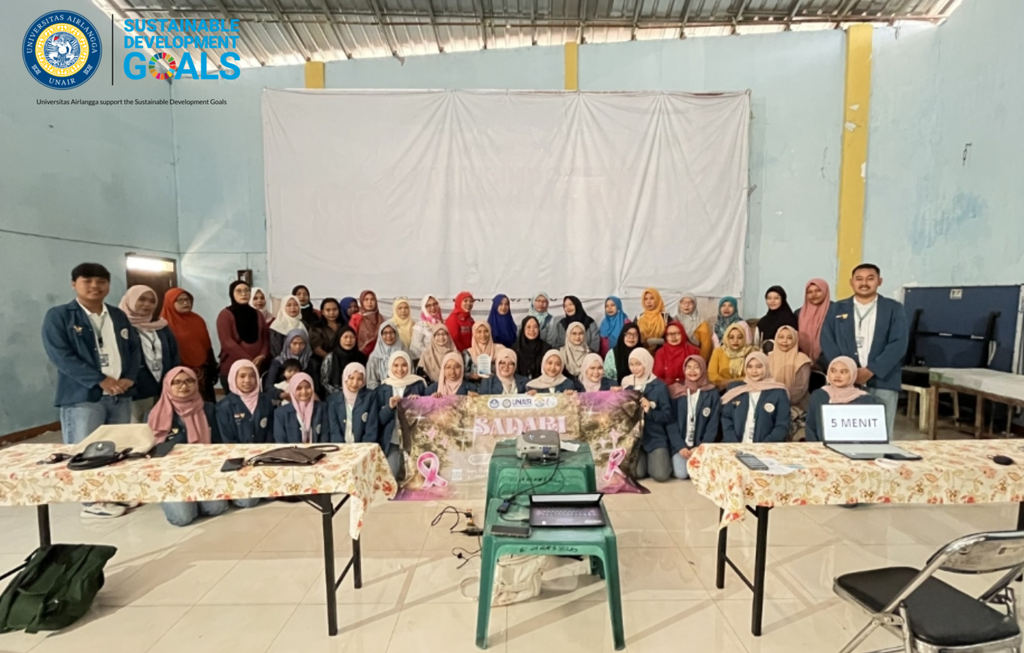
NERS NEWS — Surabaya — Nursing students from the Faculty of Nursing, Universitas Airlangga, conducted an Integrated Project-Based Learning (PjBL) activity titled “SADARI: Sayangi Diri, Kenali Kanker Payudara Sejak Dini” at the RW 5 Community Hall, Mojo, Surabaya, on Monday, October 12, 2026, starting at 8:00 a.m. Western Indonesian Time (WIB) and continuing until completion. This activity was intended for women of reproductive age (WUS) to increase their knowledge and awareness of breast cancer, prevention efforts, and early detection through breast self-examination (SADARI).
The activity was designed through interactive health education, completion of pre-tests and post-tests using QR codes, discussions, question-and-answer sessions, as well as demonstrations and practice of SADARI using a breast phantom. The material presented included the definition of breast cancer, risk factors, signs and symptoms, prevention efforts, and the importance of recognizing changes in the breasts. PowerPoint was used to help deliver the material, while leaflets were provided as information media that participants could read again after the activity. Through demonstrations and practice, participants were expected to better understand the steps of SADARI and recognize the importance of consulting healthcare professionals if they found suspicious changes.
This activity was carried out by fifth-semester students of the Faculty of Nursing, Universitas Airlangga, Class A3, Group 1, under the guidance of academic supervisors, namely Dr. Laily Hidayati, S.Kep., Ns., M.Kep., Dr. Aria Aulia Nastiti, S.Kep., Ns., M.Kep., Dr. Makhfudli, S.Kep., Ns., M.Ked.Trop., M.H.Kes., CMC, and Dr. Ilya Krisnana, S.Kep., Ns., M.Kep. The activity took place at the RW 5 Community Hall, Jalan Mojo V No. 22, RT 04/RW 05, Mojo Subdistrict, Gubeng District, Surabaya, East Java. The activity was part of integrated learning that connected Reproductive Health Nursing, Nursing Care for Chronically Ill and Emergency Pediatric Patients, End-of-Life and Palliative Nursing, and Community Aggregate Nursing.
This health education activity was a promotive and preventive effort to encourage women to pay greater attention to breast health. SADARI can help women recognize unusual changes in their breasts, but it does not replace clinical examinations or screening recommended by healthcare professionals. Therefore, participants were also given an understanding that suspicious changes need to be followed up through examination by healthcare professionals. This activity also served as an opportunity for students to apply nursing knowledge and health education directly in the community.
This PjBL activity supports the achievement of the Sustainable Development Goals (SDGs), particularly:
- SDG 3: Good Health and Well-Being, through breast health education, prevention, and increased awareness of early breast cancer detection.
- SDG 4: Quality Education, through the delivery of informative and interactive health education and the use of educational media that are easy to understand.
- SDG 5: Gender Equality, by supporting women’s access to health information, empowering women of reproductive age to maintain their health, and improving their ability to make health-related decisions.
Through the activity “SADARI: Sayangi Diri, Kenali Kanker Payudara Sejak Dini,” women of reproductive age were expected to gain better knowledge of breast cancer and become more concerned about breast health. Participants were also expected to understand the steps of SADARI, recognize unusual changes, and seek assistance from healthcare professionals when necessary. This education is expected to serve as a step toward expanding health information within families and the community.
Writer: Group 1_A3_2024, PjBL Semester 5, Faculty of Nursing, Universitas Airlangga
Editor: Nandyta Putri Rahmadhani (Airlangga Nursing Journalist)