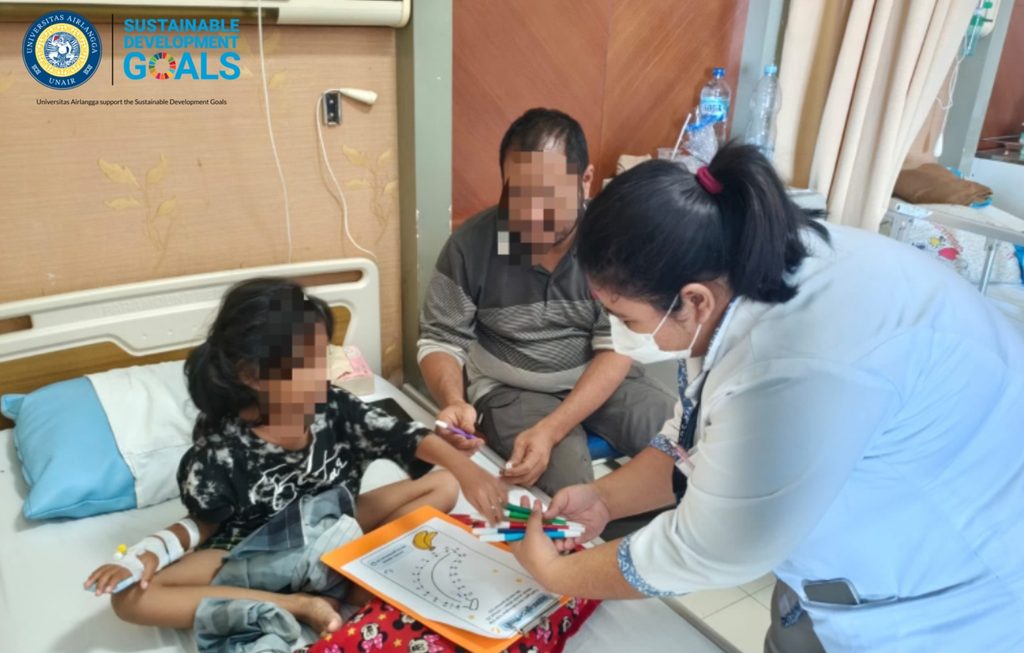
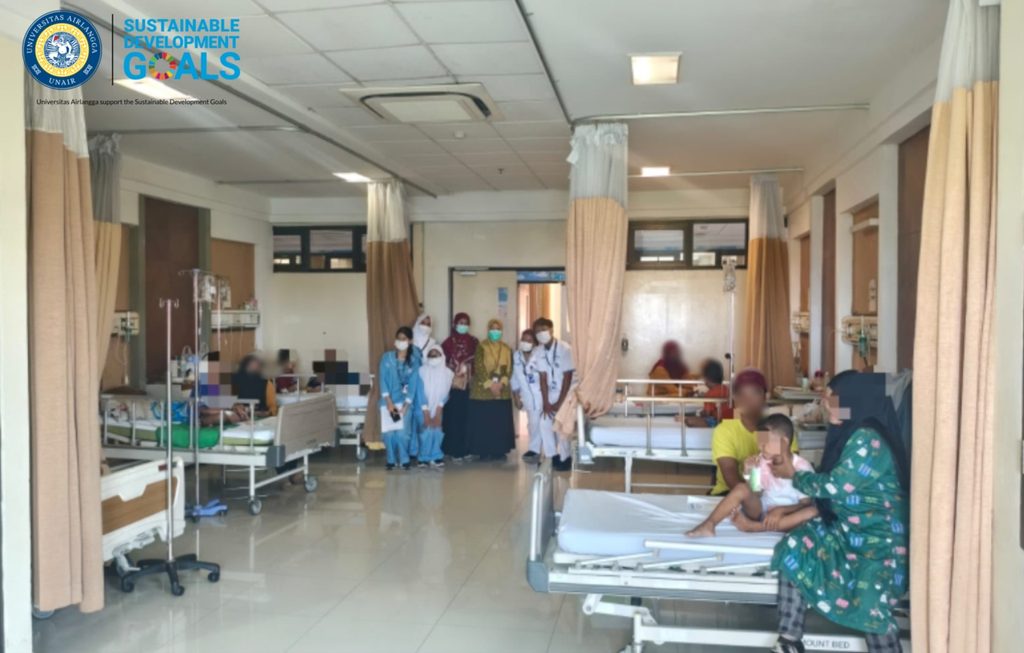
NERS NEWS — An educational play therapy activity was conducted by Group D4.2 of the Pediatric Nursing Rotation, Nursing Professional Program, 49th Batch, Faculty of Nursing, Universitas Airlangga, in the Pediatric Ward IRNA 4 of Airlangga University Hospital. The activity carried the theme “Happy Little Dots: Connecting the Fun Dots,” an educational game in which children connect dots according to numerical order to form a complete picture.
This play therapy aimed to provide children with an enjoyable play experience while undergoing treatment in the hospital. In addition to helping reduce boredom and fatigue caused by hospitalization, the Connect the Dots game also stimulates fine motor skills, hand-eye coordination, concentration, accuracy, and children’s cognitive abilities. Through this activity, children were encouraged to recognize numbers, follow patterns, and connect dots sequentially to create a picture.
This activity was intended for preschool- to school-aged pediatric patients receiving treatment in the Pediatric Ward IRNA 4 whose health conditions allowed them to participate in play activities. Before the activity began, children were given explanations about the game procedures and rules using simple language. They were then provided with illustrated worksheets containing numbered dots and writing tools to connect each dot in the correct order.
The activity was conducted interactively with the assistance of nursing students. Children were given the opportunity to choose their preferred pictures, connect the dots from the smallest number until a complete picture was formed, guess the resulting picture, and color it according to their individual creativity. Throughout the activity, students also provided encouragement, assistance, and appreciation to help children remain enthusiastic and comfortable while participating in the game.
Through this play therapy activity, children are expected to have an enjoyable experience during hospitalization while continuing to receive developmental stimulation appropriate to their age and abilities. This activity also represents an application of atraumatic care in pediatric nursing services through an educational and enjoyable play-based approach that prioritizes children’s comfort during their hospital stay.
Writer: Group D4.2, Pediatric Nursing Rotation, Nursing Professional Program, Faculty of Nursing