
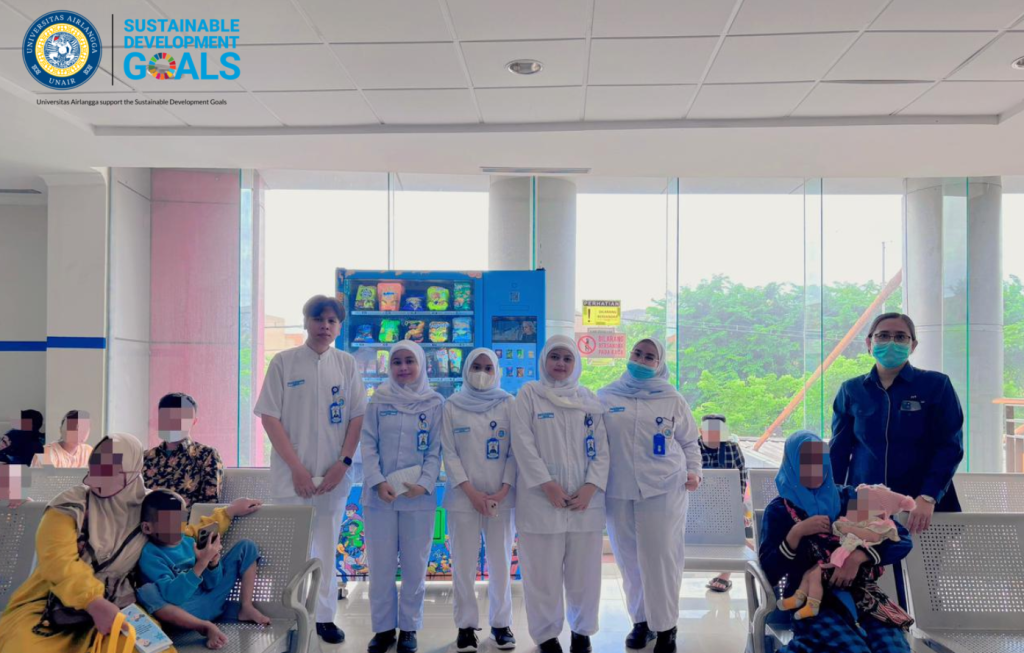
NERS NEWS — The atmosphere at the Pediatric Clinic on Thursday, February 26, 2026, became more interactive with the presence of a health education session focusing on speech delay in children. This activity was part of the Pediatric Nursing clinical rotation, aimed at increasing parents’ understanding of early detection and language development stimulation.
The session introduced the CERDAS method, an educational approach emphasizing the importance of Cutting down excessive gadget use, Educating parents, Responsive stimulation from an early age, Detecting delays early, Active interactive reading, and Supporting optimal health and nutrition. This method was designed to help parents recognize the signs of speech delay and apply simple strategies at home.
During the main session, students delivered material on the definition of speech delay, contributing factors, warning signs according to developmental stages, and the importance of active verbal interaction between parents and children. They also explained the impact of excessive gadget use without interaction and highlighted the benefits of interactive reading as an effective form of language stimulation.
The activity was conducted in stages, beginning with an orientation phase to create a comfortable atmosphere, followed by the delivery of material using leaflets and demonstrations on how to communicate actively with children, and concluding with an evaluation through a question-and-answer session. The students acted as facilitators, using simple and communicative language to ensure the material was easily understood by parents.
Throughout the session, parents showed great enthusiasm and actively asked questions about their children’s development. One participant shared, “I just realized that talking to my child is very important, not just giving instructions or commands.” This statement reflected increased parental awareness of the importance of two-way communication in supporting child development.
Through this activity, it is hoped that parents will become more attentive to their children’s language development stages and consistently apply simple stimulation techniques at home. The program also serves as part of the students’ learning process in delivering promotive and preventive education within pediatric healthcare services.
Writer: Refi Marshanda
Editor: Nandyta Putri Rahmadhani (Airlangga Nursing Journalist)





