
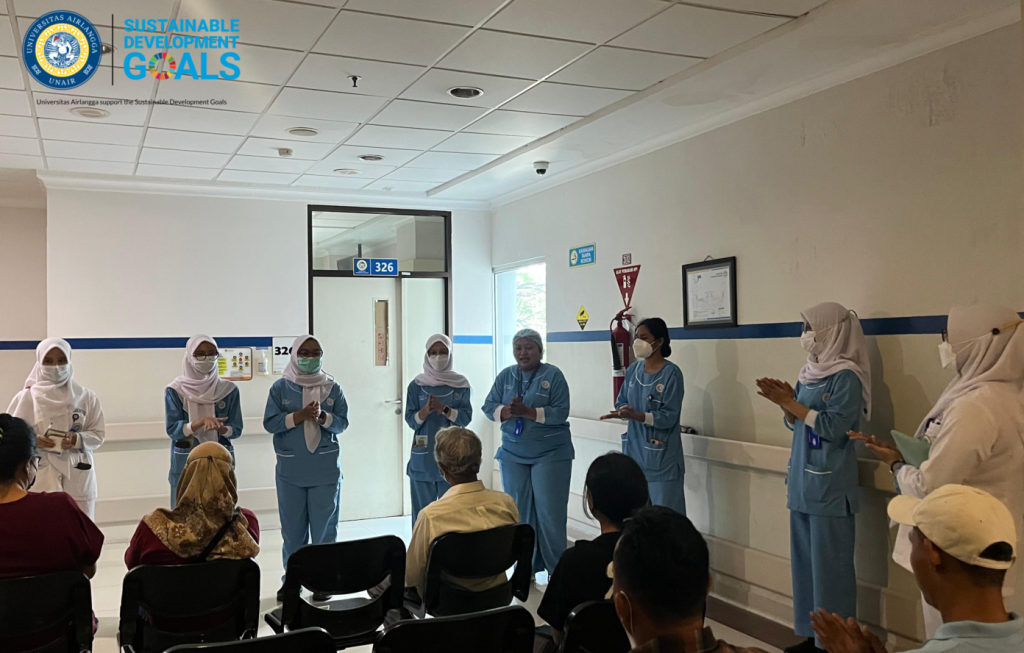
NERS NEWS — On Thursday, March 12, 2026, from 09:42 to 10:06 AM WIB, in the Irna 3 ward of Universitas Airlangga Hospital, Group 4 students from the Medical-Surgical Nursing (KMB) rotation organized a PKRS (Hospital Health Education) activity. This activity was aimed at patients’ family members as an educational effort regarding post-operative wound care at home.
The event was hosted by MC Aulia, while the materials were delivered by Awig, Awwaliyah, and Aya. The materials presented included the definition of wounds, the purpose of post-operative wound care, signs and symptoms of infection in surgical wounds, and the equipment needed in the wound care process. Participants also received explanations about important aspects to consider when caring for wounds, the six correct steps of handwashing, and the appropriate time for patients to return to a healthcare facility. Through this health education session, the students aimed to improve the understanding of patients’ families so they can provide proper care for their family members after undergoing surgery at home.
The session was attended by six family members who were accompanying their relatives receiving treatment in the Irna 3 ward of Universitas Airlangga Hospital. The activity was also supervised by the clinical instructor, Wahyuni Tri Lestari, S.Kep., Ns., M.Kep. In her remarks, she explained that families play an important role in supporting the patient’s recovery process after surgery. Families are expected to keep the wound area clean and dry and avoid exposure to dirt that may trigger infection. In addition, nutritious food intake, especially those high in protein, should be considered to accelerate healing. Patients are also advised to take antibiotics according to the doctor’s prescription, conduct regular wound check-ups at healthcare facilities, and maintain proper hand hygiene during wound care to minimize the risk of infection.
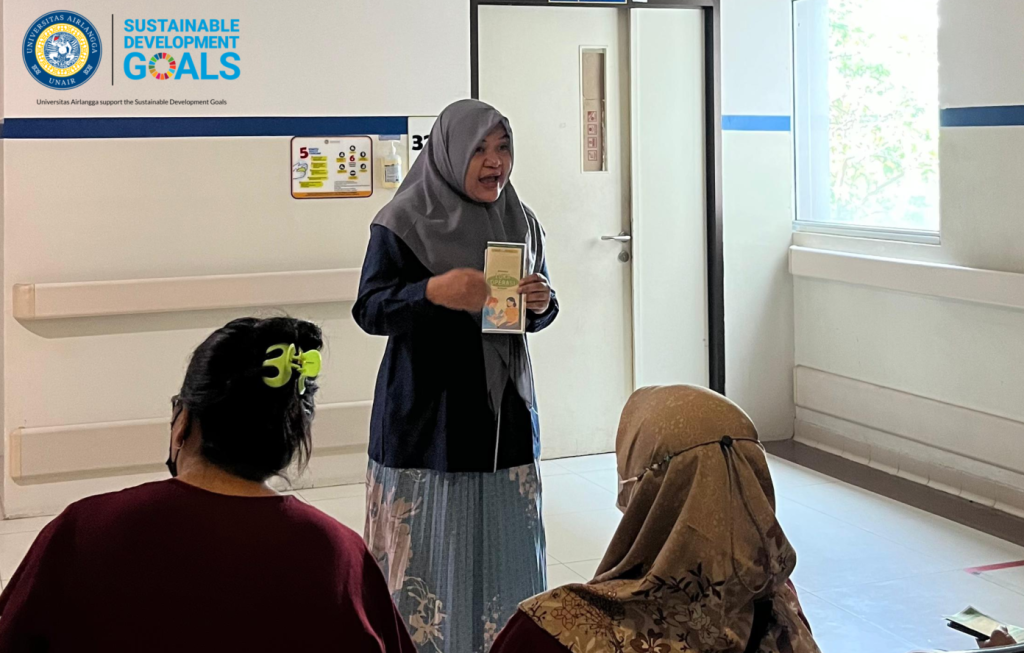
During the implementation of the activity, a feedback session was also conducted through a question-and-answer discussion with the participants. In this session, one patient’s family member asked a question regarding how to care for surgical wounds at home. This discussion helped clarify the material that had been delivered and increased participants’ understanding of the correct steps for wound care.
This health education activity also supports Sustainable Development Goal 3: Good Health and Well-Being, which focuses on promoting healthy lives and well-being for all. Through education about post-operative wound care at home, the students helped increase patients’ families’ knowledge on how to maintain wound cleanliness, recognize signs of infection, and understand the importance of follow-up visits to healthcare facilities. This education is expected to reduce the risk of complications, accelerate the patient’s recovery process, and improve the quality of care after the patient returns home, thereby contributing to the sustainable improvement of public health.
Writer: Apriyanti Rambu Ngana
Editor: Nandyta Putri Rahmadhani (Airlangga Nursing Journalist)





