
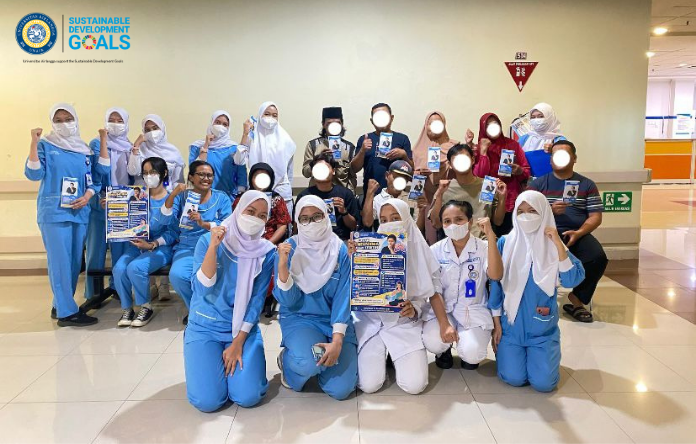
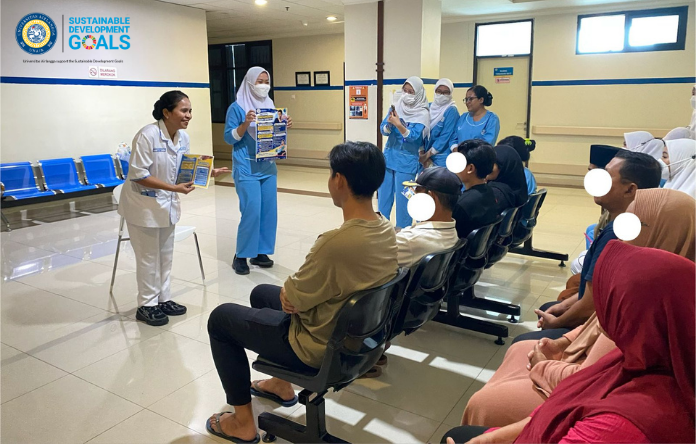
NERS NEWS – Surabaya, April 19, 2026. Professional Nursing students from Group 14 of the Medical-Surgical Nursing (KMB) rotation, Faculty of Nursing, Universitas Airlangga, conducted a Hospital Health Education (PKRS) program titled “Recognizing Pneumonia and Effective Coughing Techniques” on Sunday, April 19, 2026. The event was held at Universitas Airlangga Hospital (RSUA) and attended by family members accompanying patients in the IRNA 5 PEDE ward.
This PKRS initiative is part of the Professional Nursing competency requirements and serves as an effort to enhance family understanding of pneumonia, which is the most frequent condition encountered in this ward. The education covered the definition of pneumonia, its signs and symptoms, as well as prevention and management strategies. Additionally, the students taught the “Effective Cough” technique—a crucial respiratory method for patients with pneumonia or other respiratory infections, as it assists in clearing phlegm from the lungs. This technique has been proven effective in clearing airways, reducing shortness of breath, improving oxygen saturation, and bringing the respiratory rate back to a normal range.
The session included a live demonstration of the effective coughing technique. Participants were shown how to perform the technique by sitting upright—either in a chair for healthy individuals or on a bed for patients. The family members were taught to take deep breaths and exhale slowly through the mouth twice. On the third deep breath, they were instructed to hold it for 2–3 seconds before forcefully coughing. For infection control, participants were advised to cover their mouths with a tissue when coughing, place the used tissue in a plastic bag, and immediately dispose of it in a trash bin to prevent transmission.
The activity also featured an interactive discussion and evaluation session to ensure participants fully understood the material. Several family members shared their personal experiences on staying fit and avoiding respiratory diseases. One family member even volunteered to demonstrate the effective coughing technique to the other participants, who then followed along. Overall, the program proceeded smoothly and successfully improved the families’ knowledge regarding pneumonia and respiratory care.
Author: PKRS Group 14, Professional Nursing Program
Editor: Farah Dina Azizatul Aulia (Airlangga Nursing Journalist)





