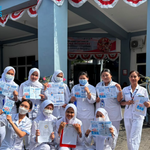
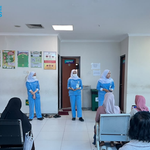
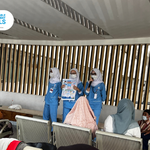
NERS NEWS – Nursing Professional Program students from the Faculty of Nursing, Universitas Airlangga, conducted a health education activity entitled “Lactation Massage: A Non-Pharmacological Intervention to Enhance Breast Milk Production and Breastfeeding Comfort Based on Current Evidence” in the Neonatal Ward of Dr. Soetomo Regional General Hospital, Surabaya, on Friday, May 29, 2026, from 10:00 to 10:30 a.m. This activity was intended for breastfeeding mothers whose infants were in the lactation room, as an effort to increase public knowledge regarding the importance of stimulating breast milk production from an early stage.
The educational session was conducted through lectures and discussions supported by leaflets and flipchart materials (desk calendars) as educational media. The topics presented included the definition of lactation massage, signs and symptoms indicating the need for lactation massage, the physical and psychological benefits of lactation massage, preparations before performing the massage, safe massage procedures and techniques, as well as massage points that can independently stimulate the oxytocin hormone. This education is important considering that breast milk is the best source of nutrition for infants; however, some breastfeeding mothers frequently experience problems such as insufficient milk production, breast engorgement, and discomfort during breastfeeding, which may affect the success of exclusive breastfeeding.
During the activity, participants demonstrated great enthusiasm by actively following the educational session and participating in the discussion. Several mothers also shared their experiences regarding low or insufficient breast milk production and expressed interest in learning how to perform the massage independently at home. This indicated a high demand for information related to maternal and infant health, particularly regarding lactation massage techniques.
This activity was conducted by Nursing Professional Program students from Group 6_A2 under the supervision of academic and clinical instructors. The entire series of activities was carried out according to the planned schedule, beginning with the opening session, followed by the presentation of materials, an evaluation session, and concluding with the closing session. The education program lasted for 30 minutes and followed a systematic flow, starting from the introduction of the topic to the distribution of leaflets as supplementary educational materials. Documentation of the activity was also completed as part of the activity report.
This educational program was motivated by the importance of supporting the success of exclusive breastfeeding, in which lactation massage serves as an evidence-based intervention to stimulate prolactin and oxytocin hormones, thereby improving breast milk production and flow. In addition, this non-pharmacological intervention effectively promotes relaxation, reduces stress hormone levels, and lowers the risk of breast engorgement and mastitis among breastfeeding mothers. Through this health education activity, mothers are expected to understand the indications for massage, prepare hygienic equipment, and safely perform massage techniques on the back, neck, shoulders, and breasts independently at home.
This educational activity also supports the achievement of the Sustainable Development Goals (SDGs), particularly SDG 3 (Good Health and Well-Being) concerning healthy lives and well-being for mothers and infants, SDG 4 (Quality Education) through health education, and SDG 17 (Partnerships for the Goals) through collaboration between educational institutions and hospitals in improving community health status.
Writer: Jannahtul Choiriah and Ni Putu Eka Maharani