
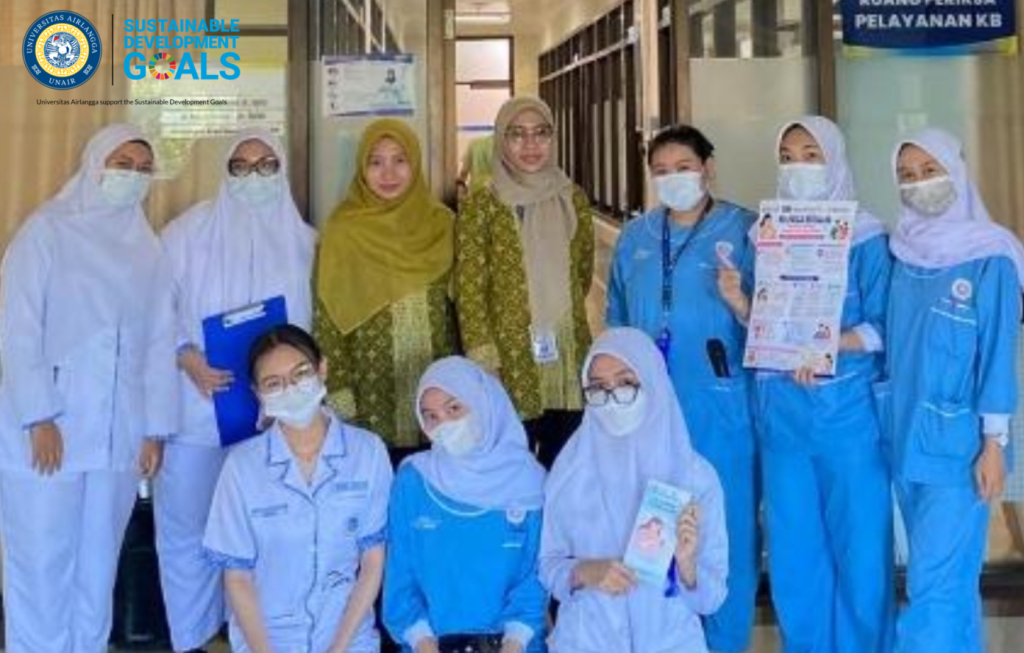
NERS NEWS — Nursing Profession students of Group B27 conducted a Hospital Health Promotion (PKRS) activity on Postpartum Family Planning (FP) at the Obstetrics and Gynecology (OBGYN) Clinic of Universitas Airlangga Hospital on Friday, June 5, 2026, at 10:30 AM. The activity was attended by pregnant women, postpartum mothers, and family members waiting for healthcare services at the OBGYN Clinic. This educational activity was accompanied by clinic healthcare staff as part of promotive and preventive efforts to improve public understanding of the importance of contraception after childbirth.
The PKRS activity was conducted interactively through material presentations, small group discussions, and question-and-answer sessions with participants. Nursing Profession students provided education regarding the definition of postpartum family planning, the benefits of contraception after childbirth, the appropriate time to begin family planning, and various contraceptive methods available for postpartum mothers. The materials covered the Lactational Amenorrhea Method (LAM), progestin-only pills, injectable contraception, implants, postpartum intrauterine devices (IUD), and permanent contraceptive methods that can be chosen according to each family’s condition and needs.
Throughout the activity, participants showed great enthusiasm. Many raised questions regarding the safety of contraceptive use during breastfeeding, possible side effects after contraceptive insertion, and how to choose the most suitable family planning method based on the mother’s health condition. Through this discussion session, participants had the opportunity to directly consult about concerns and misconceptions that are still commonly found in the community regarding postpartum contraception.
This PKRS activity aimed to improve mothers’ and families’ knowledge, understanding, and awareness of the importance of pregnancy planning after childbirth. Proper birth spacing can help reduce the risk of complications for both mother and baby, such as maternal anemia, premature birth, low birth weight, and increased maternal and infant mortality risks. In addition, postpartum family planning plays an important role in supporting maternal recovery after childbirth, enabling mothers to provide optimal care and attention to their babies.
Educational activities on postpartum family planning play a significant role in supporting reproductive health programs designed by governments and global health organizations. According to the World Health Organization (WHO), pregnancy planning and appropriate contraceptive use after childbirth are important strategies for improving maternal and child health and reducing maternal and infant mortality rates. Therefore, increasing access to information and education regarding postpartum contraception is a crucial step toward building healthy and high-quality families. This activity also aligns with the Sustainable Development Goals (SDGs), particularly SDG 3: Good Health and Well-Being.
Through this PKRS activity, it is hoped that mothers and families will gain a better understanding of the available contraceptive methods and be able to choose the most suitable method based on their needs and health conditions. With improved knowledge of postpartum family planning, it is expected that unplanned pregnancies can be reduced, maternal health can be maintained, and children’s growth and development can be optimized. This activity also reflects the contribution of Nursing Profession students in providing healthcare services that focus not only on curative aspects but also on promotive and preventive care. The health education provided is expected to offer long-term benefits for patients and families in improving reproductive health and creating healthy, prosperous, and well-planned families.
Writer: Rista Febrianti





