
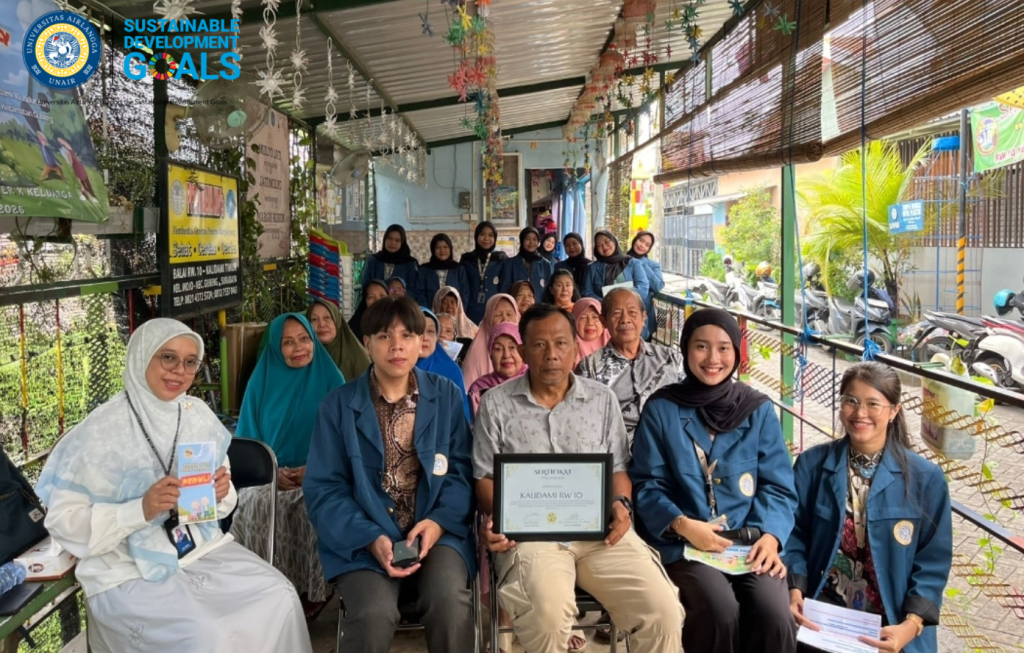
NERS NEWS — Nursing students from Class A4 Group 3, Cohort 2023, Faculty of Nursing, Universitas Airlangga successfully carried out a Project-Based Learning (PjBL) activity on Friday, June 12, 2026. The activity took place at Balai Kalidami RW 10, Mojo Village, Gubeng District, Surabaya, under the theme “SMILE FOR THE ELDERLY (Comfortable Joints, Prepared Families, Happy Aging)”. This activity aimed to improve elderly participants’ knowledge about arthritis, including its signs and symptoms, the impact of arthritis on older adults, complementary therapy approaches, and the importance of family support in managing elderly care.
The activity began with preparation and briefing sessions for all committee members, followed by final preparations to ensure the event ran smoothly. Participants then arrived during the registration session, which proceeded in an orderly manner.
The event officially opened with remarks from the master of ceremonies, followed by the singing of the Indonesian national anthem, Indonesia Raya. Opening remarks were then delivered by the Head of RW 10 Mojo Village, Mr. Teguh Hariyanto, faculty advisor Dr. Elida Ulfiana, S.Kep., Ns., M.Kep., and Chairperson Danar Mariono. These speeches reflected strong support for promotive and preventive efforts in elderly healthcare within the community.
Before the educational session began, participants completed a pre-test to assess their initial knowledge of arthritis. The speaker then delivered an interactive health education session covering the definition of arthritis, its signs and symptoms, its impact on the quality of life of older adults, complementary therapies that can be applied, and the importance of family involvement in supporting elderly care. Participants showed great enthusiasm and actively engaged in discussions by asking questions throughout the session.
After the educational session, participants completed a post-test to evaluate their improvement in understanding after receiving the material. The activity then continued with practical sessions on Range of Motion (ROM) exercises and warm compress therapy, both of which are non-pharmacological approaches that can help reduce arthritis-related discomfort. Participants joined the practical session enthusiastically under the guidance of facilitators.
The next part of the program included an awarding session for participants who actively engaged throughout the event. This was followed by a group documentation session involving participants, committee members, and faculty advisors as a memorable closing moment. The event officially concluded afterward.
The SMILE FOR THE ELDERLY 2026 program also aligns with the Sustainable Development Goals (SDGs), particularly Goal 3: Good Health and Well-Being, which focuses on ensuring healthy lives and promoting well-being for all ages. Through arthritis education, information on complementary therapies, practical ROM exercises and warm compresses, as well as strengthening family roles in supporting elderly health, this activity is expected to improve the quality of life of older adults and promote healthy aging. Additionally, the active involvement of nursing students, faculty members, and the community reflects the implementation of SDG Goal 17: Partnerships for the Goals, through collaboration between educational institutions and the community to improve public health.
Danar Mariono, as Chairperson of the event, stated that through SMILE FOR THE ELDERLY 2026, elderly participants and their families are expected to better understand arthritis and recognize various strategies to maintain joint health and improve quality of life in later life. He also emphasized that the activity provided valuable experience for nursing students in implementing their role as health educators directly within the community. The strong enthusiasm shown by participants throughout the event is expected to encourage the application of the knowledge gained in daily life, helping to create healthier, more independent, and happier elderly individuals.
Writer: Hanin Shafa Ainayya





