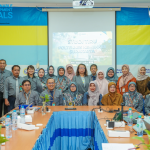
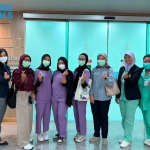
NERS NEWS — Surabaya — Students of the Faculty of Nursing, Universitas Airlangga (Unair), Class A3, Class of 2023, organized a Project-Based Learning (PjBL) activity for the Emergency Nursing course through a health education program titled BERANI (Together to Recognize and Prevent Stroke Early) with the theme “Be Brave to Live Healthy, Be Brave to Prevent Stroke.” The activity, held on Saturday, June 27, 2026, in Ploso, Tambaksari District, Surabaya, aimed to improve community knowledge regarding stroke prevention, early detection, and first aid measures for stroke emergencies.
The BERANI program began with health screening and participant registration, followed by educational sessions on stroke, risk factors, signs and symptoms, prevention, and first aid measures that can be performed by the public. In addition, the students demonstrated the BEFAST method (Balance, Eyes, Face, Arm, Speech, Time) to recognize the early signs of stroke and the Head Tilt–Chin Lift technique as one method of maintaining an open airway during emergencies. The activity was conducted interactively through discussions, question-and-answer sessions, and hands-on practice with participants.
The program was carried out by students of the Faculty of Nursing, Universitas Airlangga, Class A3, Class of 2023, under the supervision of Emergency Nursing lecturers Erna Dwi Wahyuni, S.Kep., Ns., M.Kep., Ninuk Dian K., S.Kep., Ns., MANP., and Sriyono, S.Kep., M.Kep., Ns., Sp.Kep.MB. The activity took place in Ploso, Tambaksari District, Surabaya, and was attended by 29 participants. During the event, Erna Dwi Wahyuni, S.Kep., Ns., M.Kep., also attended to reinforce the educational material. Participants showed great enthusiasm, with three participants asking questions and one participant directly taking part in the BEFAST and Head Tilt–Chin Lift demonstrations.
The activity was motivated by the high incidence of stroke, which remains one of the leading causes of disability and death in Indonesia. Limited public knowledge regarding the signs of stroke and appropriate initial response may result in delayed treatment, leading to poorer patient outcomes. Therefore, the BERANI program was developed as a promotive and preventive effort to improve public health literacy, enabling people to recognize stroke symptoms earlier and provide appropriate first aid before professional medical assistance becomes available. This effort aligns with health development goals focused on improving community quality of life.
One participant, Mrs. Annita, expressed her appreciation for the activity. She stated, “I hope the students achieve great success, and I hope this learning can be well received, especially by community health cadres, regarding first aid measures for stroke victims.” This statement reflects that the educational material was considered beneficial and relevant to community needs, particularly for health cadres who play an important role in providing education and initial assistance within their communities.
The BERANI program supports the achievement of the Sustainable Development Goals (SDGs), particularly SDG 3 (Good Health and Well-Being) by improving public knowledge of stroke prevention, early detection, and emergency first aid. In addition, the activity supports SDG 4 (Quality Education) through the dissemination of health education to the community and SDG 17 (Partnerships for the Goals) through collaboration among students, supervising lecturers, community health cadres, and the local community to improve community health. Through this activity, students not only implemented the Emergency Nursing knowledge they had learned but also contributed to creating a healthier, more responsive, and better-prepared community in facing emergency situations.
Writer: Fitri Damayanti Adam