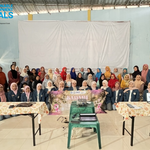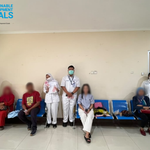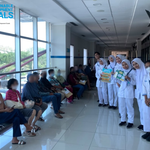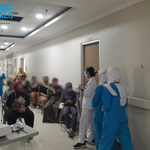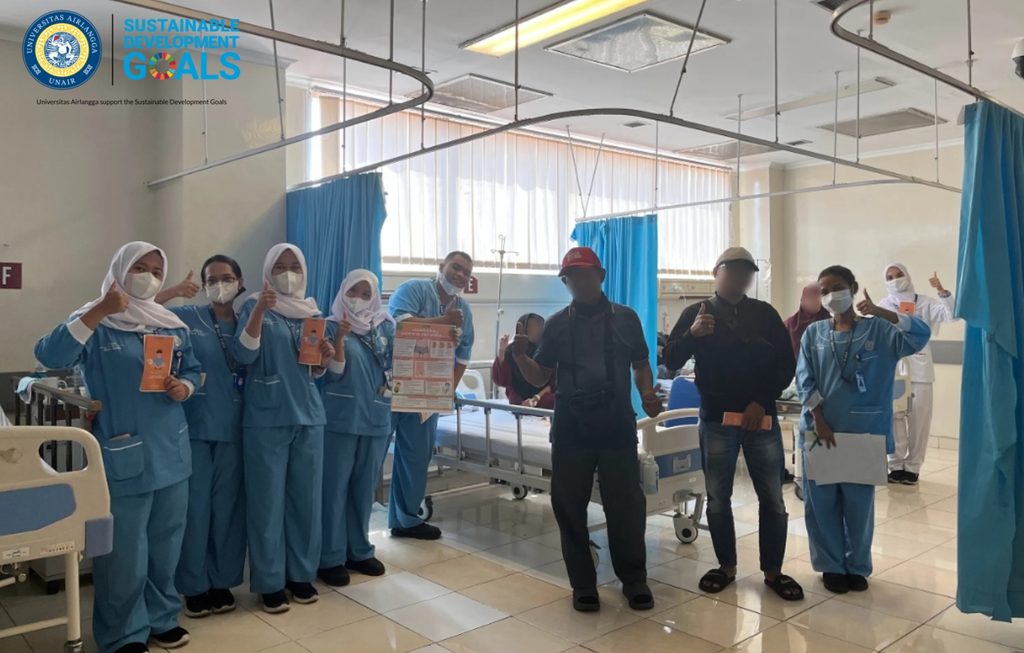
NERS NEWS — Nursing students from Group 2 in Room IRNA 6A Grha Trimed of the 2026 Nursing Profession Education Program, Faculty of Nursing, Universitas Airlangga, successfully conducted a health education activity as part of the Basic Nursing Practice at Room 606, IRNA 6A Grha Trimed, on Tuesday, August 18, 2026, with the theme “SEHATI: Sehat Hadapi Hernia Inguinalis Melalui Edukasi Perawatan dan Pencegahan Hernia Inguinalis.” This activity was part of the Nursing Profession Education Program practice at the Faculty of Nursing, Universitas Airlangga.
The health education activity was attended by all patients and families in Room 606, IRNA 6A Grha Trimed. The education was delivered through lectures and question-and-answer sessions and used educational media prepared by the students in the form of posters and leaflets. The activity was conducted interactively, with participants given the opportunity to discuss and ask questions related to the material presented.
This health education activity was conducted as an effort to increase public knowledge about inguinal hernia, particularly its definition, causes, signs and symptoms, risk factors, modes of transmission, prevention, and management of inguinal hernia. Through this education, participants are expected to be able to recognize the signs and symptoms of inguinal hernia at an early stage and implement preventive measures to maintain their own health and that of their family members.
The presenter explained that an inguinal hernia is a condition in which part of the contents of the abdominal cavity, such as fatty tissue or part of the intestine, protrudes through a weak area of the abdominal wall into the groin area or inguinal canal. An inguinal hernia occurs due to weakness in the abdominal wall accompanied by increased pressure within the abdominal cavity. In addition, participants were provided with an understanding of the signs and symptoms of inguinal hernia, such as a lump in the groin area, pain, soreness, burning sensation, and discomfort in the groin area. The education also discussed warning signs that should be monitored, possible complications, and the management of inguinal hernia.
The material on the care and prevention of inguinal hernia was also an important part of this activity. Participants were educated about measures that can help reduce the risk of worsening and recurrence of inguinal hernia by maintaining healthy daily habits, such as avoiding heavy lifting, using proper techniques when lifting heavy objects, avoiding excessive straining, eating high-fiber fruits, and maintaining a healthy weight. Participants were also reminded to seek examination at a healthcare facility if symptoms become more severe, persist for a long time, or are accompanied by signs and symptoms requiring further examination.
Participants’ enthusiasm was evident throughout the activity, particularly during the discussion and question-and-answer session. Participants actively asked questions about the causes, signs and symptoms, and ways to prevent inguinal hernia within the family environment. Through this activity, participants are expected not only to be able to recognize inguinal hernia at an early stage but also to implement clean and healthy living behaviors to reduce the risk of developing this condition.
Through the “SEHATI: Sehat Hadapi Hernia Inguinalis Melalui Edukasi Perawatan dan Pencegahan Hernia Inguinalis” education activity, patients and families are expected to better understand the importance of recognizing inguinal hernia, taking preventive measures, and taking appropriate action when signs and symptoms appear. Nursing Profession students from the Faculty of Nursing, Universitas Airlangga, continue to strive to provide applicable health education as part of their contribution to improving the knowledge and ability of the community to maintain family health.
Writer: Eka Oktaviana Febiyanti