
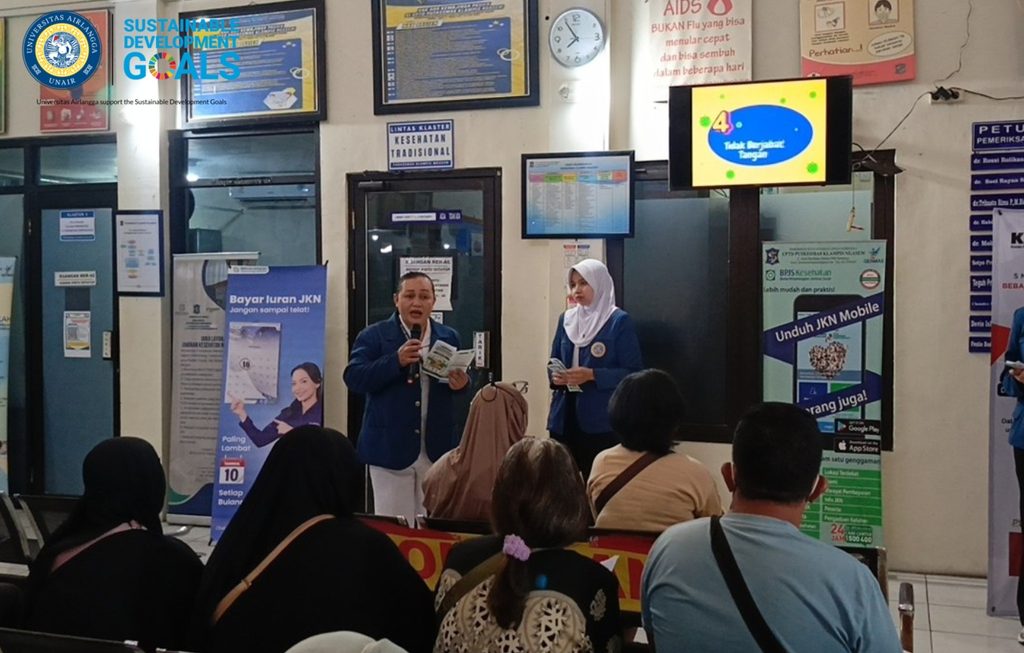
NERS NEWS — Klampis Ngasem Group 2 Students Educate the Community on a Hypertension Diet. Klampis Ngasem Group 2 students of the Nursing Profession Education Program, Class of 2026, Faculty of Nursing, Universitas Airlangga, successfully conducted a health education activity as part of the Community Nursing Rotation with the theme “Control Hypertension with a Healthy Diet: Reduce Salt, Prevent Complications” on Thursday, August 20, 2026, from 09:00 to 09:30 a.m. WIB at Klampis Ngasem Community Health Center. This activity was part of the Nursing Profession Education Program practice at the Faculty of Nursing, Universitas Airlangga.
The activity was attended by members of the general public visiting Klampis Ngasem Community Health Center. The health education was conducted through interactive lectures, discussions, and question-and-answer sessions using leaflets as educational media. The education aimed to increase public knowledge about hypertension and the importance of adopting a healthy diet to help control blood pressure and prevent complications. The material presented included the definition and risk factors of hypertension, complications, hypertension diets, the DASH Diet (Dietary Approaches to Stop Hypertension), recommended and restricted foods, as well as the importance of physical activity and regular blood pressure checks.
During the health education, the presenter explained that the DASH Diet is a healthy eating pattern that emphasizes the consumption of natural foods, such as fruits, vegetables, sources of complex carbohydrates, fish, skinless chicken, tofu, tempeh, and low-fat protein sources. This diet also recommends limiting the consumption of salt or sodium, sugar, saturated fat, processed foods, and fast food. Sodium restriction is an important part of the DASH Diet because excessive sodium consumption can increase blood pressure.
In addition to dietary regulation, participants were also educated about the importance of regular physical activity. People with hypertension are advised to engage in moderate-intensity physical activity for at least 150 minutes per week or approximately 30 minutes per day for five days a week, according to their ability. Activities that can be performed include walking, hypertension exercises or elderly exercises, leisurely cycling, gardening, and household activities such as sweeping and mopping. Participants were also reminded to warm up and cool down and to stop the activity if complaints such as chest pain, shortness of breath, dizziness, or excessive fatigue occur.
Participants’ enthusiasm was evident during the discussion and question-and-answer session. Participants actively asked questions about food choices, the use of salt in cooking, as well as the implementation of a healthy diet and physical activity in daily life. This activity also supported the achievement of the Sustainable Development Goals (SDGs), particularly Goal 3: Good Health and Well-Being, through promotive and preventive efforts to increase public knowledge in preventing and controlling non-communicable diseases, particularly hypertension.
Through this activity, it is expected that the community will be able to apply the principles of the DASH Diet, reduce salt consumption, choose healthier foods, engage in regular physical activity, and have their blood pressure checked regularly to help prevent complications and improve quality of life.
Writer: Almira Florint Salsabila





