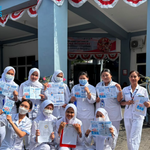
NERS NEWS — Students of the Nursing Professional Education Program, Faculty of Nursing, Universitas Airlangga, Group 2 of the Critical Nursing Rotation, Wave 2, Cohort 48, conducted a Hospital Health Education (PKRS) activity entitled “Prevent Transmission and Recognize the Dangers of Pulmonary TB and Respiratory Failure” for the families of patients in ICU 5B2. The activity aimed to increase families’ knowledge regarding the prevention of pulmonary TB transmission and the recognition of warning signs of respiratory failure.
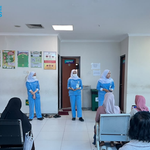
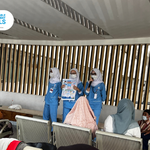
The activity was held on Thursday, August 27, 2026, at 10:00 a.m. WIB in the Family Waiting Room of ICU 5B2, Graha Trimed, Universitas Airlangga Hospital, under the supervision of Devi Ayu Kumalasari, S.Kep., Ns., as the clinical supervisor. The material was delivered through lectures and question-and-answer sessions using posters and leaflets.
The educational material covered the definition, signs and symptoms, modes of transmission, and prevention of pulmonary TB, as well as warning signs and appropriate actions to take in cases of respiratory failure. Participants were also educated on the proper use of masks, cough etiquette, maintaining adequate ventilation, adherence to TB treatment, and the importance of immediately contacting healthcare workers when a patient’s condition deteriorates.
The activity concluded with an evaluation of participants’ understanding, a summary and motivational session, and the distribution of leaflets as educational materials. This activity is expected to strengthen the role of families in disease prevention and the early recognition of emergency conditions. The implementation of this PKRS activity also contributed to the achievement of the Sustainable Development Goals (SDGs), particularly SDG 3 (Good Health and Well-Being) through increased health awareness, SDG 4 (Quality Education) through health education, and SDG 17 (Partnerships for the Goals) through collaboration among students, the clinical supervisor, and the hospital. Through this PKRS activity, students contributed to providing promotive and preventive education to patients’ families while supporting improvements in the quality of healthcare within the hospital environment.
Writer: Group 2, Critical Nursing Rotation, Wave 2, Cohort 48