
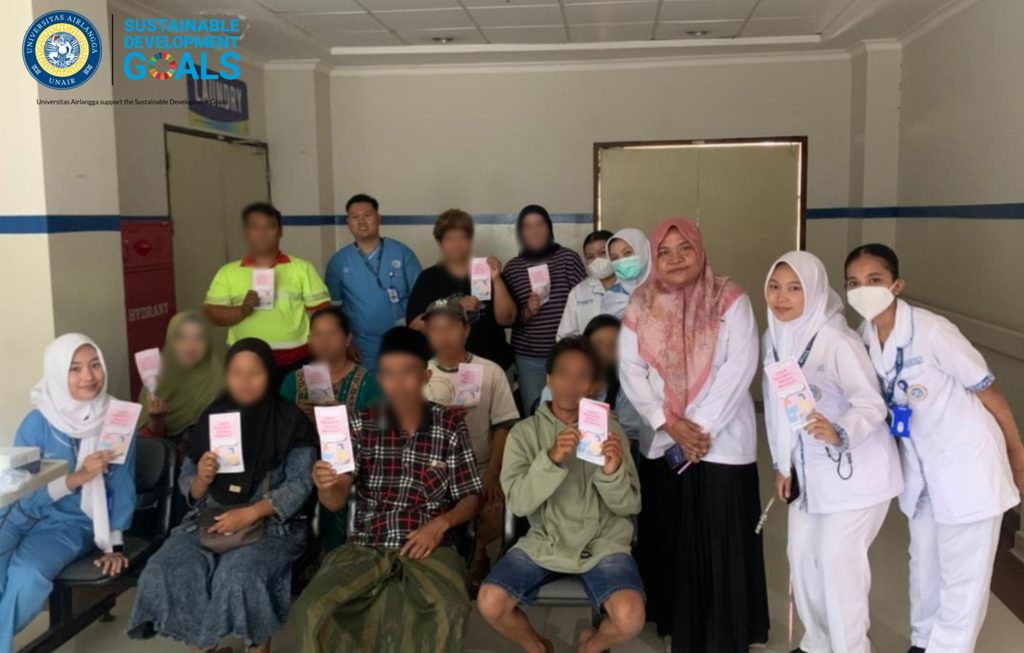
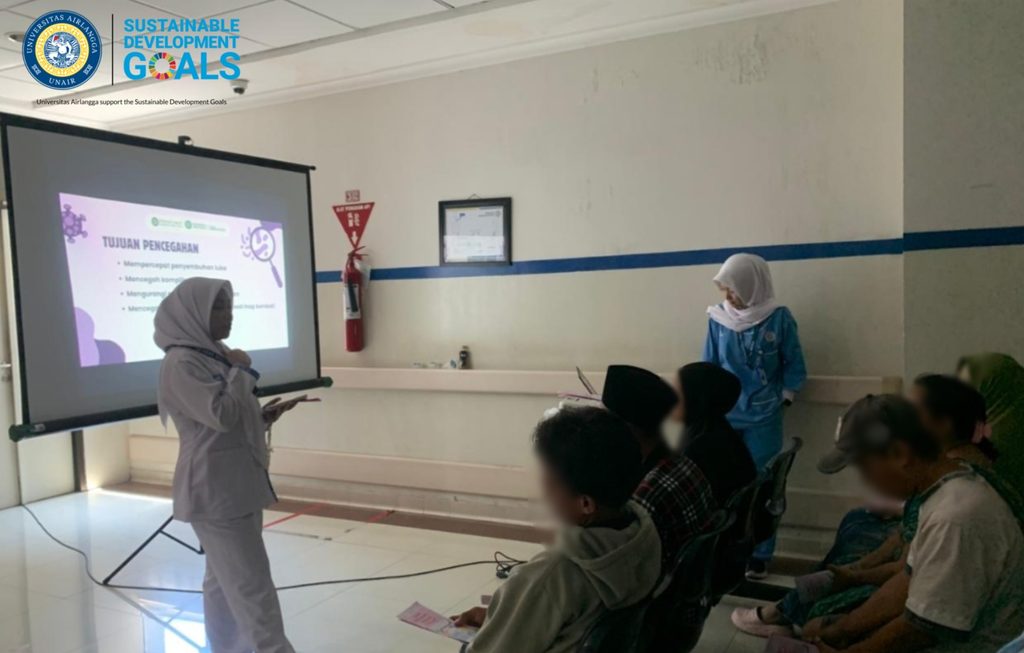
NERS NEWS — Nursing Profession Education Program students of Group 2, Batch 49, Faculty of Nursing, Universitas Airlangga, successfully conducted a Hospital Health Education (PKRS) activity as part of the Medical-Surgical Nursing Rotation at IRNA 3, Universitas Airlangga Hospital, on Friday, August 28, 2026. The activity, which began at 10:00 Western Indonesia Time (WIB), carried the theme “Infection Prevention and Surgical Wound Care in the Inpatient Ward” and was attended by 10 participants consisting of patients’ families. The activity was supervised by Wahyuni Tri Lestari, S.Kep., Ns., M.Kep. as the academic supervisor and Yevi Dwi L, S.Kep., Ns. as the clinical supervisor of IRNA 3.
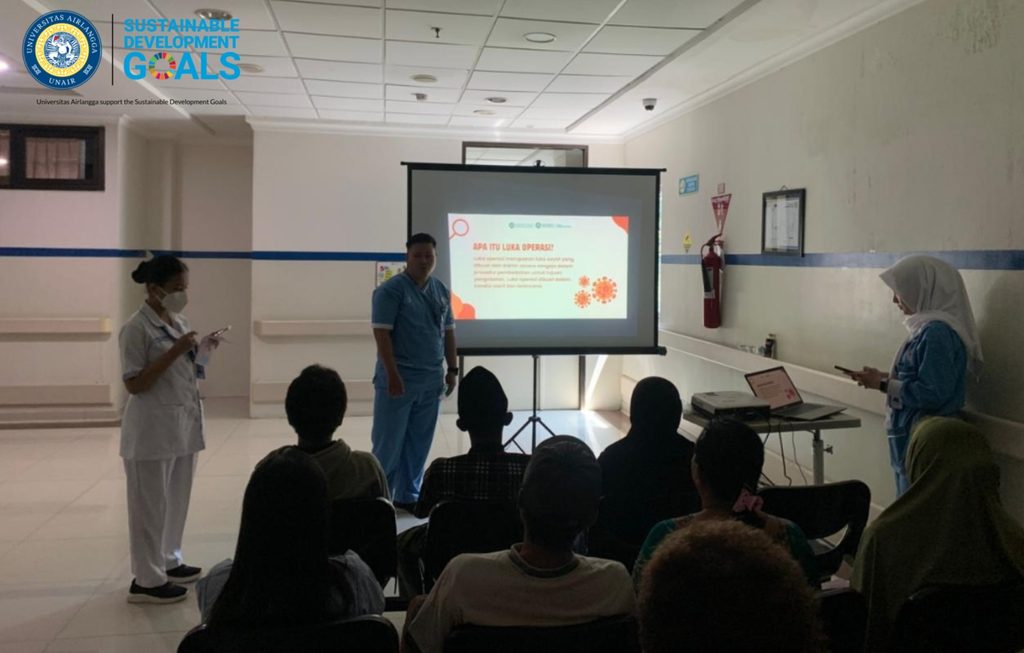
The health education was delivered by two presenters representing the group with the aim of increasing participants’ knowledge about the definition of surgical wounds, the wound healing process, signs of infection, factors that influence the occurrence of infection, as well as ways to prevent and manage infection in surgical wounds. The presenters explained that a surgical wound is an incision wound intentionally made during a surgical procedure for diagnostic or therapeutic purposes. The wound healing process occurs through four phases, namely hemostasis, inflammation, proliferation, and maturation or remodeling.
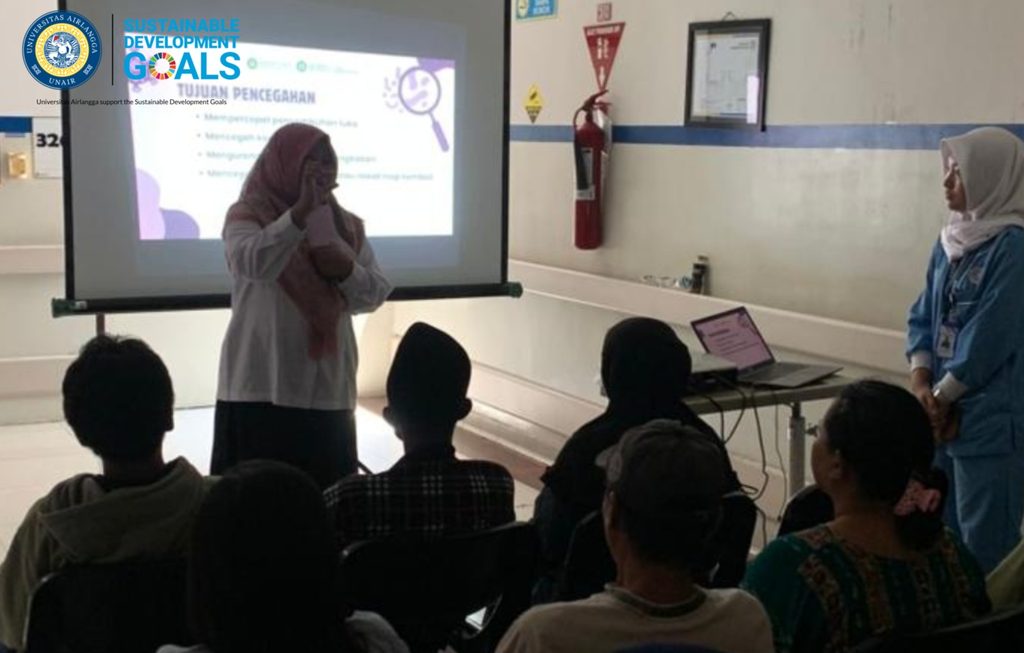
During the activity, the presenters also explained that infection in surgical wounds can cause the healing process to take longer. Infection can cause excessive inflammation and tissue damage, resulting in increased pain and swelling, discharge or pus, and separation of the wound edges. Participants were given an understanding of Surgical Site Infection (SSI), which can occur in the skin, tissues beneath the skin, organs or body spaces involved in surgery, as well as materials or implants placed during certain procedures.
The health education was conducted interactively through lectures, discussions, and question-and-answer sessions, using educational media in the form of leaflets and posters. This approach aimed to make it easier for participants to understand the material provided while also giving patients and families the opportunity to ask questions and share experiences related to surgical wound care.
The presenters also provided education about the signs of infection, which can be remembered through the acronym “BENGKAK,” namely Bengkak (Swelling), Eritema or redness, increasing Nyeri (Pain), Getah or pus discharge, Kulit feeling warm, Aroma or unpleasant odor, and Kondisi badan with fever. In addition, factors that can influence the occurrence of infection were explained through the acronym “SEHAT,” namely Status gizi (Nutritional status), Eksisting disease or comorbidities, Higiene (Hygiene), Aktivitas berlebihan (Excessive activity), and Teknik perawatan yang benar (Proper care techniques).
To help participants remember infection prevention measures, the presenters introduced the acronym “AMAN,” namely Atur kebersihan (Maintain cleanliness), Makan makanan tinggi protein (Eat high-protein foods), Amati kondisi luka (Observe the wound condition), and No Sentuh (Do not touch the wound or open the dressing without guidance from healthcare professionals). Participants were also given an understanding that if signs of infection appear, such as increasingly widespread redness, swelling, increasingly severe pain, discharge or pus, or fever, patients and families need to immediately report them to a nurse or doctor.
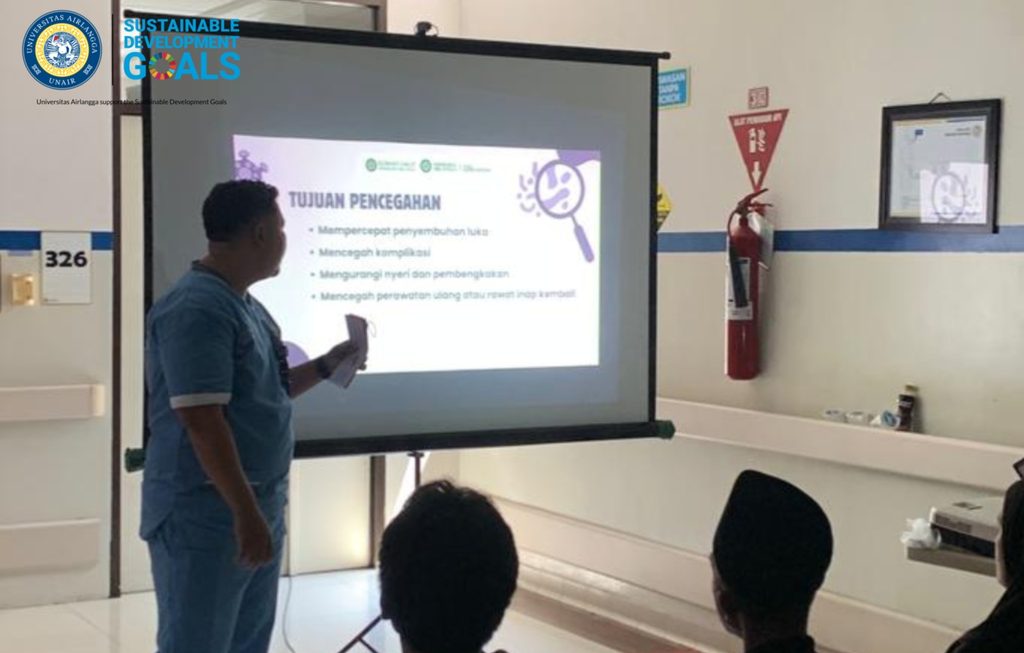
In addition to providing direct benefits to the participants, this activity also supports the achievement of the Sustainable Development Goals (SDGs), particularly SDG 3: Good Health and Well-Being and SDG 4: Quality Education. Through this activity, students not only serve as prospective healthcare professionals but also as educational agents who help improve patients’ and families’ ability to maintain health and prevent complications after surgical procedures.
Through this health education, patients and families are expected to better understand the importance of maintaining hand hygiene, meeting nutritional needs, particularly protein, regularly observing wound conditions, and avoiding actions that may cause wound contamination. Patients and families are also expected to be able to recognize signs of infection early and know when to immediately consult healthcare professionals.
The group hopes that health education activities on surgical wound infection prevention will not only be a one-time activity but can be carried out continuously. Consistent education is expected to strengthen patients’ and families’ understanding of proper wound care, increase awareness of infection prevention, and help accelerate the healing process and reduce the risk of complications. Thus, health education activities can have a positive impact on improving the quality of patient care and health.
Writer: Ade Capri Surya Saputra





