
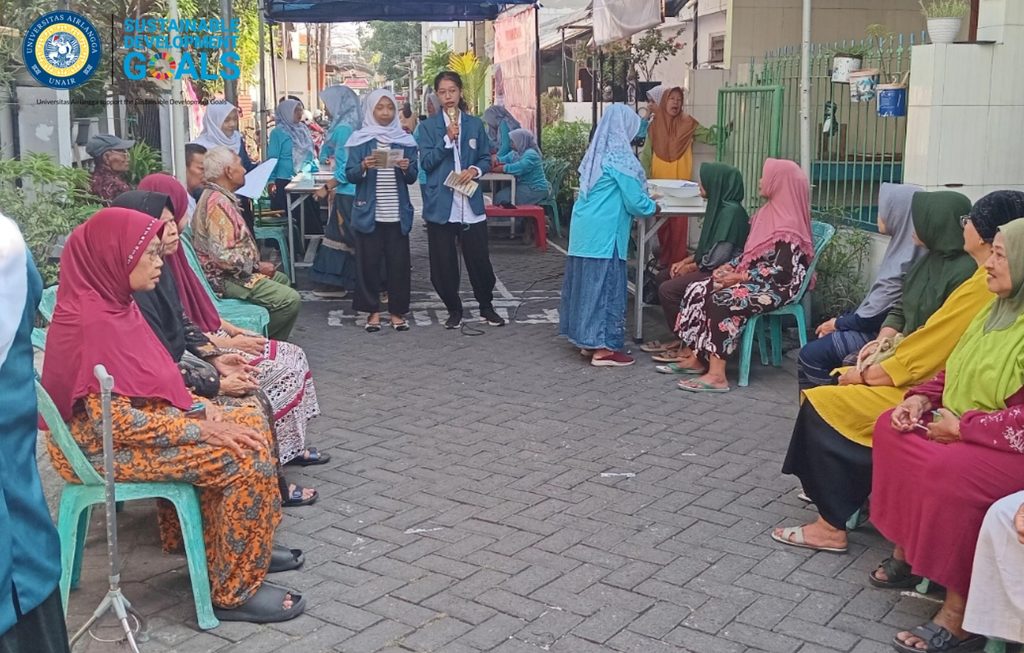
NERS NEWS — Nursing Profession Education Program students of Group 1 Klampis Ngasem conducted a health education activity as part of the Community Nursing Rotation on Saturday, September 12, 2026. The activity, which was held at 08:00 WIB at the RW 01 Community Hall, Gebang Putih Subdistrict, Sukolilo District, within the working area of the Klampis Ngasem Community Health Center, carried the theme “Early Detection and Prevention of Osteoporosis in the Elderly.” The target of the activity was elderly residents in RW 01, Gebang Putih Subdistrict. This activity aimed to increase the elderly’s understanding of osteoporosis, its risk factors, early detection, and preventive efforts to maintain bone health and reduce the risk of fractures.
The activity began with student preparation and educational media in the form of posters and leaflets. After the participants gathered, the students opened the activity by greeting the participants, introducing themselves, stating the purpose of the health education, explaining the time contract, and delivering an overview of the material to be provided. Before entering the material, the students also explored the participants’ initial knowledge about osteoporosis to determine their understanding before receiving health education.
The first material presented was about the definition of osteoporosis. Participants were given an understanding that osteoporosis is a disease characterized by decreased bone mass and density, causing the bone structure to become more fragile and easily broken. This condition can increase the risk of fractures, including in the wrist, hip, and spine.
Next, the students explained various risk factors for osteoporosis. These risk factors were divided into non-modifiable factors and modifiable factors. Non-modifiable factors include advanced age, female sex, menopause, and a family history of osteoporosis. Meanwhile, modifiable factors include lack of physical activity, low intake of calcium and vitamin D, smoking habits, excessive alcohol consumption, and excessively low body weight.
The discussion then continued with the signs and symptoms of osteoporosis. The students explained that osteoporosis often develops slowly and may not cause typical symptoms in its early stages. This condition sometimes causes a person to be unaware of a decrease in bone density until a fracture occurs. Some conditions that may appear include bones becoming fragile and easily broken, a stooped posture, loss of height, and back pain caused by fractures or cracks in the spine.
In addition to recognizing signs and symptoms, participants were educated about the importance of early detection of osteoporosis. The students explained that early detection can be carried out through identification of risk factors, bone density testing or Bone Mineral Density (BMD), and regular health examinations. BMD testing can be performed using Dual-Energy X-Ray Absorptiometry (DEXA) to determine bone mineral density in certain parts of the body, such as the spine and hips.

The next material discussed efforts to prevent osteoporosis through the implementation of a healthy lifestyle. Participants were encouraged to exercise regularly to help maintain bone density, increase muscle strength, and maintain body balance. Activities such as walking, jogging, climbing stairs, dancing, and playing tennis can be options for weight-bearing exercises. Meanwhile, balance and coordination exercises such as yoga, tai chi, and stretching exercises can help reduce the risk of falls, especially in the elderly.
The students also provided education on the importance of adequate nutrition to maintain bone health. Participants were encouraged to meet their calcium needs through various food sources such as milk, yogurt, cheese, green vegetables, nuts, tofu, tempeh, and fish that can be consumed with their bones, such as sardines. In addition to calcium, vitamin D is also needed to help absorb calcium and maintain bone mineral balance. Adequate protein intake also plays a role in maintaining bone mass and increasing muscle strength.
Not only discussing food and physical activity, participants were also given an understanding of daily habits that can affect bone health. The students emphasized the importance of quitting smoking, limiting caffeine and carbonated beverage consumption, and getting enough sleep. Implementing these various habits is part of a healthy lifestyle to help maintain bone health.
The students also emphasized the importance of maintaining bone health from an early age. Bone density reaches its peak at around 20–30 years of age and can subsequently decrease gradually. Therefore, adequate nutrition, regular physical activity, sufficient vitamin D, as well as avoiding smoking and alcohol consumption need to be implemented to help maintain bone health into old age.
After the material was delivered, the activity continued with a discussion and question-and-answer session. Participants were given the opportunity to ask questions or provide responses related to the osteoporosis material that had been presented. The students then provided explanations to the participants’ questions while also conducting an evaluation to determine the participants’ cognitive abilities and level of understanding after participating in the health education.
The evaluation was conducted by assessing the participants’ ability to explain the material on early detection and prevention of osteoporosis. The success of the activity was also assessed based on participants’ participation from the beginning to the end of the activity, their interest in implementing a healthy lifestyle, as well as their ability to participate in the question-and-answer session and answer the evaluation questions correctly. In the SAP, the activity targeted a minimum of 15 participants, with audience participation of 75% of the target elderly population.
The health education activity was then concluded with an expression of appreciation to the participants and a closing greeting. Through this health education activity, Nursing Profession Education Program students of Group 1 Klampis Ngasem hoped that the elderly would increase their awareness of the importance of bone health, recognize the risk factors for osteoporosis, understand the importance of early detection, and implement a healthy lifestyle as an effort to prevent osteoporosis and fractures.
This activity was part of the Nursing Profession Education Program Practice in the Community Nursing Rotation of the Faculty of Nursing, Universitas Airlangga. The implementation of the activity involved all members of Group 1 Klampis Ngasem, with roles divided into moderator, presenter, facilitator, observer, equipment, and documentation.
Writer: Nurul Khumairo Azizah





