
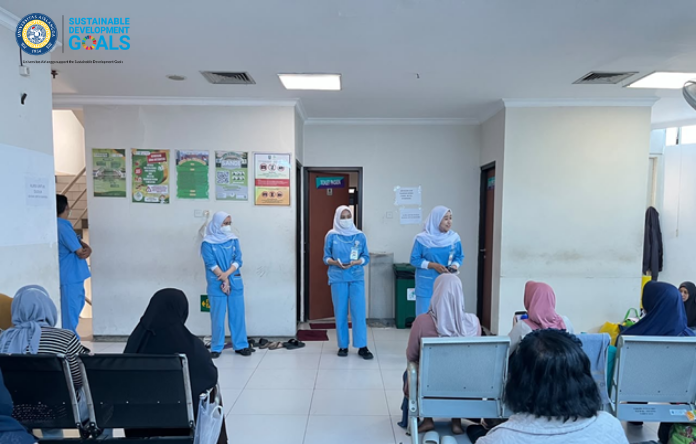
Students of the Nursing Professional Education Program at Universitas Airlangga conducted a Hospital Health Promotion (PKRS) activity entitled “Preventing Recurrent Heart Attacks” in the ICVCU waiting room at Dr. Soetomo General Hospital, Surabaya, on Thursday, September 17, 2026, at 10:00 a.m. Western Indonesia Time (WIB). The activity was aimed at patients and their families to increase their knowledge about heart attacks and the steps that can be taken to prevent recurrent heart attacks.
The health education session was conducted directly through interactive lectures, discussions, and question-and-answer sessions. The topics covered included the definition of a heart attack, its causes and risk factors, signs and symptoms that should be recognized, as well as measures to prevent recurrent heart attacks. The education also emphasized the importance of medication adherence, adopting a healthy lifestyle, engaging in physical activity appropriate to the patient’s condition, and attending regular medical check-ups as recommended by healthcare professionals.
Throughout the activity, participants showed great enthusiasm and listened attentively to the material presented. Several participants actively asked questions, including whether heart attacks can run in families or be related to hereditary diseases, what activities are recommended for patients after stent placement, and the use of medications following a heart attack. These questions became part of an interactive discussion, allowing participants to gain a better understanding of post-heart-attack care and strategies to prevent recurrence.
One of the main focuses of the activity was the importance of family support in helping patients through the recovery process and preventing recurrent heart attacks. Family members play an important role in helping patients adhere to their medications, supporting healthy lifestyle changes, accompanying them to medical check-ups, and recognizing signs and symptoms that require immediate medical attention. To make the information easier to remember, the students introduced the “CEPAT” action steps that families can take when facing a condition suggestive of a heart attack: Check and monitor the patient’s condition, Emergency—immediately call 112, Position the patient comfortably, Assist with or help the patient take prescribed heart medication, and Take continuous notice of the patient’s condition until medical assistance arrives.
Through this PKRS activity, participants were expected not only to understand the risk factors and ways to prevent recurrent heart attacks but also to play an active role in supporting patients throughout their recovery. Family involvement is expected to help patients consistently follow their treatment and lifestyle changes while improving family preparedness in responding to cardiovascular emergencies.
The health education session proceeded smoothly and in an orderly manner. The participants’ enthusiasm throughout the activity demonstrated their strong interest in heart health information, particularly regarding the prevention of recurrent heart attacks, activities following stent placement, medication use, and the role of families in supporting patients.





