
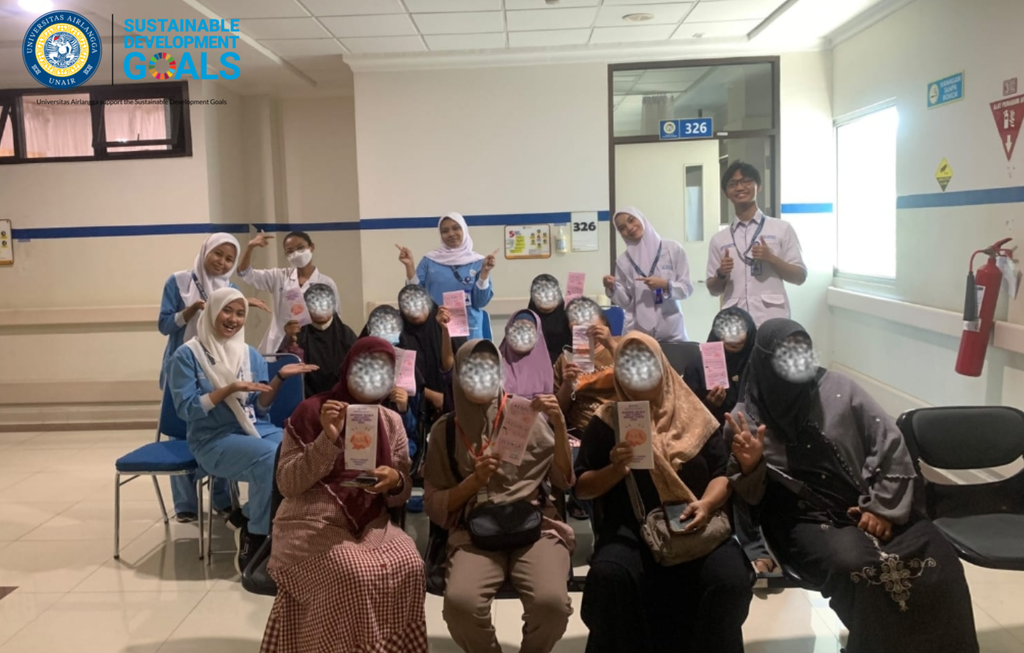
NERS NEWS — Persistent headaches that do not improve, sudden seizures, visual disturbances, and changes in consciousness are often considered ordinary complaints. However, certain neurological changes require attention and further examination. Recognizing the importance of raising awareness, Group 6 of the Medical-Surgical Nursing (KMB) Rotation, Nursing Profession Education Practice, Faculty of Nursing, Universitas Airlangga, conducted a Hospital Health Promotion (PKRS) activity entitled “Be Alert to the Symptoms and Recognize the Dangers of Brain Tumors” on Friday, September 25, 2026, at IRNA 3, Universitas Airlangga Hospital. The activity was aimed at patients’ families to improve their knowledge and awareness of the symptoms and dangers of brain tumors through interactive education using PowerPoint (PPT) presentations and leaflets.
The activity targeted patients’ families as the people closest to them, who play an important role in accompanying patients and observing changes in their condition during hospitalization. A total of 16 participants attended the activity, exceeding the initial target of 10 participants. Participants’ enthusiasm was evident from the beginning, when the education team invited them to participate in a brainstorming session to explore their initial understanding of brain tumors. “If someone has a persistent headache, does it always mean they have a brain tumor?” was one of the questions that led to a discussion about how certain symptoms cannot be used directly to establish a diagnosis. Through this educational activity, participants were encouraged to understand that various neurological complaints can have many different causes, making examination by healthcare professionals necessary to identify the underlying condition.
The material was then delivered interactively using PowerPoint (PPT) and reinforced with leaflets that participants could take home. The discussion covered the definition of brain tumors, risk factors, warning signs and symptoms, potential dangers, examinations, general treatment approaches, and when someone should seek help from healthcare professionals. The material was presented in simple language so that patients’ families could understand the information effectively. One of the main focuses of the education was to help families recognize warning signs that require attention, such as increasingly severe or persistent headaches, newly occurring seizures, visual disturbances, speech difficulties, limb weakness, balance problems, and changes in consciousness. Participants were also taught that being alert does not mean making a diagnosis themselves, but rather recognizing changes in a patient’s condition and knowing when to consult healthcare professionals.
The activity became even more interactive when participants were given the opportunity to ask questions and engage in discussions. Rather than delivering information solely in one direction, the education team used the teach-back method by asking participants to explain the warning signs and symptoms they had learned and the appropriate steps to take if they encountered them. This method formed part of the evaluation to assess how well participants understood and remembered the information. The entire activity proceeded in an orderly and communicative atmosphere, with participants actively engaging in the presentation, discussions, and evaluation.
Beyond simply providing information about brain tumors, this activity was part of an effort to build health literacy among families. Families not only serve as patient companions but can also help recognize changes in a patient’s condition and encourage patients to seek medical examinations when concerning symptoms arise. This improvement in knowledge is expected to help families take appropriate action without attempting to make diagnoses or provide treatment independently.
This activity also supports the Sustainable Development Goals (SDGs), particularly SDG 3: Good Health and Well-Being, through promotive and preventive efforts to improve public knowledge and awareness of health issues. The education provided also supports SDG 4: Quality Education through an interactive, easy-to-understand health learning process that actively involves participants. Through health education, families are expected to gain the knowledge needed to recognize changes in health conditions and understand the importance of seeking timely and appropriate assistance from healthcare professionals.
Through the “Be Alert to the Symptoms and Recognize the Dangers of Brain Tumors” activity, Group 6 of the Medical-Surgical Nursing Rotation, Nursing Profession Education Practice, Faculty of Nursing, Universitas Airlangga, sought to provide informative and interactive health education that addressed the needs of patients’ families. It is hoped that after participating in this activity, families will take home not only the leaflets but also an understanding that recognizing changes in a patient’s condition early and knowing when to seek medical assistance are important aspects of maintaining health.
Writer: Latifatur Rohma





