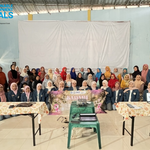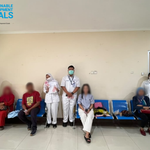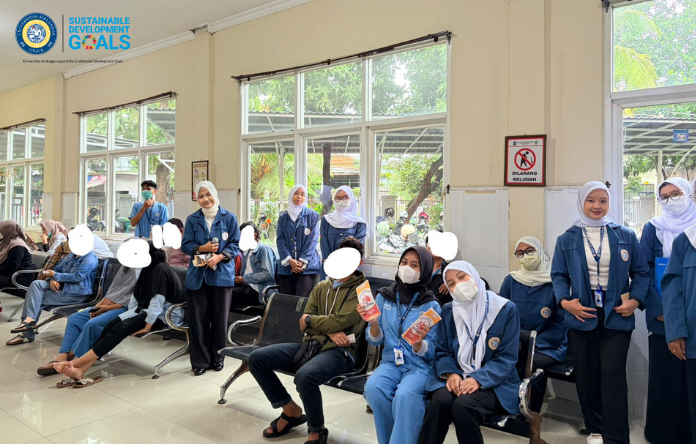
NERS NEWS – Surabaya, Thursday, February 26, 2026 Students from the Nursing Professional Program, Faculty of Nursing, Airlangga University, Group 2 A2021, conducted a health education program on Tuberculosis (TB) at the Kalijudan Community Health Center. This education program is part of a promotive and preventive program aimed at improving public health. The activity was held in the health center’s waiting room and was attended by patients and their families who were waiting for their turn to be examined.
The outreach activity was delivered by nursing students who were undergoing professional practice at the Kalijudan Community Health Center. The speakers at this outreach event were Tessa Audy and Norviasita Dwi, assisted by group members as facilitators. The activity was supervised and guided by Nurse Waji as the students’ clinical supervisor and also received guidance from academic supervisors Prof. Ferry, Mrs. Silvy, and Mr. Aziz. The activity began with an introduction of the presenters and a brief explanation of the purpose of the outreach program. The speakers explained that tuberculosis (TB) is an infectious disease that remains a health problem in Indonesia, requiring active community participation in its prevention and control. The material presented included the definition of TB, the cause of the disease by the Mycobacterium tuberculosis germ, transmission through droplets when the patient coughs or sneezes, signs and symptoms such as coughing for more than two weeks, fever, night sweats, weight loss, and the importance of sputum examination at health facilities. Additionally, the session explained that TB treatment must be taken regularly for a minimum of six months and should not be stopped prematurely even if symptoms improve.
During the event, the educational session was interactive and communicative. Several visitors to the health center were actively participating. The presenter emphasized the importance of adhering to medication regimens to prevent recurrence and drug resistance. Education on proper coughing etiquette was also practiced directly, with the presenter demonstrating how to cover the mouth with the inner elbow and the importance of wearing masks for people with active TB. The participants seemed enthusiastic about participating in the activity until it was over. This was evident from their attention when the material was presented, their involvement in the question and answer session, and their willingness to repeat the important points that had been explained. At the end of the activity, the presenter conveyed the message that the community should not stigmatize TB patients, but rather provide moral support so that patients are enthusiastic about undergoing treatment.
Overall, the outreach activities ran smoothly and orderly, and received positive responses from visitors to the Kalijudan Community Health Center. These activities had a positive impact in the form of increased public knowledge and understanding of TB transmission, symptoms, prevention, and the importance of adherence to TB treatment. Participants became more aware of the importance of early detection and no longer held misconceptions about transmission or stigma toward TB patients. Through interactive and demonstrative education, the community also became more prepared to adopt healthy living behaviors as a form of prevention. This activity directly supports the achievement of SDG 3 (Good Health and Well-being) launched by the United Nations, particularly target 3.3 in ending the tuberculosis epidemic. It is hoped that similar activities can be carried out continuously and reach more levels of society so that promotional and preventive efforts are more optimal and contribute significantly to reducing TB transmission rates at the community level.