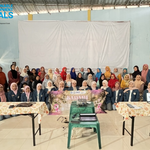
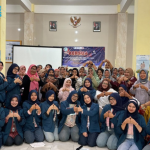
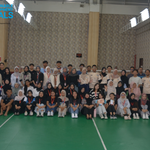
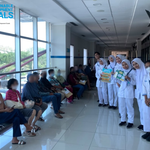
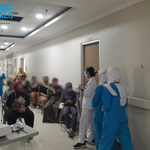
NERS NEWS – The environmental health education activity themed “Demonstration of Ovitrap Making and Decluttering as an Effort to Prevent Dengue Hemorrhagic Fever (DHF)” was held on Sunday, March 1, 2026 at 09.00 AM WIB in RT 03 and on Sunday, March 8, 2026 at 09.00 AM WIB in RT 02, Kalijudan Village, Surabaya. The event received enthusiastic participation from residents who attended to follow the health counseling and demonstrations delivered by nursing profession students. The session began with a presentation on the definition of Dengue Hemorrhagic Fever (DHF), its transmission, and the importance of prevention efforts through mosquito breeding site elimination. Leaflet media was used to help participants understand the information more clearly and easily.
After the decluttering material session, participants were guided through a demonstration of ovitrap making as a simple method to control the population of Aedes aegypti mosquitoes around the home environment. The ovitraps were made using simple materials such as modified used bottles that function as traps for mosquito eggs. In addition, participants were introduced to the concept of decluttering, which involves cleaning and organizing the home environment by reducing unused items that could potentially collect water and become mosquito breeding sites. The atmosphere was interactive, with several participants actively asking questions about the ovitrap-making process and steps to maintain environmental cleanliness.
This activity was conducted as part of the Health Promotion practicum during the Community and Family Nursing rotation at Kalijudan Public Health Center, aiming to improve public knowledge and awareness about the importance of maintaining environmental hygiene as a key step in preventing Dengue Hemorrhagic Fever. The background of this activity arises from the continued presence of potential mosquito breeding sites around households, which increases the risk of DHF transmission. Through ovitrap and decluttering demonstrations, the community is expected to adopt simple yet effective methods to control mosquito populations and maintain a clean living environment.
One of the student organizers stated that this activity is part of the promotive and preventive efforts carried out by nursing profession students for the community. “We hope the community can independently make ovitraps at home and maintain environmental cleanliness by routinely decluttering to prevent the growth of mosquitoes that cause DHF,” the student said.
Through this activity, it is hoped that sustainable collaboration will continue between educational institutions and healthcare facilities to increase public awareness of the importance of environmental health. Preventive efforts through direct education and practical demonstrations in the community serve as an important step in reducing the risk of environmentally based diseases such as Dengue Hemorrhagic Fever.
Author: Tessa Audy Janiar – Nursing Profession Student, Community and Family Health Rotation
Editor: Eva Khoirunnisa Adinta (Airlangga Nursing Journalist)