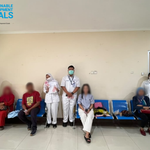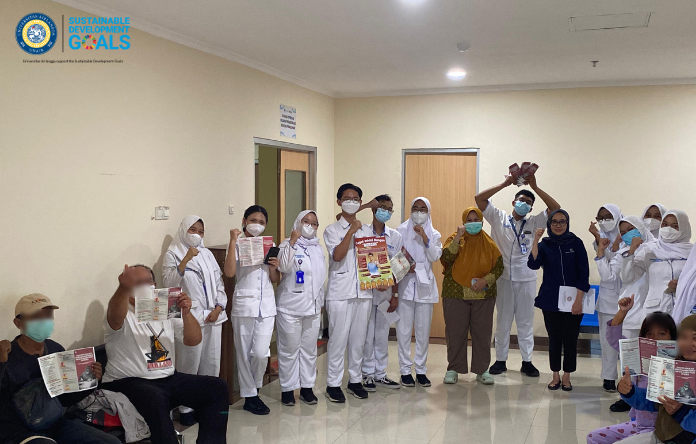
NERS NEWS – Thursday, March 12, 2026 – Nursing Professional Program students from the Faculty of Nursing, Universitas Airlangga conducted a health education session titled “Education Strategies for Preventing Infection Risk in Postoperative Patients” in the Operating Room of the Special Infectious Disease Hospital (RSKI) Universitas Airlangga.
This activity was part of the Medical-Surgical Nursing clinical practice, focusing on promotive and preventive education for patients’ family caregivers to improve their understanding of infection signs and prevention. Surgical site infection occurs when bacteria enter the surgical wound, causing inflammation and potentially slowing down the healing process. Signs of infection include redness around the wound, swelling, increased pain, warmth in the wound area, discharge (pus), and an unpleasant odor from the wound.
The activity was carried out through lectures and interactive discussions, using educational posters and leaflets so that the information could be easily understood and reviewed again at home. The material presented included the definition of surgical site infection, causes of infection, local and systemic signs and symptoms that should be monitored, wound care methods, the purpose of preventing surgical site infections, factors that may cause infection, the wound healing process, and the role of family members in supporting wound healing.
This activity was held on Thursday, March 12, 2026, from 1:30 PM to 2:00 PM (WIB) and was attended by three participants, meeting the initial target of three participants.
Participants showed enthusiasm through active participation during the question-and-answer session. Some of the questions asked included:
“Regarding eggs, should patients eat only the yolk or the white? Is it okay if the eggs are fried? If patients consume chicken, does it affect wound healing?”
“If the surgical wound is still wet and slightly raised, we sometimes feel hesitant to clean it, especially if we have to press the wound. What should we do?”
“My child really likes spicy food. Is it okay to eat spicy food during the recovery period after surgery?”
The student team explained that both egg whites and yolks are allowed, but it is better if they are boiled. Eating chicken is also allowed and can even help accelerate the wound healing process. If there is blood on the wound, it should be cleaned properly to keep the wound hygienic. In response to the third question, spicy food consumption should be controlled during the recovery period. However, as long as nutritional needs are fulfilled, eating spicy food in moderation is still acceptable.
This activity was conducted under the guidance of the academic supervisor Ms. Nauvila Fitrotul, S.Kep., Ns., M.Kep. and the clinical supervisor Ns. Akhmad Ja’far, S.Kep., Ns. Through this promotive and preventive activity, the students also contributed to the achievement of the Sustainable Development Goals (SDGs), particularly SDG 3: Good Health and Well-being by increasing public knowledge about disease prevention, SDG 4: Quality Education by delivering accessible health education to the community, and SDG 17: Partnerships for the Goals through collaboration between educational institutions and hospitals to improve community health.
Through this health education activity, it is hoped that patients and their families can become key supporters in preventing surgical site infections, allowing the wound healing process to proceed optimally.
Author: Agustin Novianatasari
Editor : Eva Khoirunnisa Adinta (Airlangga Nursing Journalist)