
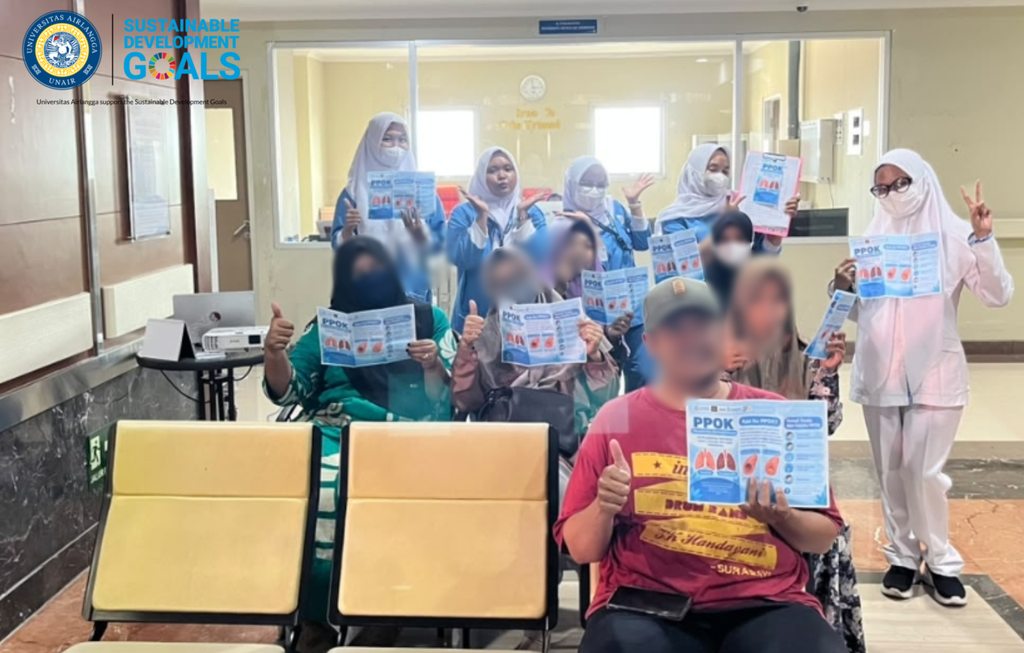
NERS NEWS – Surabaya, September 24, 2026 – Group 12 of the Medical-Surgical Nursing (KMB) Rotation Class of 49, Faculty of Nursing, Universitas Airlangga, conducted a Hospital Health Education (PKRS) session regarding Chronic Obstructive Pulmonary Disease (COPD) at IRNA 7A Room, Grha Trimed, Universitas Airlangga Hospital. The event adopted the theme “Beware of COPD: Recognize the Signs, Causes, and Prevention,” targeting hospitalized patients and their families. The activity aimed to enhance participants’ knowledge about COPD, encompassing its definition, classification, causes, signs and symptoms, risk factors, nursing care, and strategies to prevent condition deterioration.
COPD is a chronic lung disease characterized by persistent and progressively worsening airflow limitation. This condition leads to various complaints, including shortness of breath, chronic cough, sputum production, wheezing, and fatigue. These symptoms can interfere with daily activities and lower the patient’s quality of life. The primary risk factors for COPD are linked to long-term smoking habits and exposure to secondhand smoke. Additionally, exposure to air pollution, dust, fumes, occupational chemicals, respiratory infections, and specific individual factors can increase the risk of developing COPD.
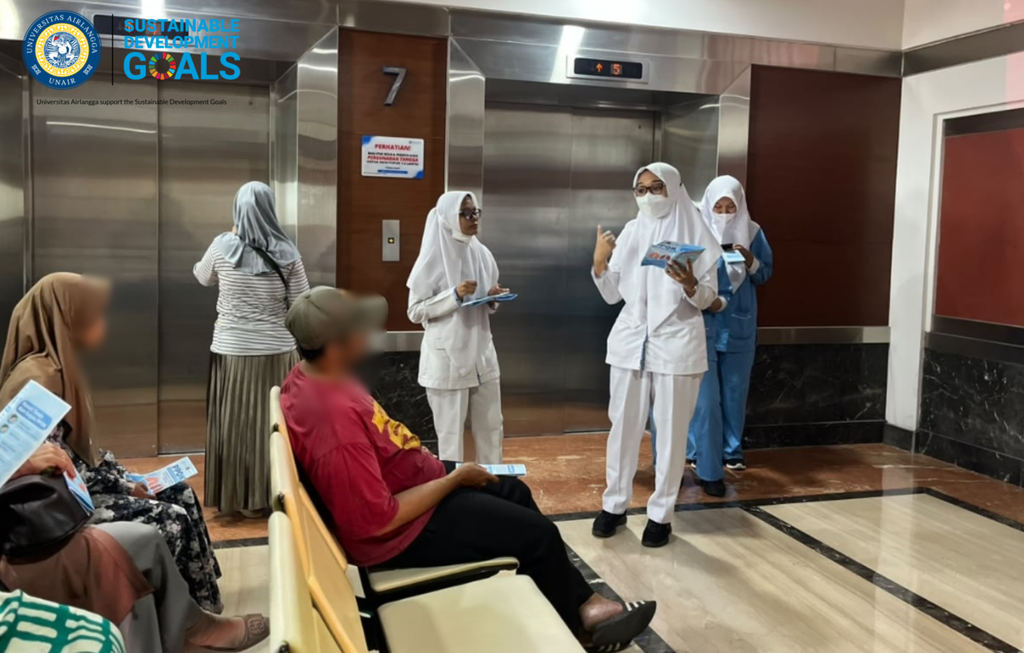
The educational session was delivered directly to patients and families in the waiting area of IRNA 7A Grha Trimed. Material was presented in simple, easily understandable language using PowerPoint (PPT) slides and leaflets. The PPT helped participants grasp key points through text and visual illustrations, while leaflets were distributed so participants could review the COPD information after the session.
The presented material covered the definition of COPD, its classification, causes, signs and symptoms, risk factors, patient care management, prevention of COPD and its exacerbations, as well as warning signs requiring immediate medical attention. Participants were also given the opportunity to ask questions and engage in discussions regarding the presented material.
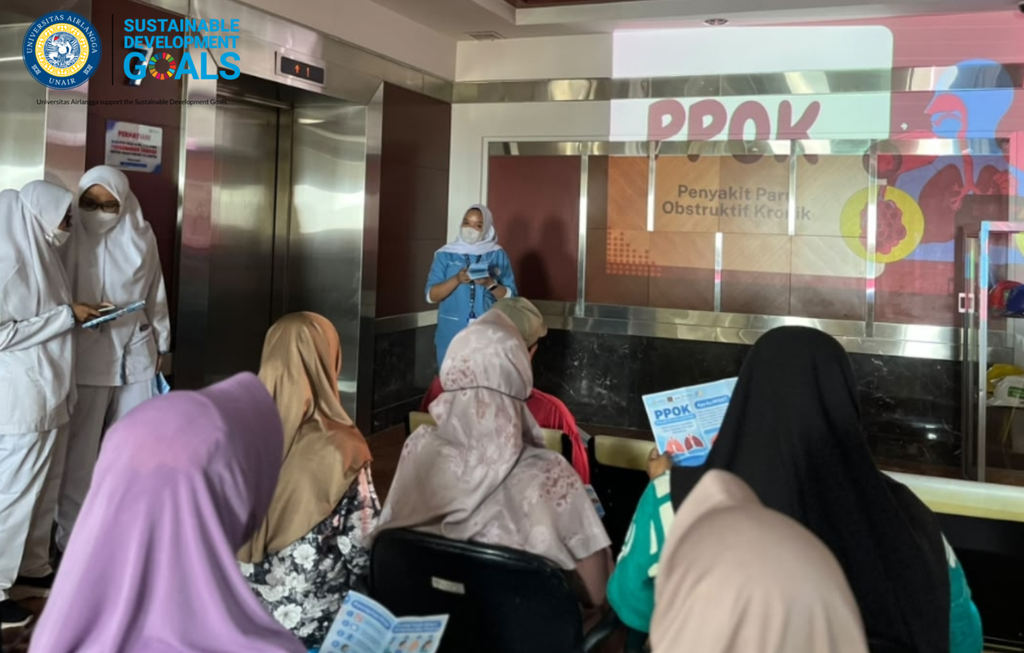
During the presentation, participants were informed that smoking and secondhand smoke exposure serve as major risk factors for COPD. Therefore, preventive efforts include avoiding or quitting smoking, eliminating exposure to secondhand smoke, reducing exposure to air pollution and hazardous substances, using personal protective equipment in the workplace, and adopting a healthy lifestyle. Regular health check-ups and proper disease management are also essential to help prevent the worsening of conditions in individuals already diagnosed with COPD.
The activity was attended by 6 participants. Although the attendee count fell short of the initial target of 10 people, the event proceeded according to plan. Participants demonstrated enthusiasm by attentively listening to the presentation and engaging in the Q&A session. One participant asked a question at the end of the presentation, which was subsequently answered by the presenter. The overall session was orderly and conducive until completion.
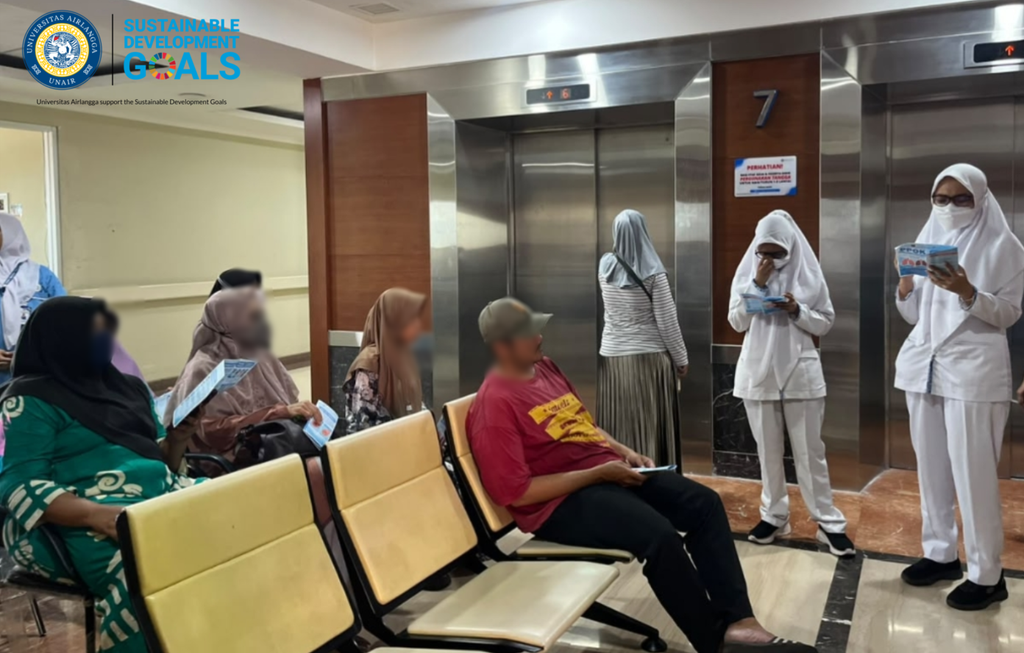
This PKRS program involved Group 12 of the Medical-Surgical Nursing Rotation Class of 49, Faculty of Nursing, Universitas Airlangga. The team comprised Khairun Nisa’ Anabila, Eka Sari Nur Cholifah, Nur Safitri Rahmania, Angelica Ismaylin, Siti Faidza Agustin, and Rizcha Rachmawati. The initiative was held under the guidance of Nur Arifah Astri, S.Kep., Ns., M.Kep. as the academic advisor and Rahmatul Fitriyah, S.Kep., Ns., M.Kep. as the clinical instructor.
Through this PKRS activity, Nurse Profession students of the Faculty of Nursing, Universitas Airlangga, hope that patients and their families gain a better understanding of COPD, recognize its signs and symptoms, identify factors that exacerbate the condition, and learn appropriate care and preventive measures. The education is also expected to encourage patients and families to adhere to healthcare professionals’ recommendations and seek prompt medical attention if warning signs emerge.
Writer: Siti Faidza Agustin





