
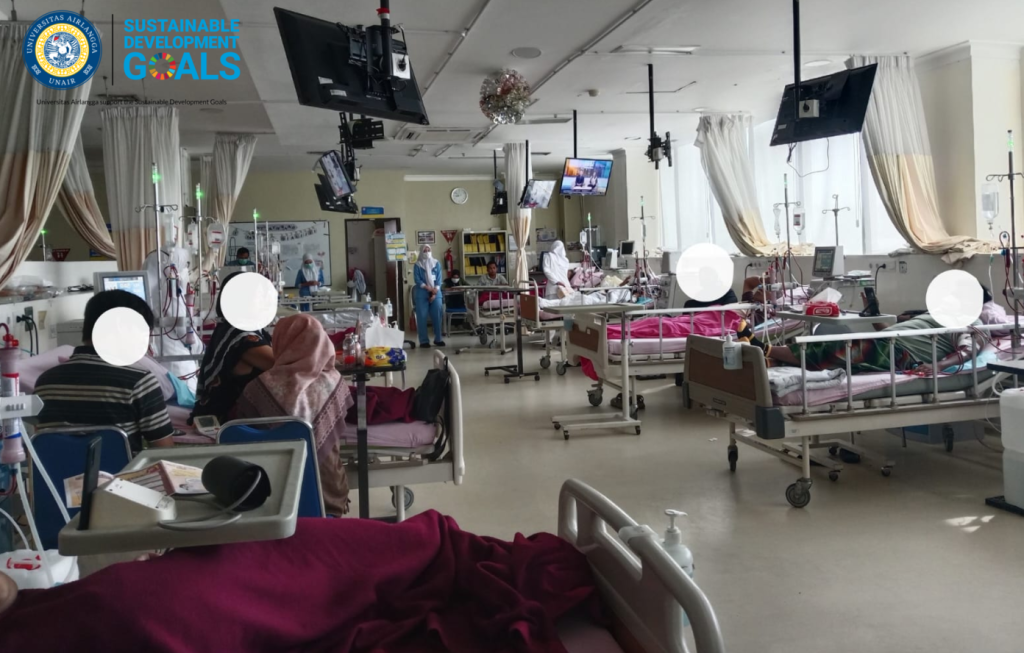
NERS NEWS – Surabaya, April 18, 2026 – Students of the Nursing Professional Education Program, Faculty of Nursing, Universitas Airlangga, conducted a Hospital Health Education Program (PKRS) with the theme “Beware of Cramps During Hemodialysis: Recognize, Prevent, and Manage Them Properly” in the Hemodialysis Unit of Universitas Airlangga Hospital on Saturday, April 18, 2026, at 08:30 WIB. This activity aimed to improve the knowledge of patients and their families regarding the importance of recognizing, preventing, and managing cramps during the hemodialysis process.
Cramps during hemodialysis are one of the common complications frequently experienced by patients with chronic kidney failure undergoing hemodialysis (HD) therapy, especially in the lower extremities such as the calves and feet. This educational session was expected to provide understanding regarding the symptoms, causes, as well as appropriate management and prevention of cramps.
The material presented included the definition of cramps during hemodialysis and the causes summarized in the acronym HIPER: Hypotension, Increased fluid intake, Prompt fluid removal, Electrolyte imbalance, and Record of cramps. In addition, the signs and symptoms of cramps were explained, along with preventive and management measures that patients can take. The team also taught participants prevention strategies using the principle CEGAH: Consume fluids as recommended, Evaluate weight gain, Go through routine HD diligently, Apply light activity and stretching, and Help-seek from healthcare professionals when needed.
Regarding cramp management, the session also explained practical methods such as placing the patient in a comfortable position, performing gentle massage, and using warm water therapy to relieve symptoms. Participants were reminded to immediately report cramps that occur frequently, are accompanied by severe pain, or are associated with other disturbances to healthcare professionals. The activity was also supported by educational media such as posters and leaflets, which helped visualize preventive measures and cramp symptoms clearly and understandably. In addition, these educational materials provided information on when to seek immediate medical assistance if cramp symptoms worsen.
It is hoped that through this activity, patients undergoing hemodialysis and their families will be better prepared and know how to identify and manage cramps independently, thereby improving patient comfort and safety during hemodialysis therapy.
Writer: Anindiya Putri Rahmawati
Editor: Nandyta Putri Rahmadhani (Airlangga Nursing Journalist)





