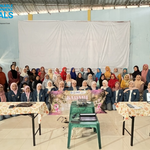
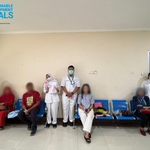
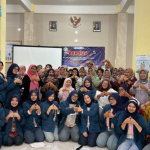
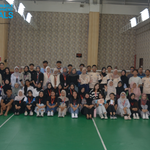
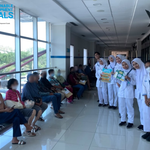
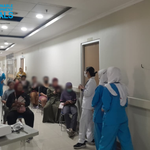
NERS NEWS — Nursing Clinical Practice (PKK) students from Groups A1–A4 of the Faculty of Nursing, Universitas Airlangga, conducted a Group Activity Therapy (GAT) program with older adults at Griya Werdha Kalijudan. The activity utilized the color-pointing method, an activity designed to stimulate cognitive function among older adults through the ability to recognize and differentiate colors. In addition, the activity aimed to improve concentration, train the ability to follow simple instructions, and optimize eye-hand coordination.
The activity was conducted on May 21, 2026, at UPTD Griya Werdha Kalijudan and was attended by 32 older adults. In its implementation, 20 students served as organizers and were assigned various roles, including moderator, documentation team, and facilitators who accompanied the older adults throughout the therapy sessions. The direct assistance provided by facilitators helped create an interactive, comfortable environment that encouraged active participation from the older adults in every session.
The implementation of this GAT program aimed to enhance the physical and cognitive health of older adults, thereby supporting their overall quality of life. In addition to providing cognitive stimulation, the activity also served as a platform for social interaction, boosting self-confidence, and maintaining the functional abilities that participants still possessed. This activity aligns with the achievement of the Sustainable Development Goals (SDGs), particularly SDG 3: Good Health and Well-Being, which focuses on improving health and well-being for all age groups, including older adults.
The activity had a positive impact on the participants, particularly in improving attention and focus, compliance with simple instructions, as well as motor and sensory coordination. Furthermore, the enjoyable atmosphere of the program enhanced enthusiasm, participation, and social interaction among the older adults. It is hoped that similar activities can be carried out continuously with a wider variety of programs to provide optimal cognitive and psychosocial stimulation. Through regular and well-structured activities, older adults are expected to maintain cognitive function, improve their quality of life, and enjoy a healthier, more active, and prosperous later life.
Writer: Kinanthi Sulistyobudi