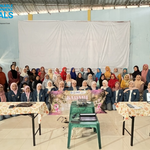
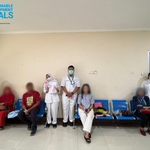
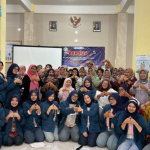
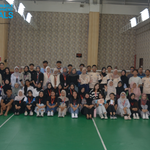
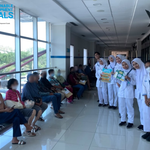
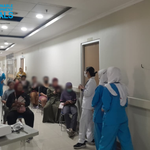
NERS NEWS — On Wednesday (May 13, 2026), Nursing Clinical Practice students from Universitas Airlangga conducted a health education session on Dengue Hemorrhagic Fever (DHF) for visitors at Kalijudan Community Health Center, held in the waiting area of the health center. This activity was carried out as an effort to increase public knowledge regarding the dangers, transmission, and prevention of DHF, considering the ongoing risk of dengue cases in the surrounding community. The educational session was delivered by Nursing Clinical Practice students through lectures and question-and-answer discussions, enabling participants to understand DHF prevention through the implementation of the 3M Plus strategy at home and in their surrounding environment.
The DHF education activity at Kalijudan Community Health Center began with an opening session by the moderator, followed by the presentation of materials covering the definition of DHF, its causes, signs and symptoms, and preventive measures. During the activity, participants received education on the importance of maintaining environmental cleanliness, draining water storage containers, tightly covering water containers, and recycling used items that could potentially become mosquito breeding sites. The material was delivered directly using leaflets distributed to participants and educational posters, allowing participants to understand the information more clearly.
The activity involved Nursing Clinical Practice students from Universitas Airlangga Groups A3 and A4 as the main organizers. In addition, the activity was supervised by the academic advisor, Mrs. Eka Mishbahatul Mar’ah Has, S.Kep., Ns., M.Kep., and the clinical supervisor, Mrs. Waji, S.Kep., Ns., who assisted in coordinating the event. The education session was conducted on Wednesday, May 13, 2026, from 09:00 a.m. to 09:30 a.m. in the waiting area of Kalijudan Community Health Center. This location was chosen because it was strategic and easily accessible to visitors. Throughout the activity, participants attended in an orderly manner from beginning to end. They listened attentively to the presentations, observed the educational media used, and actively participated in the question-and-answer session. The atmosphere was highly interactive, as participants also shared experiences related to dengue fever cases in their communities. As a result, the session served not only as a means of delivering information but also as a forum for discussing collective prevention efforts.
This DHF education activity was conducted with the aim of increasing public knowledge and awareness regarding the prevention, transmission, and early management of dengue fever so that community members can independently implement preventive measures in their homes and surrounding environments. The activity was motivated by the continued high risk of DHF transmission, particularly during the rainy season, which can increase the breeding of Aedes aegypti mosquitoes, the primary vector of the disease.
In addition, limited public understanding of the importance of maintaining environmental cleanliness and implementing the 3M Plus strategy remains one of the main reasons why ongoing health education is necessary. Through this activity, participants were expected to gain a better understanding of the signs and symptoms of DHF, methods to prevent mosquito breeding, and appropriate actions to take if a family member develops symptoms of dengue fever. This activity is also aligned with the Sustainable Development Goals (SDGs), particularly Goal 3: Good Health and Well-Being.
Intan Nuraini (Group A4, Nursing Clinical Practice A23, Faculty of Nursing, Universitas Airlangga)