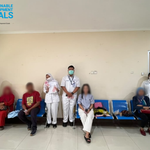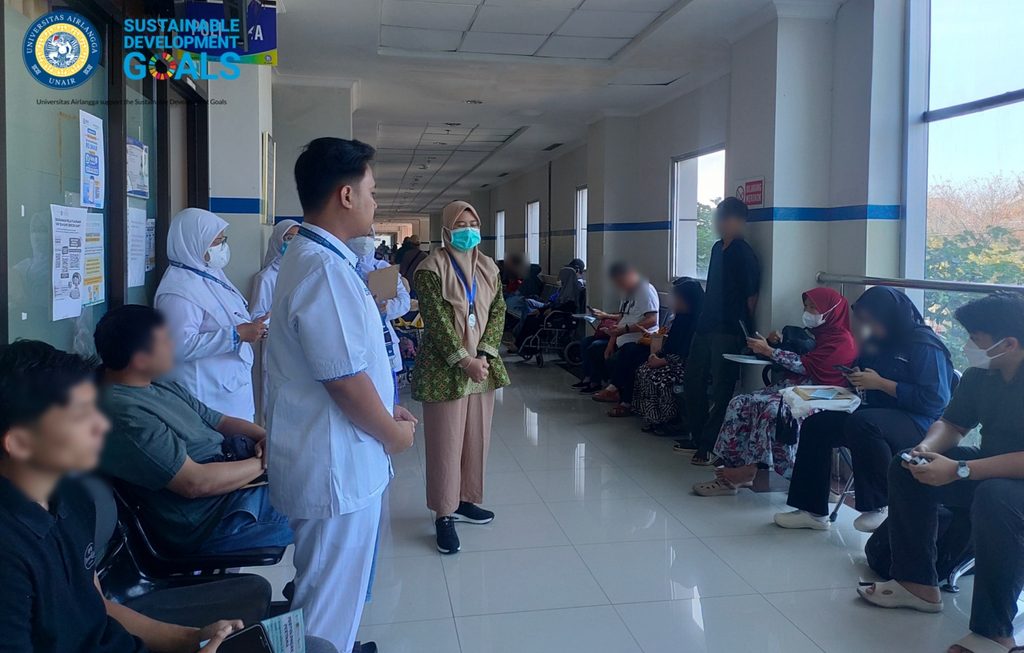
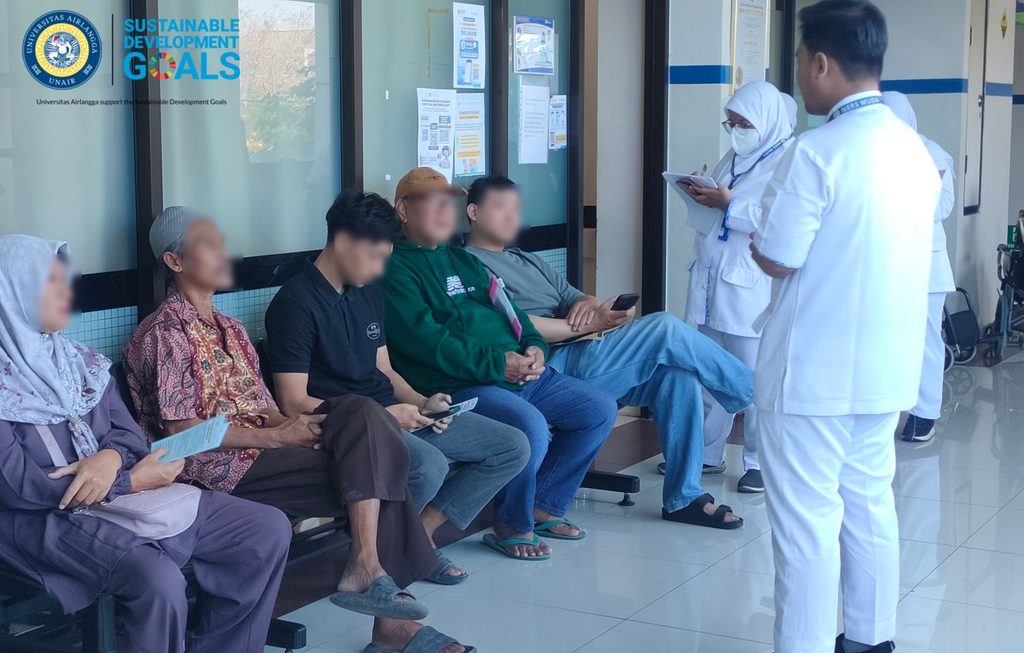
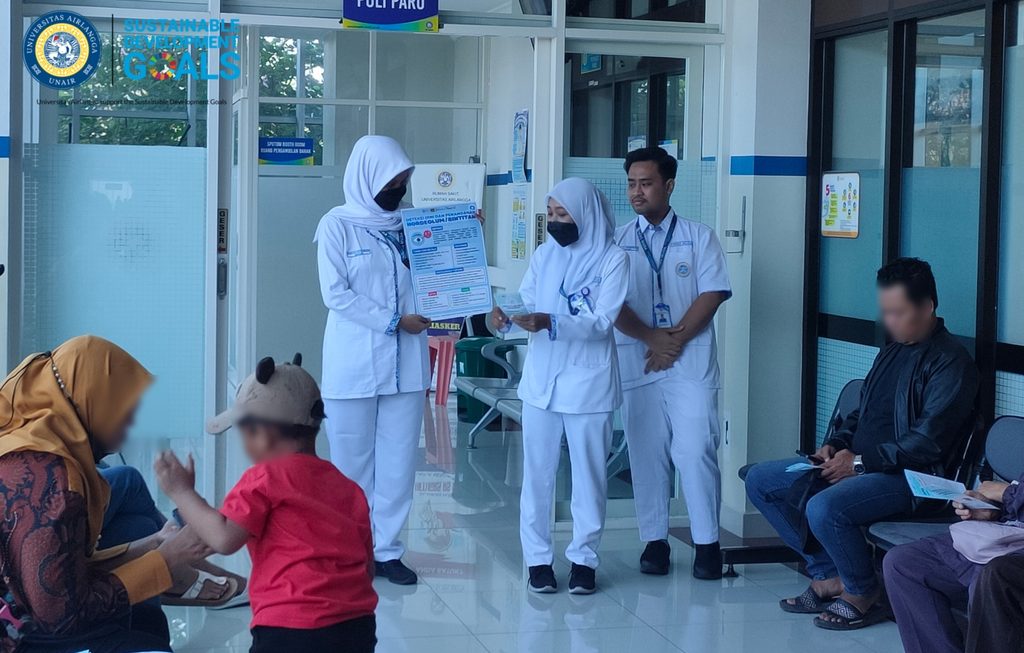
NERS NEWS — On Thursday, August 27, 2026, students of the Nursing Study Program, Cohort 49, Academic Year 2026/2027, Faculty of Nursing, Universitas Airlangga, provided health education to the community through an educational session on the Early Detection and Management of Hordeolum, commonly known as a stye. The activity was conducted by Group 1 of the Medical-Surgical Nursing (KMB) Rotation in the waiting room of the Ophthalmology Clinic at Universitas Airlangga Hospital.
The educational session was delivered by two student representatives from the group, with the aim of increasing participants’ knowledge regarding the definition, causes, signs and symptoms, and appropriate management of a stye. Beyond the medical aspects, the presenters also addressed various myths that have circulated in the community. One popular myth is the belief that a stye develops as a result of the habit of peeking at other people. The presenters firmly clarified that this is not true and explained that styes can be caused by bacterial infections, particularly Staphylococcus aureus or Staphylococcus epidermidis.
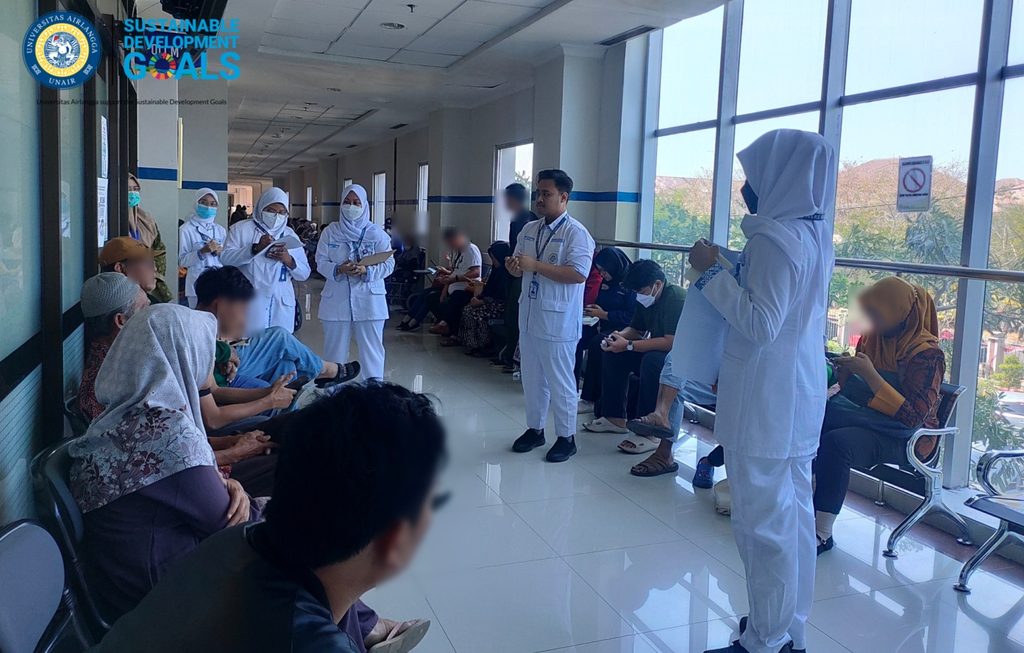
The education was conducted interactively through lectures, question-and-answer discussions, and the use of educational materials such as leaflets and posters. This approach not only made it easier for participants to understand the material but also provided them with an opportunity to ask direct questions about their personal experiences or information they had previously heard.
In addition to providing direct benefits to the participants, this activity also aligns with the achievement of the Sustainable Development Goals (SDGs), particularly SDG 3: Good Health and Well-Being and SDG 4: Quality Education. Through this educational activity, students not only serve as future healthcare professionals but also as agents of change who encourage the community to become more aware of their own health and the health of those around them. Through this education, the community is expected to become more capable of recognizing the symptoms of a stye at an early stage, providing simple treatment at home, maintaining eye hygiene, and knowing when to seek consultation with healthcare professionals.
The group also hopes that this educational activity will not remain a one-time event but can be carried out continuously. Consistent health education can strengthen community understanding and raise awareness of the importance of eye health. In this way, activities of this kind can have a meaningful positive impact on improving the quality of life of communities in Indonesia while supporting the achievement of sustainable health development goals.
Writer: Kurnianingtyas Novikasari Muhare