
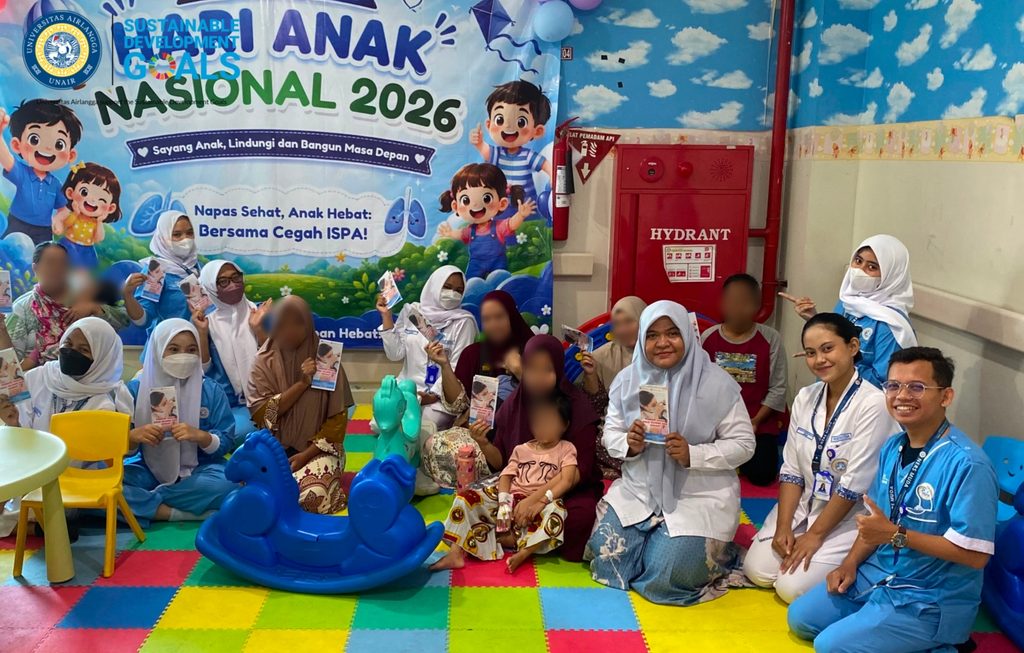
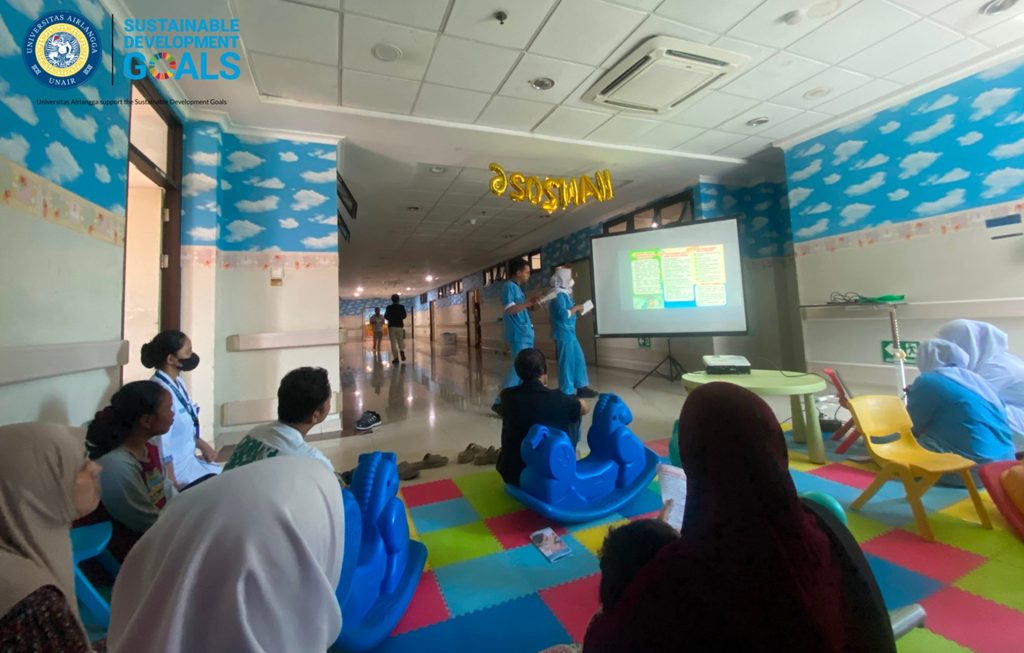
NERS NEWS — Educational activities on meeting the basic needs for safety and comfort through injury prevention in children with febrile seizures were carried out as part of promotive and preventive efforts to improve families’ knowledge and skills in dealing with febrile seizures in children. This activity was conducted at IRNA 4 Pediatrics, Universitas Airlangga Hospital (RSUA), targeting patient families who were accompanying their children during treatment. The education was conducted on Friday, August 21, 2026, with a duration of approximately 30 minutes, under the guidance and support of Ns. Widia Yuniarti, S.Kep. as the clinical supervisor and academic supervisor Mrs. Wahyuni Tri Lestari, S.Kep., Ns., M.Kep.
Febrile seizures are a condition that commonly occurs in children and can cause panic among parents or caregivers. Lack of family understanding regarding febrile seizures can lead to inappropriate first-aid measures, such as putting a spoon, finger, or other object into the child’s mouth, forcibly restraining the child’s body movements, or giving food or drinks while the child is still experiencing a seizure. These actions can increase the risk of injury to the child. Therefore, education on proper management of febrile seizures is important as one of the efforts to fulfill children’s basic needs for safety and comfort.
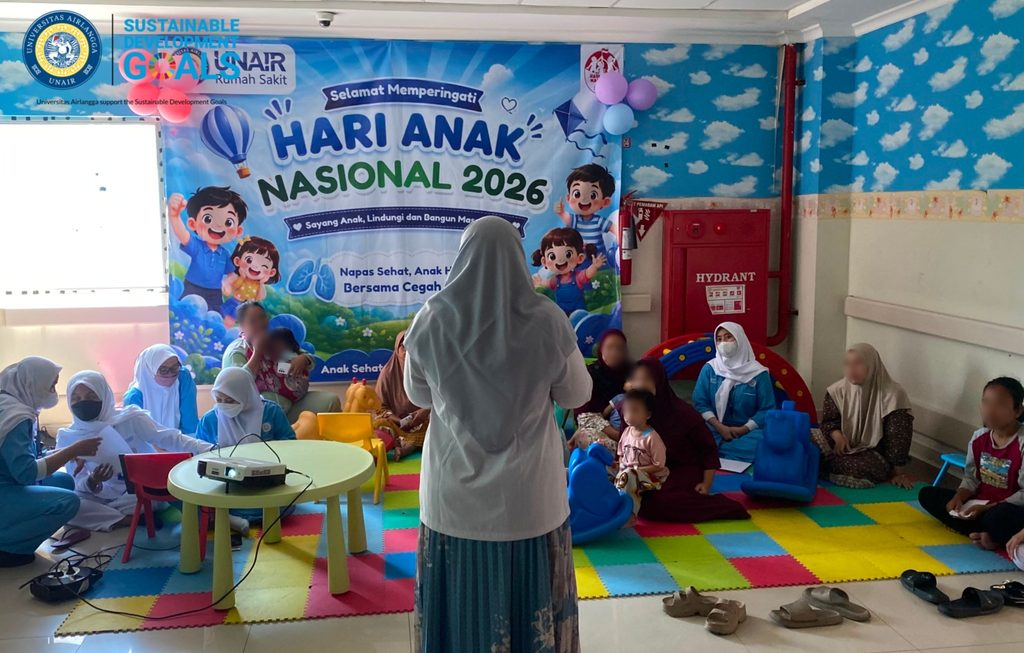
The education was conducted using lecture and demonstration methods supported by leaflets. The material was delivered using simple language so that it could be easily understood by patient families. The material provided included the definition of febrile seizures, types of febrile seizures, causes and risk factors, signs and symptoms, impacts and risks of injury, ways to prevent seizures when a child has a fever, steps for managing febrile seizures at home, as well as conditions that require the child to receive immediate medical attention.
During the demonstration session, participants were introduced to safe initial management steps when a child experiences a seizure. Families were given an understanding of the importance of remaining calm, placing the child in a safe location away from dangerous objects, turning the child onto their side, loosening clothing, especially around the neck, and observing and counting the duration of the seizure. Participants were also emphasized on actions that should not be performed, such as putting any object into the child’s mouth and forcibly restraining the child’s body movements.
In addition to initial management, families were educated about danger signs that require immediate medical attention. Participants were informed that the child should be immediately taken to a healthcare facility if the seizure lasts more than five minutes, is focal, occurs repeatedly within 24 hours, is accompanied by breathing difficulties or bluish discoloration of the face and lips, or when the child’s consciousness does not quickly return after the seizure stops. This information is expected to help families make appropriate decisions and prevent delays in treatment.
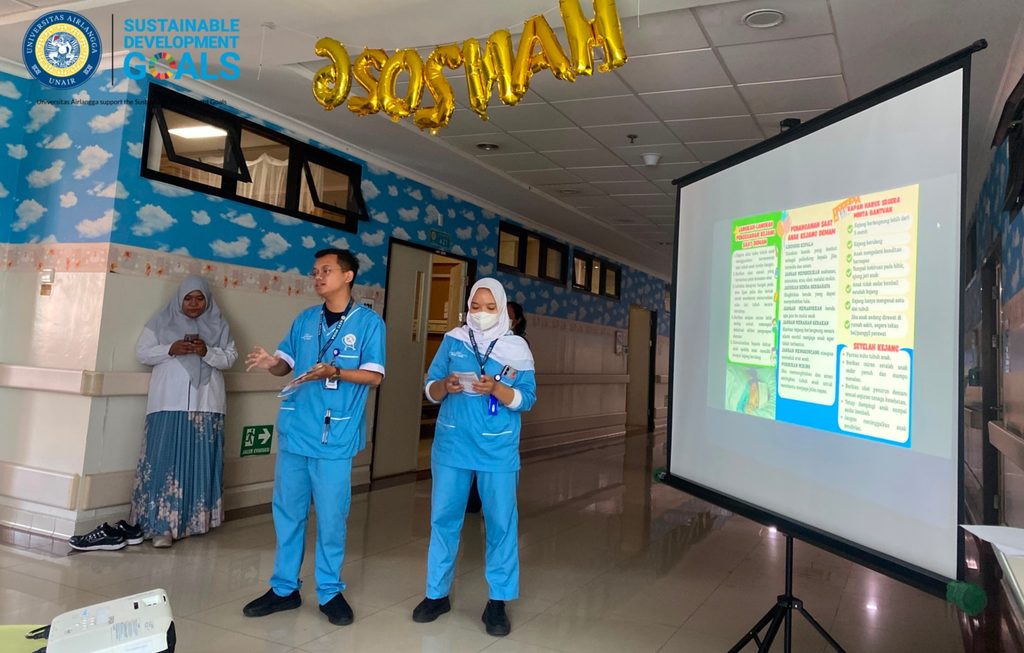
The activity involved two presenters, Muhammad Rizqi Hidayat and Siti Faidza Agustin, who were responsible for delivering the material and conducting the demonstration. The activity was also supported by a moderator, material developers, health education officers, observers and a note-taker, as well as equipment and documentation officers. All group members contributed to preparing and carrying out the activity so that the education could be conducted in an organized manner and in accordance with the predetermined objectives.
Throughout the activity, participants appeared enthusiastic in following the material provided. Participants were given opportunities to ask questions, answer questions from the presenters, and observe the demonstration of initial febrile seizure management. At the end of the activity, participants were also given the opportunity to practice the management steps that had been explained. The demonstration method was used so that participants would not only understand the material theoretically but also be able to apply appropriate actions when dealing with a child experiencing a febrile seizure.
The activity was evaluated through question-and-answer sessions and repeated demonstrations. Participants were expected to be able to explain the definition, causes, signs, and symptoms of febrile seizures, understand the risk of injury if seizures are not managed properly, and correctly explain and demonstrate the steps for managing febrile seizures at home. The evaluation was also aimed at ensuring that participants could distinguish between actions that should and should not be performed when a child experiences a seizure.
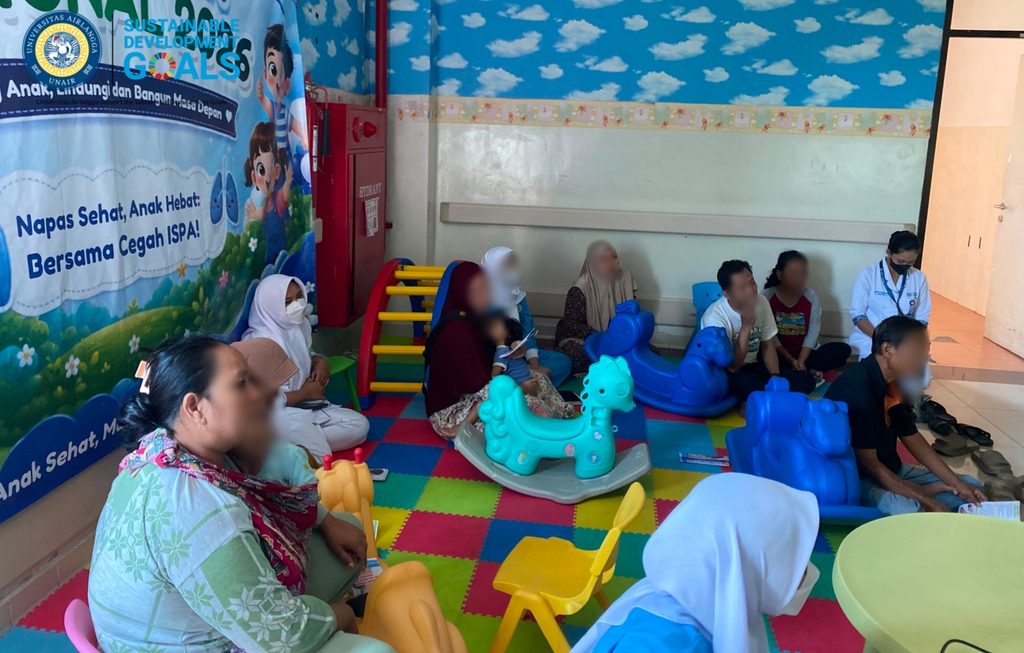
Through this educational activity, families are expected to have better knowledge and preparedness in dealing with febrile seizures in children. Understanding the appropriate actions can help families ensure children’s safety, reduce the risk of injury, and prevent dangerous first-aid measures. This education is also expected to be applied by families after returning home so that efforts to fulfill children’s basic needs for safety and comfort can be carried out sustainably.
The injury prevention education activity for children with febrile seizures at IRNA 4 Pediatrics, RSUA, was one form of contribution by Nursing Profession students in providing health education to patient families. Through lectures, question-and-answer sessions, and demonstrations, participants are expected not only to gain information but also to acquire practical skills in providing safe initial assistance. Thus, families can become an important part of creating a safe environment for children while helping prevent injuries and complications caused by inappropriate management of febrile seizures.
This activity supported the achievement of several Sustainable Development Goals (SDGs), namely:
- SDG 3: Good Health and Well-Being
- SDG 4: Quality Education
- SDG 17: Partnerships for the Goals.
Through the implementation of health education provided to patients and their families, this activity aimed to improve community understanding of health and strengthen synergy between educational institutions and healthcare facilities in supporting the achievement of sustainable development.
This health education activity also served as a form of implementing the role of nursing students in health promotion and community empowerment efforts. Through continuous education, students are expected to contribute to improving family health literacy and supporting the development of a healthier community in the future.
Writer: Muhammad Rizqi Hidayat and Kurnianingtyas Novikasari Muhare





