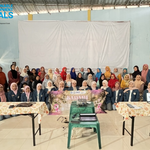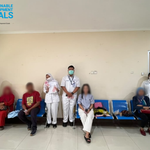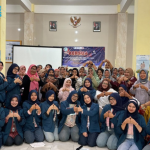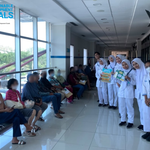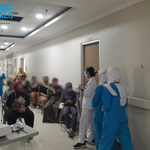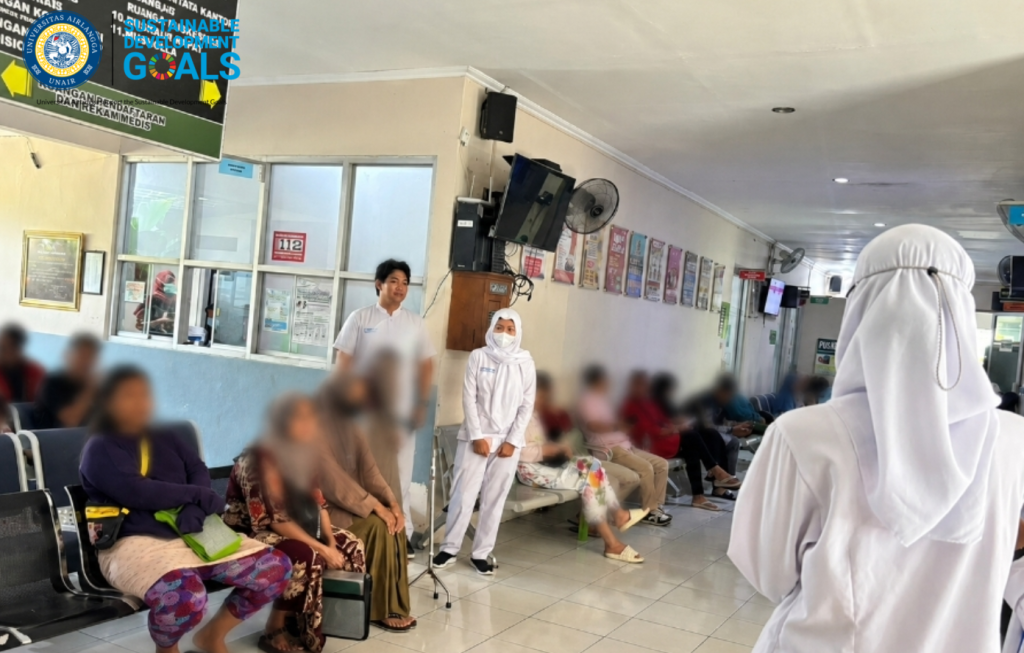
NERS NEWS — Surabaya — Clinical Nursing Practice (PKK) students from the Faculty of Nursing, Universitas Airlangga (FKp Unair), Group C5, consisting of Jessica Adel, Mesi Amelia, Naura Reghita, and Stefani Luciana, under the academic supervision of Aziz Nashirudin Habibie, S.Kep., Ns., M.Kep., and clinical supervisor Afif Lailif Huda, S.Kep., Ns., conducted a Hospital and Community Health Promotion Program (PKRS) titled “Beware of Stroke: Recognize, Prevent, Avoid!” at Puskesmas Kenjeran, Surabaya, on Friday, June 5, 2026. This activity was part of the implementation of community nursing practice focusing on promotive and preventive efforts to increase public awareness of stroke. The health education session targeted patients and families visiting Puskesmas Kenjeran. Through this activity, the students aimed to improve public understanding of stroke, including its definition, risk factors, signs and symptoms, and preventive measures that can be applied in daily life.
Stroke remains one of the leading causes of death and disability worldwide. Limited public knowledge regarding stroke risk factors and early symptoms often leads to delayed treatment, increasing the risk of severe complications. Therefore, health education is an important step in improving public awareness of this disease. During the education session, students delivered the material interactively using leaflets and lecture methods accompanied by discussion sessions. The material covered the types of stroke, modifiable and non-modifiable risk factors, and the importance of early detection of stroke signs and symptoms.
One of the key topics that attracted participants’ attention was the recognition of stroke signs and symptoms using the “SeGeRa Ke RS” method, which stands for asymmetrical smile, sudden body weakness, slurred speech or difficulty speaking, numbness on one side of the body, sudden blurred vision, and severe sudden headache. Through this method, the public is expected to recognize stroke symptoms more quickly and seek immediate medical attention to minimize the risk of disability or death.
In addition, participants received education on stroke prevention through the “WASPADA” principle, which includes monitoring high blood pressure, maintaining a healthy diet low in salt and fat, stopping smoking, regular health check-ups, consuming a balanced diet rich in vegetables and fruits, and engaging in regular physical activity for at least 30 minutes every day. Throughout the activity, participants showed great enthusiasm. This was evident from their active involvement in discussions and question-and-answer sessions. Various questions were raised regarding stroke risk factors, hypertension management, and actions to take when encountering family members showing stroke symptoms.
This educational activity not only served as a means of educating the public but also provided students with an opportunity to implement the role of nurses as educators, communicators, and health promotion agents in the community. Through this activity, students learned how to deliver effective health education and encourage positive health behavior changes in society. PKK students of FKp Unair Group C5 hope that this activity can increase public awareness regarding the importance of stroke prevention and early detection. With improved public knowledge, it is expected that the incidence of stroke and its complications can be minimized, thereby improving the quality of life through the adoption of healthy lifestyles.
Writer: Jessica Adel