
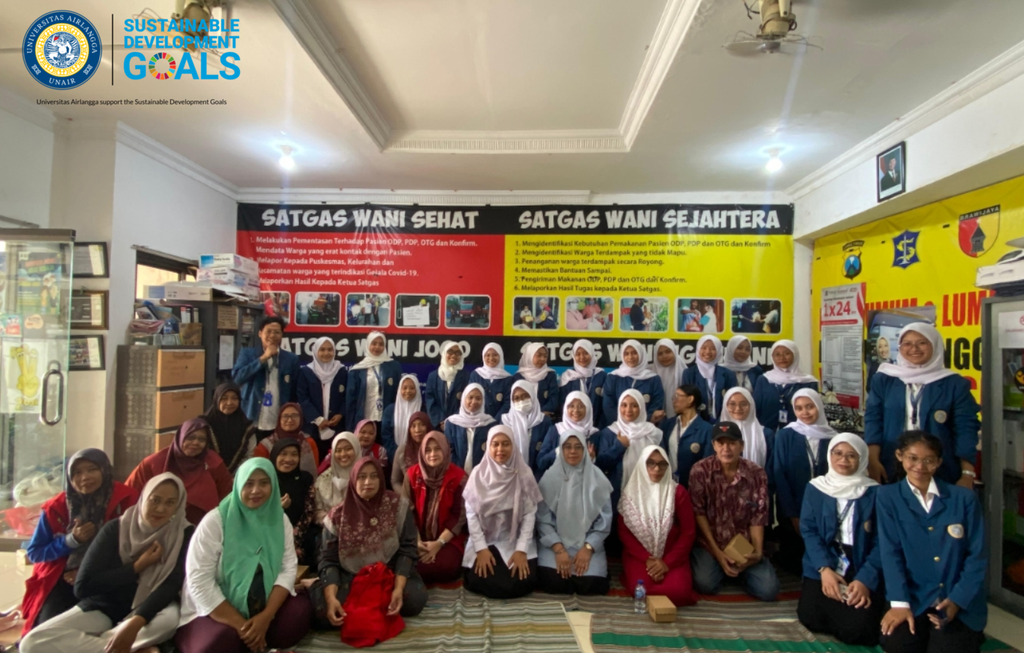
NERS NEWS — On Friday, September 25, 2026, the Final Dissemination of the Nursing Profession Education Practice, Wave 2, Community and Family Nursing Rotation, was held at the RW 01 Community Hall, Gebang Putih Urban Village, within the working area of Klampis Ngasem Community Health Center, starting at 7:00 a.m. WIB until completion.
This activity was conducted to present the results of the community and family nursing practice carried out in RT 03, RT 04, and RT 05 of RW 01, Gebang Putih Urban Village. The activity aimed to present the implementation and evaluation results of work programs to the Community Health Center, local administrative officials, health cadres, and the community, while also establishing a shared understanding of health problems and follow-up plans that could be carried out sustainably.
The activity began with participant registration and an opening by the master of ceremonies (MC), followed by singing the national anthem, Indonesia Raya, and remarks from representatives of the students, Community Health Center, academic supervisors, and community. The students then presented the activity results, followed by a question-and-answer session and discussion, the presentation of plaques or souvenirs to relevant parties, and the closing session and group documentation.
During the activity, the implementation results of various age-group programs and supporting activities were presented, including the Productive-Age Working Group, Older Adults Working Group, School Health Unit, School-Age Children Working Group, Mothers and Toddlers Working Group, Pregnant Women Working Group, Adolescent Working Group, Environmental Health Working Group, as well as Hospital Health Promotion (PKRS), Family Integrated Health Post (Posyandu Keluarga), the Chronic Disease Management Program (Prolanis), and health education sessions at the Community Health Center. In general, the nursing practice activities had gone through the stages of assessment, planning, implementation, and evaluation, and showed improvements in participants’ knowledge and abilities in several activities.
The discussion also addressed follow-up family visits, the sustainability of working group programs, and appreciation from the Community Health Center and Surabaya Hebat Health Cadres (KSH) for the students’ activities. The relevant parties stated that the students’ activities had helped support the role of the Community Health Center and had an impact on changes in residents’ health and behavior. Furthermore, the activity report is expected to be submitted and followed up collaboratively by the RW, Community Health Center, and other relevant parties.
The follow-up plans include sustaining healthy living behaviors within the community, providing education and monitoring through health cadres, reminding residents of examination schedules and treatment adherence, increasing promotive and preventive activities by the Community Health Center, and maintaining ongoing coordination among the community, health cadres, Community Health Center, and local administrative officials.
Writer: Sekar Ayu Cahyani





