
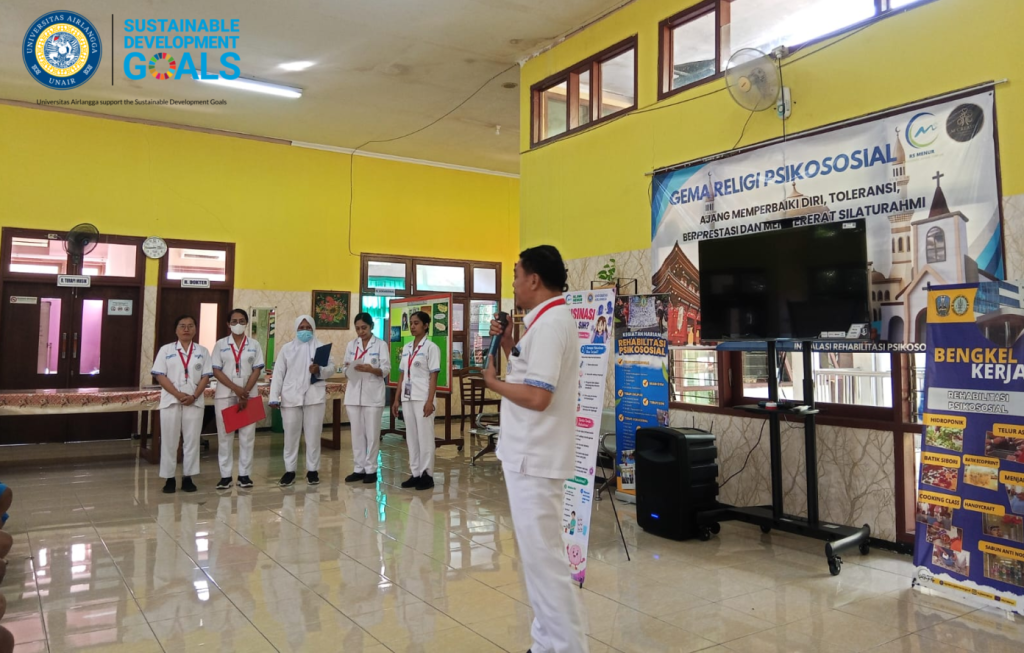
NERS NEWS — Nursing Professional Education students from the Faculty of Nursing, Universitas Airlangga, Batch B27, conducted a Hospital Health Promotion (PKRS) program entitled “How to Control Hallucinations in Patients with Mental Disorders” in the Flamboyan Ward of Prof. Dr. Moeljono Regional Hospital, Surabaya. This activity was carried out as a promotive and preventive effort to improve patients’ knowledge of recognizing and independently managing hallucinations.
The educational program was intended for patients receiving treatment in the Flamboyan Ward. Its objective was to enhance patients’ knowledge, understanding, and ability to recognize the signs of hallucinations and apply effective strategies to control them, thereby reducing the frequency of hallucinations and improving patients’ ability to maintain reality orientation.
The PKRS session began at 8:30 a.m. and employed an educational, communicative, and interactive approach. The material was delivered through lectures, discussions, question-and-answer sessions, and demonstrations of hallucination management techniques. Educational posters were used as visual aids to help participants better understand the information presented.
During the session, the presenters explained that hallucinations are sensory perceptions that occur without any real external stimulus. These may include hearing voices, seeing objects, smelling odors, tasting flavors, or feeling physical sensations that are not actually present. If left unmanaged, hallucinations can affect patients’ behavior, emotions, and ability to carry out daily activities.
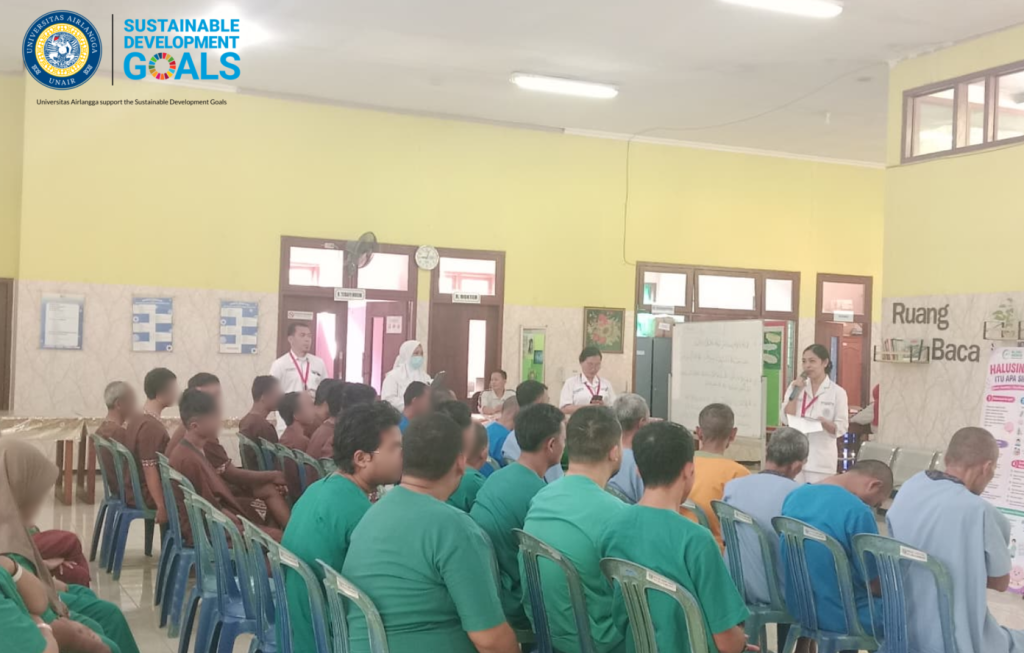
Participants were educated on several strategies for controlling hallucinations, including recognizing early warning signs, firmly confronting or dismissing hallucinations, engaging in conversations with others, participating in scheduled activities to divert attention, taking prescribed medications regularly, and strengthening spiritual activities according to their individual beliefs. Throughout the session, participants also had the opportunity to practice the technique of firmly confronting hallucinations and to discuss their personal experiences.
The participants were highly engaged throughout the activity. Their enthusiasm was reflected in their active participation in answering questions, taking part in demonstrations, and successfully repeating the hallucination management techniques explained by the facilitators. A brief evaluation conducted at the end of the session showed that most participants were able to explain the definition of hallucinations and identify several independent strategies for controlling them.
This PKRS activity also supports the achievement of Sustainable Development Goal (SDG) 3: Good Health and Well-Being by promoting mental health through patient education, enabling individuals to recognize and manage hallucination symptoms appropriately.
Through this educational program, patients are expected to apply hallucination management strategies in their daily lives, improve adherence to treatment, prevent relapse, and ultimately enhance their quality of life while living with mental disorders.
Writer: Mariana Ringu Langu





