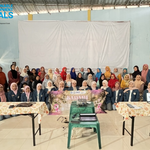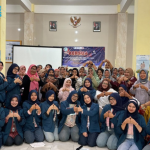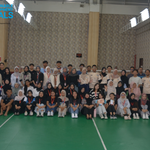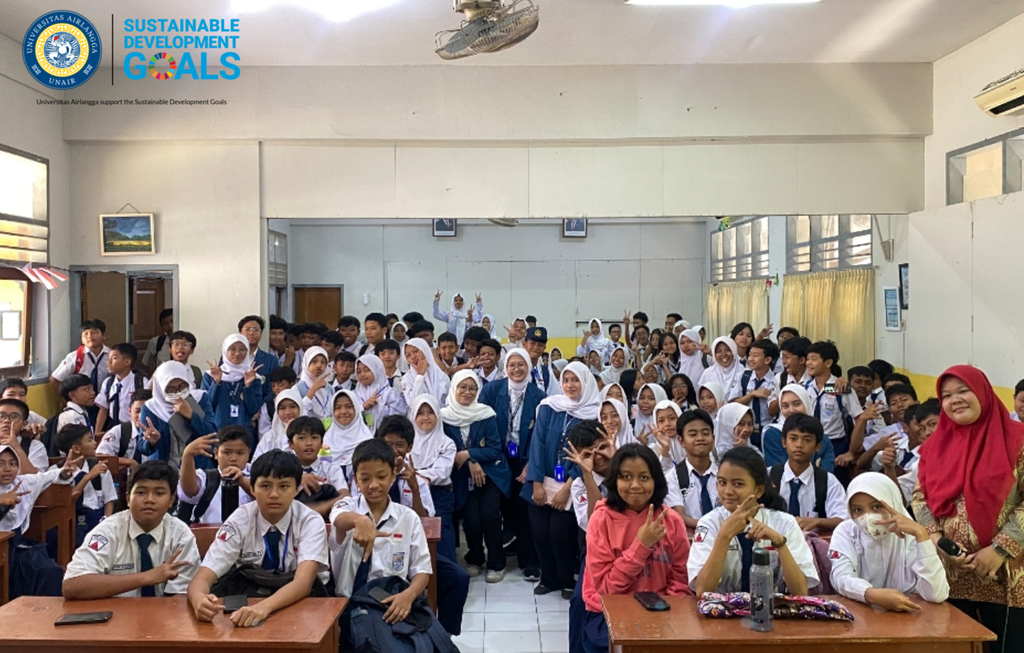
NERS NEWS — On Friday, September 18, 2026, a health education session with the theme “Wise Internet Use and Efforts to Reduce Cigarette Consumption” was held at SMP GIKI 3 Surabaya. The activity was conducted by students of the Nursing Professional Education Program, Faculty of Nursing, Universitas Airlangga, Community and Family Nursing Rotation, Wave 2, as part of promotive and preventive efforts for adolescents. The health education session was conducted face-to-face and targeted students as an adolescent age group. The activity aimed to increase adolescents’ awareness and knowledge regarding the wise use of the internet and social media, as well as to raise awareness of the dangers of smoking to physical and social health.
The materials covered social media etiquette, wise internet use, cyberbullying, ways to avoid doom-scrolling habits, the influence of social media on risky behaviors, the health impacts of smoking, and efforts that can be taken to reduce or prevent cigarette consumption among adolescents. The activity began with preparation of the venue and equipment, followed by a briefing and participant registration. At the beginning of the activity, representatives from the school also welcomed the students and the participants of the health education session. In their remarks, the school expressed appreciation and support for the health education activity conducted by the students. The school representatives stated that activities such as this are needed to help students obtain accurate information that can be applied in their daily lives, particularly regarding social media use and health-related behaviors among adolescents.
Following the welcoming remarks, the activity continued with a pre-test to assess participants’ initial understanding before the materials were presented. Participants completed the pre-test sheets prepared by the committee with assistance from facilitators. After the pre-test, the speakers delivered the educational materials interactively using a PowerPoint presentation and animated videos as supporting media. In the context of smoking, participants were encouraged to be more critical in distinguishing between entertainment content, lifestyle content, covert promotion, and health information. Participants were then educated about the effects of smoking, including the risk of nicotine dependence, its impact on the lungs and cardiovascular system, reduced physical fitness, and the potential continuation of smoking behavior into adulthood.
Several questions were raised by participants following the presentation, including questions about the meaning of the video on wise social media use, smoking prevention, the definition of passive smokers, and the negative effects of smoking. After the discussion session, the activity continued with a post-test to evaluate participants’ understanding after receiving the educational materials. Participants completed the post-test sheets prepared by the committee with assistance from facilitators. Overall, the health education session proceeded well. Participants followed the activity from beginning to end, paid attention to the materials presented, and actively participated in the question-and-answer and discussion sessions. Based on observations, the target group, topic, timing, content, and implementation process were in accordance with the activity plan. Participants also demonstrated engagement through their questions and responses during the education session.
Through this activity, students are expected to apply the knowledge they gained in their daily lives, particularly by using social media wisely, maintaining proper etiquette and safety when interacting in the digital world, recognizing and avoiding risky behaviors, and developing awareness of the importance of preventing and reducing cigarette consumption. This activity is also expected to serve as a form of collaboration between students and the school in supporting promotive and preventive efforts for adolescent health.
Writer: Sasikirana Ariesta Dewani