
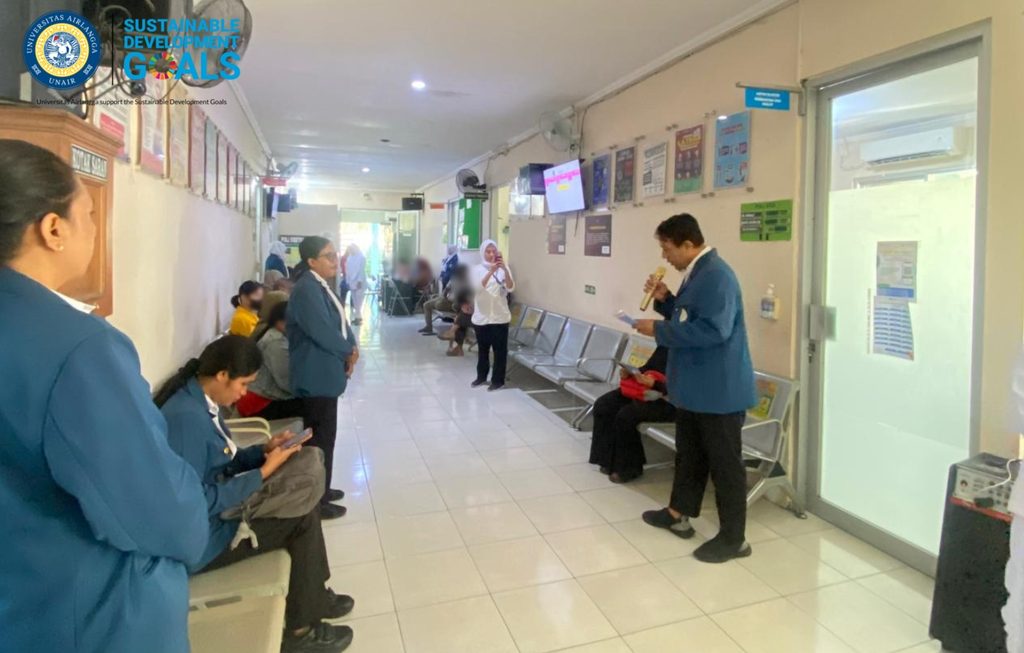
NERS NEWS — Young Nurses from the Nursing Professional Education Program, Faculty of Nursing, Universitas Airlangga, Batch B27, conducted a health education activity with the theme “Early Detection and Prevention of Osteoporosis” for patients and patients’ families at Kenjeran Public Health Center, Surabaya, on Thursday, August 13, 2026. This activity aimed to increase participants’ knowledge and awareness regarding osteoporosis, risk factors, signs and symptoms, early detection, and efforts to prevent osteoporosis through the implementation of a healthy lifestyle. The activity was part of the implementation of Nursing Professional Education practice in the field of community nursing.
The education was delivered through lectures and question-and-answer sessions using educational media in the form of leaflets and posters. The materials presented included the definition of osteoporosis, risk factors, signs and symptoms, methods of early detection, prevention efforts through a healthy lifestyle, and the importance of maintaining bone health from an early age. Participants were also provided with an understanding of the importance of regular physical activity, meeting calcium and vitamin D requirements, and implementing healthy lifestyle habits to help maintain bone strength.
This health education activity was motivated by the high incidence of osteoporosis, which is one of the health problems, particularly among older adults. Osteoporosis is a condition characterized by decreased bone mass and density, causing bones to become more fragile and susceptible to fractures. This condition can lead to disability, decreased quality of life, and increased dependence among older adults. In Indonesia, the risk of osteoporosis is also relatively high, particularly among older women.
During the activity, it was explained that osteoporosis can be influenced by non-modifiable and modifiable risk factors. Non-modifiable factors include older age, female sex, menopause, and a family history of osteoporosis. Meanwhile, modifiable factors include lack of physical activity, low intake of calcium and vitamin D, smoking, excessive alcohol consumption, and being underweight. Understanding these risk factors is expected to help participants recognize the risk of osteoporosis at an early stage.
Participants were also provided with information about the signs and symptoms of osteoporosis. In its early stages, osteoporosis often does not cause symptoms, so a person may not realize that their bone density has decreased. As the condition progresses, bones can become increasingly fragile and susceptible to fractures caused by minor impacts or falls. Some signs that may be observed include a stooped posture, loss of height, and back pain caused by fractures or cracks in the vertebrae.
Early detection was also an important part of the education. Participants were provided with an understanding that early detection can be carried out by identifying risk factors, undergoing regular health examinations, and having a bone mineral density (BMD) test. BMD testing can be performed using Dual-Energy X-Ray Absorptiometry (DEXA) to determine bone mineral density and help identify whether a person has normal bone density, osteopenia, or osteoporosis.
In addition to early detection, participants received education regarding various efforts to prevent osteoporosis through a healthy lifestyle. Prevention can be achieved by exercising regularly, performing weight-bearing and balance exercises, meeting calcium and vitamin D requirements, consuming protein-rich foods, quitting smoking, limiting caffeine and carbonated beverages, and getting adequate sleep. Implementing these lifestyle practices is expected to help maintain bone density, improve muscle strength, and reduce the risk of fractures.
The activity also emphasized the importance of maintaining bone health from an early age. Bone density reaches its peak at around 20–30 years of age and may subsequently decline gradually. Therefore, adequate nutrition, physical activity, and the implementation of a healthy lifestyle from a young age are important aspects of maintaining bone health into older age. Early prevention efforts are expected to help reduce the risk of osteoporosis and its complications so that individuals can remain active and independent.
In addition to osteoporosis, participants were also provided with education on fall prevention among older adults. As age increases, muscle strength, balance, and vision may decline, resulting in a higher risk of falls. Prevention can be achieved by creating a safe home environment, ensuring adequate lighting, organizing objects that may cause tripping, avoiding slippery carpets or mats, keeping bathrooms clean and dry, and providing handrails in necessary areas. Older adults are also encouraged to wear non-slip footwear, stand up slowly after sitting or lying down, and use walking aids when necessary.
During the activity, participants were expected to actively participate in the education, pay attention to the materials, and take part in the question-and-answer session. An oral evaluation was conducted to assess participants’ understanding of osteoporosis, risk factors, signs and symptoms, early detection, and prevention efforts. Participants were expected to be able to explain the information regarding early detection and prevention of osteoporosis and demonstrate an interest in implementing a healthy lifestyle in their daily lives.
The activity was conducted for 20 minutes and consisted of an opening, delivery of the materials, question-and-answer session, evaluation of understanding, and closing. The activity used leaflets and posters to help participants understand the information presented. The division of tasks included a moderator, presenter, facilitators, observer, timekeeper, equipment team, and documentation team so that the education session could be carried out according to the prepared plan.
Through this educational activity, patients and patients’ families are expected to increase their knowledge regarding the importance of maintaining bone health, recognizing osteoporosis risk factors, undergoing early detection, and implementing a healthy lifestyle as part of osteoporosis prevention. Education on fall prevention is also expected to increase families’ awareness of creating a safe environment for older adults so that the risk of falls and injuries can be minimized. With good knowledge and awareness, the community is expected to be able to maintain bone health and preserve quality of life into older age.
Writer: Meriyana Ate Engge





